Riding the Hong Kong Tram (Ding Ding): Routes, Fares & How to Pay
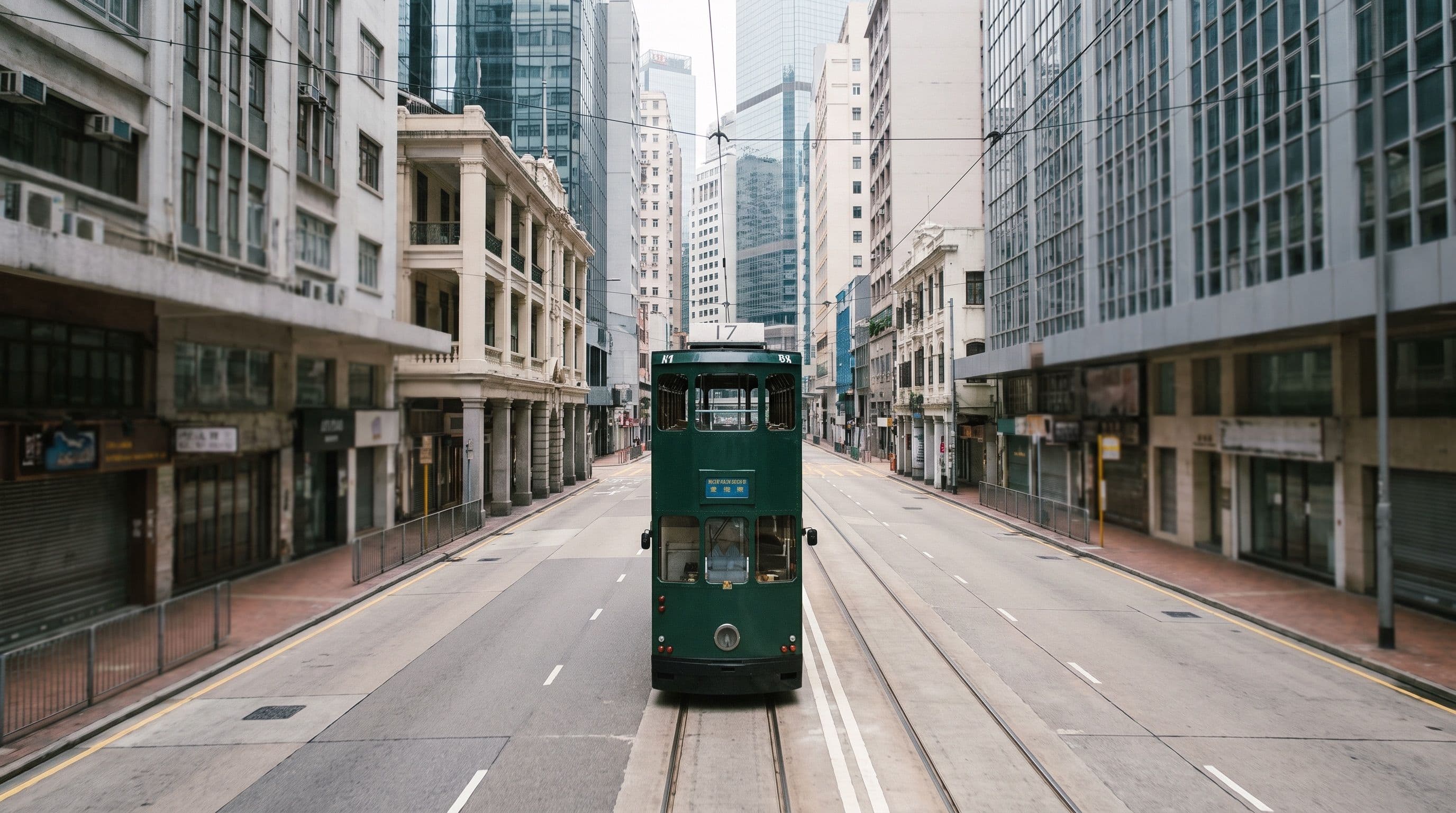
The double-decker trams that trundle along Hong Kong Island are older than almost everything else on the road, and at a flat HK$3.30 for adults they are the cheapest sightseeing ticket in the city. Locals call them the "ding ding" after the bell the driver rings, and riding one is the closest thing Hong Kong has to a free tour. Here is exactly how the Hong Kong tram works: what it costs, where to board and pay, which routes go where, and where to sit for the best view.
What the Hong Kong tram costs
The fare is flat. It does not matter whether you ride two stops or the length of the line, you pay the same. As of the operator's current fare table:
- Adult: HK$3.30
- Child (aged 3 to under 12): HK$1.60
- Senior (aged 65 and over): HK$1.50
- Monthly ticket: HK$260
Children under 3 ride free. There is no distance-based pricing and no zones to work out, which is part of why the tram is such an easy first ride when you land.
How to board and pay
This trips up almost every first-timer, because it works the opposite way to a bus. You board at the rear through the turnstile, take a seat, and pay at the front when you get off. Nobody checks your fare on the way in.
The easiest way to pay is by tapping an Octopus card on the reader by the driver as you leave. If you are paying cash you need the exact fare in coins, because the tram gives no change. An Octopus card removes all of that fiddliness, and it is the same card you will use on the MTR, buses and the Star Ferry, so it is worth sorting out early. There are also discounted Octopus cards for children and seniors that carry the lower child and elder fares automatically.
Where the trams go
Hong Kong Tramways runs six overlapping routes along a single east to west line on the north shore of Hong Kong Island. The line stretches from Kennedy Town in the west to Shau Kei Wan in the east, with a branch that loops through Happy Valley around the racecourse. Along the way it passes through Sheung Wan, Central, Admiralty, Wan Chai and Causeway Bay, which covers most of the places a visitor actually wants to be.
You do not need to memorise the six routes. Every tram shows its destination on the front, so you just check that it is heading the right way (east or west) and hop on. If it does not go all the way to where you want, you get off and catch the next one for another flat fare. Trams run frequently from early morning until around midnight, so you rarely wait long. The tram only covers Hong Kong Island, though, so if you are arriving from the airport or heading to Kowloon it is just one piece of the puzzle: our guide to getting from Hong Kong airport into the city covers the rest.
Is the ding ding worth riding?
For the price of a bottle of water, yes. The trams are slow, and if you are in a hurry the MTR underneath you is far faster. But slow is the point. Sit on the upper deck at the very front and you get an open-window, eye-level view of Hong Kong Island street life gliding past: wet markets, neon signs, old shophouses and glass towers stacked together. The stretch through Wan Chai and Causeway Bay is the most photogenic. A ride from Western Market through Central to Causeway Bay takes maybe 40 minutes and shows you more of the real city than any organised tour.
If you want the sightseeing version with commentary, Hong Kong Tramways runs a vintage open-top TramOramic tour on a 1920s-style tram. It costs HK$95 for adults and HK$65 for children (aged 4 to 11) and includes a one-hour circuit plus a two-day unlimited tram pass. For most travellers the normal HK$3.30 ride is all you need, but the tour is a fair option if you want the narrated loop.
The ding ding is not the Peak Tram
One quick point of confusion worth clearing up: the street tram is a completely different thing from the Peak Tram, which is a funicular railway that climbs up to Victoria Peak. They share the word "tram" and nothing else. The ding ding runs flat along the streets for a couple of dollars; the Peak Tram hauls you up the mountain for a view and costs a lot more. If the summit is what you are after, read whether the Peak Tram is worth it before you queue.
Quick answers
How much does a tram ride cost in Hong Kong? A flat HK$3.30 for adults, HK$1.60 for children aged 3 to under 12, and HK$1.50 for seniors 65 and over, no matter how far you ride.
How do you pay for the Hong Kong tram? You pay when you get off, at the front by the driver. Tap an Octopus card or drop the exact fare in coins. No change is given, so Octopus is easier.
What is the etiquette for the Hong Kong tram? Board at the rear, move up to the top deck if you can, and pay as you leave from the front. Have your Octopus ready so you do not hold up the queue at the door.
Is the Hong Kong tram the same as the Peak Tram? No. The ding ding is a street tram running east to west across Hong Kong Island. The Peak Tram is a separate funicular up to Victoria Peak with its own, much higher ticket price.
Planning the rest of your trip? See our guide to Is the Hong Kong Airport Express Worth It? Fares, Times & the Free Return.
Planning the rest of your trip? See our guide to Cheapest Way From Hong Kong Airport to the City.