Hong Kong Solo Travel Itinerary: 3 Days, Where to Stay & What It Costs
Most of what turns up under Hong Kong solo travel itinerary is somebody's holiday diary with the good bits highlighted. This is the practical version: a three-day plan built for one person, plus the parts nobody writes down, like which fares punish you for travelling alone and how to eat well where the best food comes at a table you share.
It's an easy first solo trip: compact, bilingual, trains that run late. The same qualities make it a little lonely if you don't plan for it, which is why the evenings below sit where being on your own is unremarkable.
Is Hong Kong a good place to travel alone?
Yes, for specific reasons. The MTR reaches almost everywhere you'd want to go, station signage and staff are in English, and nobody looks twice at a solo diner because half the city eats alone on a work day. The catch is money: Hong Kong prices rooms by the room and its best transport deals by the group, so going alone costs more per person. There's a section below on where that shows up.
How long should a Hong Kong solo travel itinerary be?
Three: one day on Hong Kong Island, one in Kowloon, one out of the city. Solo travel moves faster because there's no negotiating about lunch, so three days alone covers roughly what four would with company. Still deciding? Here's how many days you need in Hong Kong.
Buy an Octopus card first. A Tourist Octopus costs HK$39 with no stored value and no deposit; the standard on-loan card is HK$150 of stored value plus a HK$50 refundable deposit. It pays for the MTR, buses, trams, the Star Ferry and most convenience stores, and every leg below assumes one is in your pocket.
Where to stay in Hong Kong as a solo traveller
Base yourself on the north shore of Hong Kong Island (Sheung Wan, Central, Wan Chai or Causeway Bay) or in Tsim Sha Tsui. Anywhere else costs you 40 minutes a day getting back to where things are happening.
Sheung Wan and Sai Ying Pun win if you want to walk home from dinner; Tsim Sha Tsui wins on harbour views and cheaper rooms, with the Star Ferry as your commute. Our guide to where to stay in Hong Kong breaks the neighbourhoods down in detail.
One structural warning: a private room costs the same whether one person sleeps in it or two, so the accommodation line of a solo budget is effectively doubled. Hostels in Sheung Wan, Jordan and Tsim Sha Tsui are the standard fix, and they're the easiest place to find someone to eat dinner with.
Day 1: Hong Kong Island, SoHo and the Peak at dusk
Morning. Start in Central and walk uphill. The Central–Mid-Levels Escalator runs downhill from 6am to 10am and uphill from 10am until midnight, so arrive after 10am and it carries you up through SoHo instead of fighting you. Man Mo Temple is a short walk west along Hollywood Road, and Tai Kwun, the old police station turned arts complex, sits beside the escalator run.
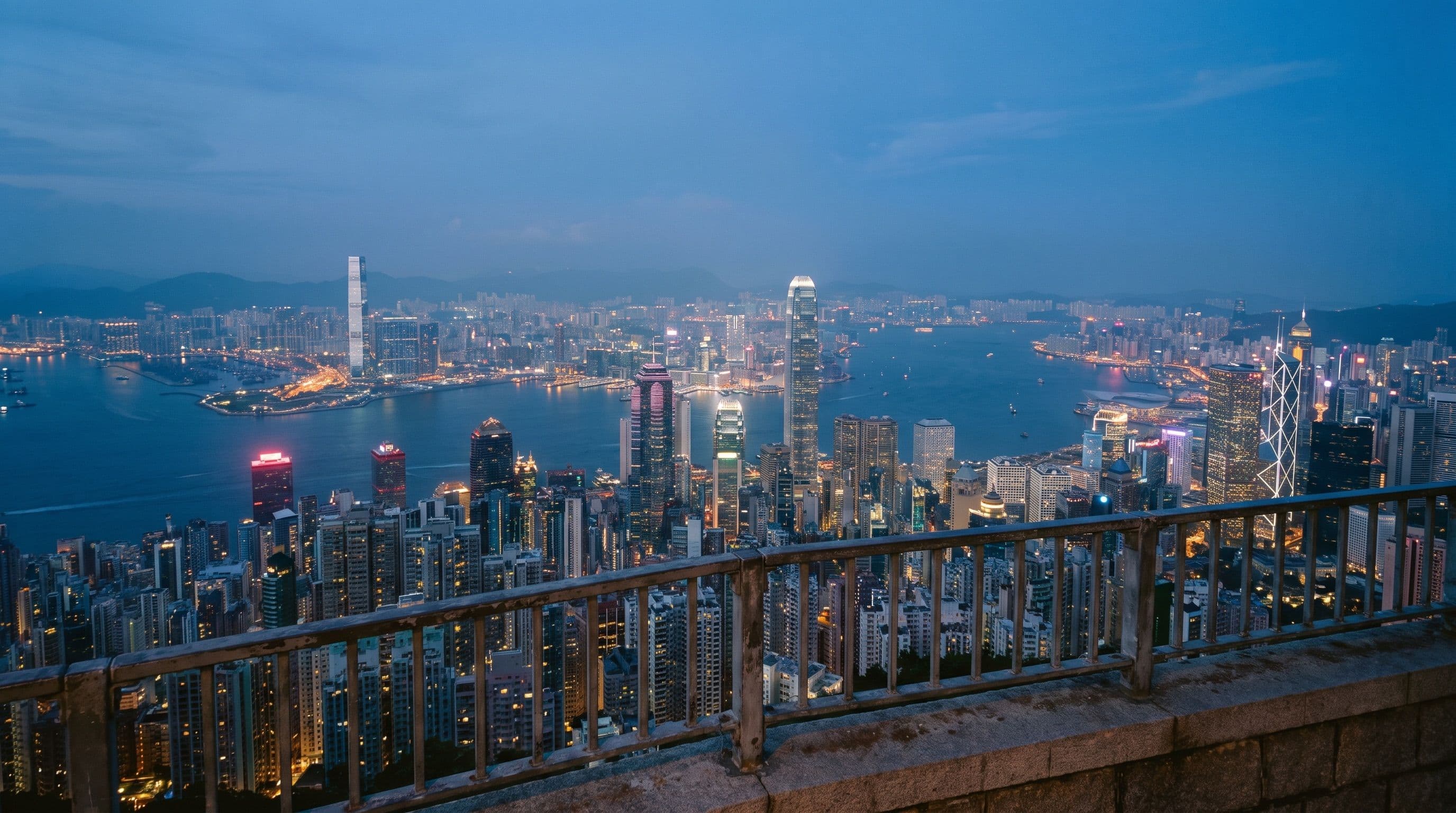
Afternoon. Walk to the Peak Tram terminus on Garden Road and go up around 4pm. An adult single is HK$82, a return HK$116. Late afternoon gets you the city in daylight, at dusk and lit up in one trip, which matters more when you aren't coming back a second night. The tram is suspended on 8 September 2026 for maintenance, with The Peak Tower and Sky Terrace 428 open as usual; that day, or any day the queue looks brutal, Citybus 15 and green minibus 1 climb to the same viewpoint.
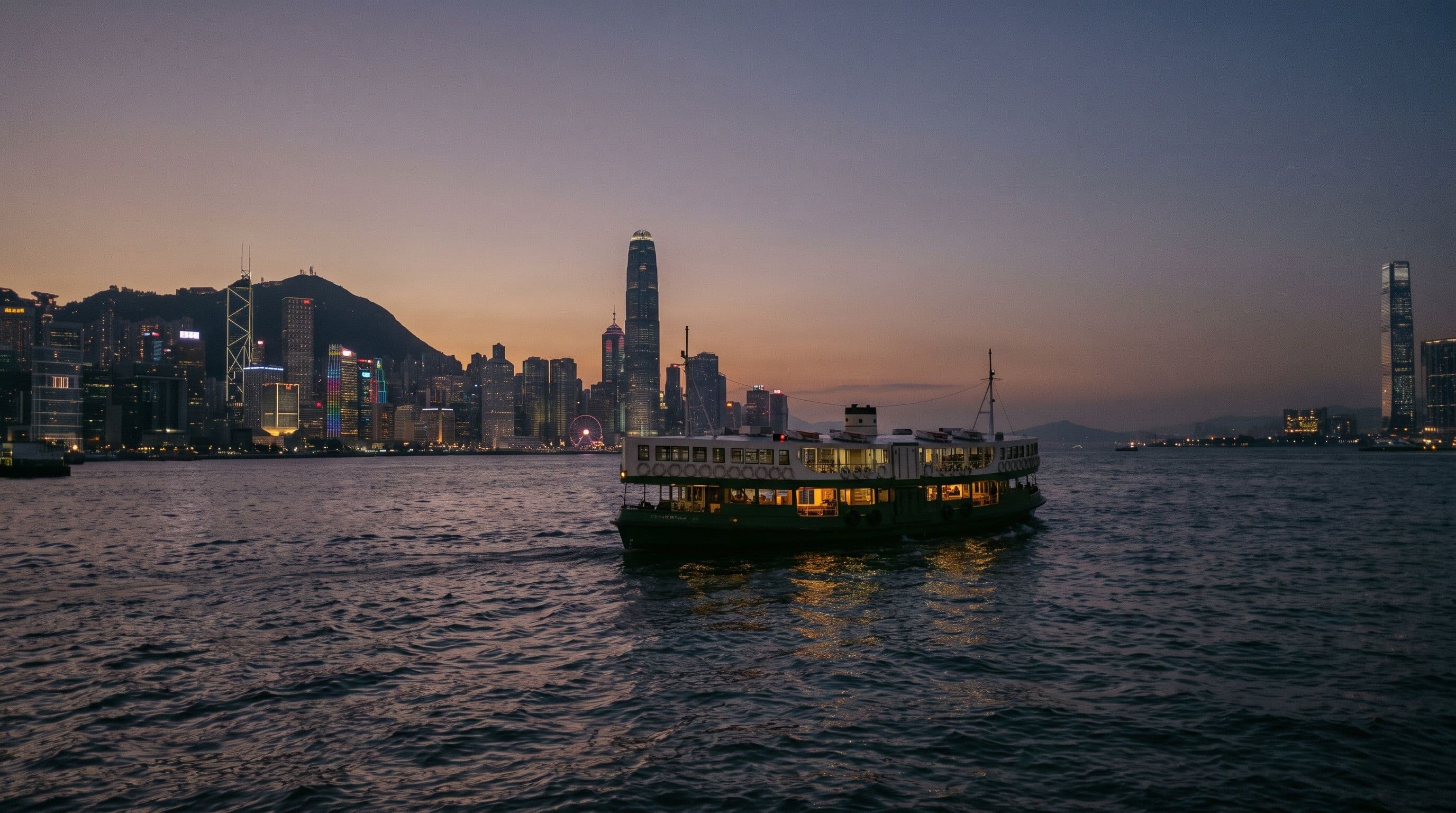
Evening. Come down and cross the harbour on the Star Ferry. An adult pays HK$4 lower deck or HK$5 upper deck on a weekday, HK$5.60 and HK$6.50 at weekends and on public holidays. Be on the Tsim Sha Tsui waterfront by 7.50pm for A Symphony of Lights, the free show over the harbour at 8pm nightly. The government has confirmed it's being retired later in 2026, so treat it as now-or-never.
Day 2: Kowloon, the markets and eating alone
Morning. Walk the Tsim Sha Tsui promenade early, while the light is on the Island side. The Avenue of Stars runs along the water and carries on west to West Kowloon, where M+ and the Hong Kong Palace Museum sit side by side. Pick one. Museums are the best solo hours of any trip, and two in a morning means you see no streets at all.
Midday. MTR north to Mong Kok, three stops on the Tsuen Wan line. The Ladies' Market on Tung Choi Street, the flower market and the goldfish stalls sit within a few blocks of each other, and the street food between them is as much the point as the shopping.
Lunch, and this is the solo skill. Eat at a cha chaan teng. These local diners seat single customers at shared tables as routine, and most hand you a paper slip to tick, so there's no conversation to get wrong. Dai pai dong street stalls work the same way. The one meal that wants a group is a full dim sum spread: do that at lunch, order three baskets, and skip the rest.
Evening. Temple Street in Jordan, dinner from a stall, then back across the water if you want the skyline twice.
Day 3: get out of the city
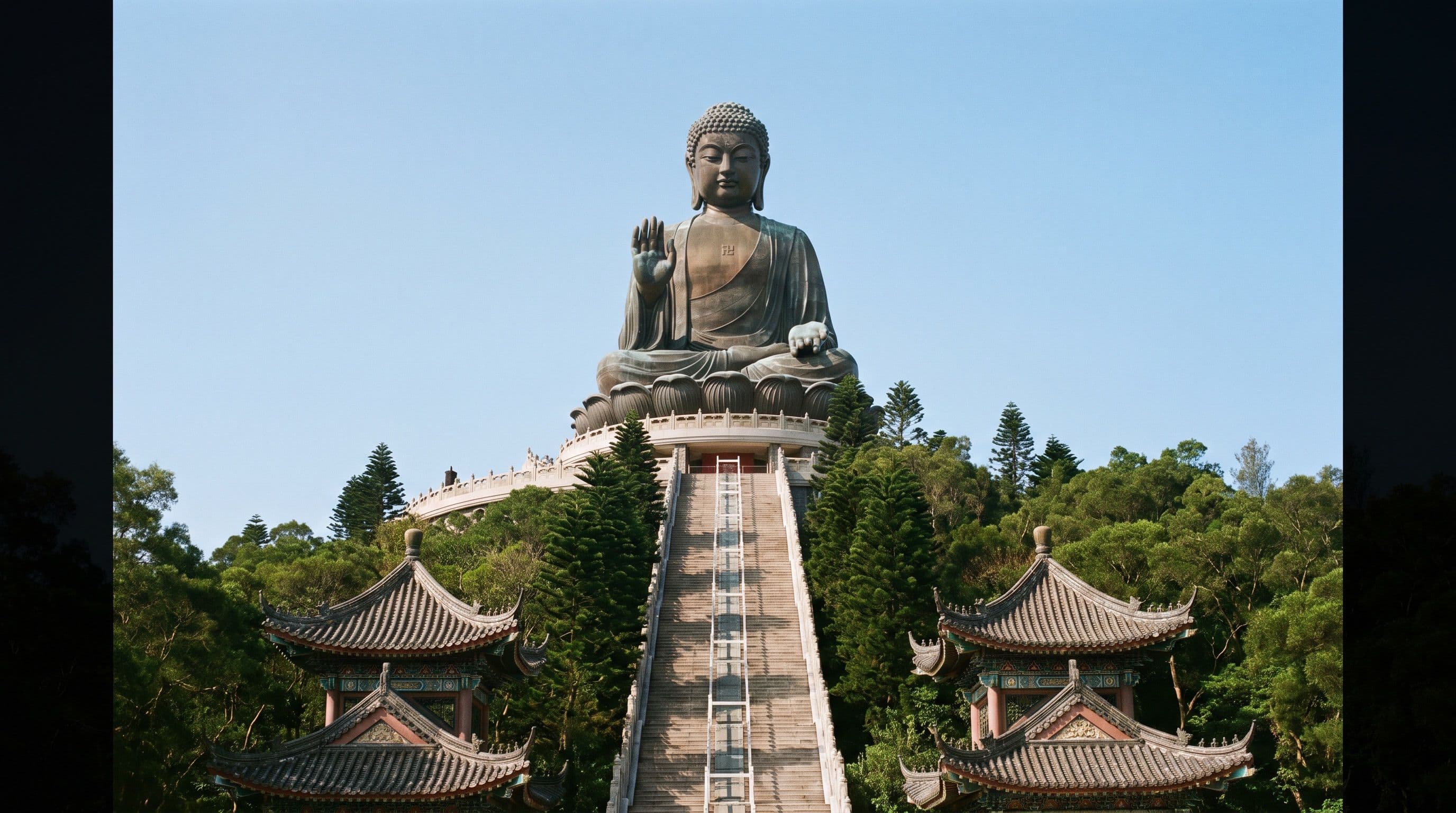
Lantau. The cable car to Ngong Ping, the Big Buddha, then Tai O fishing village. The classic day out, and simple enough to improvise: our Lantau Island day trip guide has the routes and timings. Cover your shoulders and knees at the monastery.
Or Dragon's Back. Take the MTR to Shau Kei Wan, leave by Exit A3 and catch bus 9 to the To Tei Wan stop. The ridge section is about 5km and 1.5 to 2 hours with the sea on both sides; the full Shek O to Big Wave Bay route is 8.5km and closer to 3.5 hours. Time magazine called it the best urban hike in Asia, and it's busy enough at weekends that walking it alone feels ordinary. Carry water: there are no shops on the trail.
What costs more when you travel alone
Three things cost a solo traveller more, and only one of them is fixable.
The Airport Express is the clearest case. A single adult from the airport to Hong Kong Station is HK$120 with Octopus or HK$130 on a Smart Ticket, but MTR's group ticket drops that to as little as HK$42.5 per person for four people riding together. Alone you pay full fare, so the airport buses are the solo answer.
Accommodation is the second, and a dorm bed or a genuinely small single room is the only real lever. Taxis are the third, and here Hong Kong is kind: between the MTR, the trams at a flat fare and the Star Ferry, you can go three days without taking one. For what the trip adds up to, see our three-day Hong Kong budget breakdown.
Is Hong Kong safe for solo travellers?
Solo travellers, including solo women, consistently rate Hong Kong as one of the safest big cities in Asia. The practical version: streets stay busy and lit late, MTR stations are staffed, and the emergency number is 999.
Ordinary precautions still apply: watch your drink in Lan Kwai Fong and your bag in a crowded market. Hiking trails empty out on weekdays, so tell someone your route if you walk Dragon's Back alone midweek.
Quick answers
Is it a good idea to visit Hong Kong alone? Yes. It's compact, the transport is bilingual and straightforward, eating alone is normal, and it's safe to walk at night. The downside is cost: rooms are priced per room and the best transport deals per group.
How many days is enough for a Hong Kong trip? Three full days covers Hong Kong Island, Kowloon and one day out to Lantau or the hills. Solo travel moves faster, so three days alone gets you about as far as four with company.
Where should a solo traveller stay in Hong Kong? Sheung Wan or Central to walk home from dinner, Tsim Sha Tsui for the harbour view and cheaper rooms. Hostels in Sheung Wan, Jordan and Tsim Sha Tsui cut the biggest line in a solo budget and make it easier to find dinner company.
Is Hong Kong safe for solo female travellers? It has a strong reputation on this, for practical reasons: busy well-lit streets late into the night, staffed MTR stations, and 999 for emergencies. Normal precautions in nightlife areas and crowded markets still apply.