The Most Instagrammable Spots in Hong Kong
I get asked for the most Instagrammable spots in Hong Kong more than almost anything else, and most of the answers online are the same seven photos recycled with different captions. Some of those are genuinely worth it. A few are overrated. And a couple of the best ones barely get mentioned because they take a bit more effort to reach. Here's the real list, in the order I'd actually shoot them.
Choi Hung Estate: the rainbow rooftop
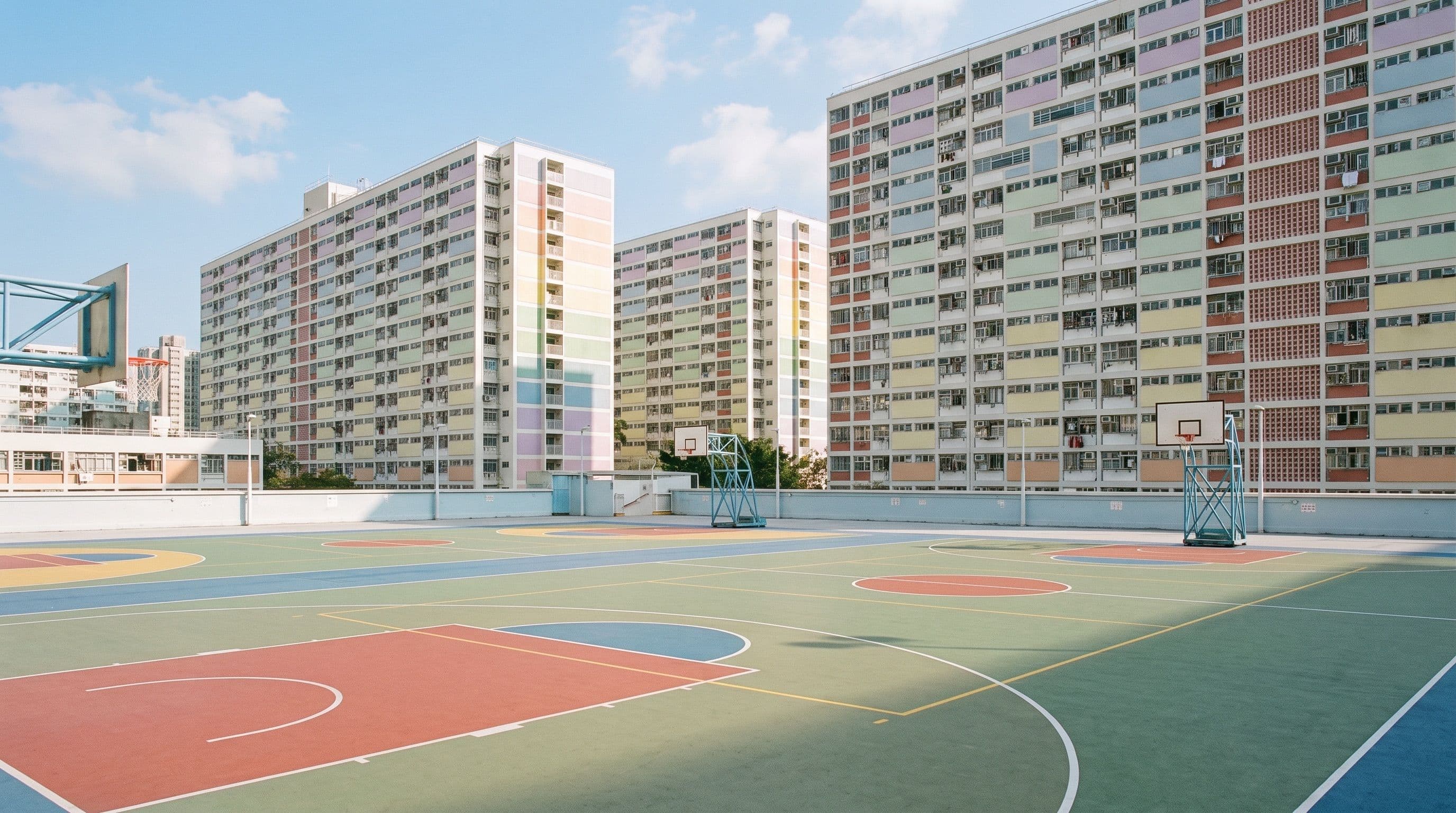
Choi Hung means "rainbow" in Cantonese, and the pastel-striped public housing towers above a car-park rooftop basketball court in Wong Tai Sin have become one of the most photographed frames in the city. It's free, it's a four-minute walk from Choi Hung MTR station, and it's still an occupied estate, so the etiquette matters as much as the composition. I've written up exactly how to find the roof, the best light, and how to shoot it without bothering the people who live there in the full Choi Hung Estate guide.
Monster Building, Quarry Bay
The Yik Cheong Building complex in Quarry Bay is an E-shaped cluster of five residential blocks that looks like a cyberpunk film set from directly below, thanks to hundreds of stacked balconies and air-con units. It's a five-minute walk from Quarry Bay MTR Exit A, and the best angle is from the courtyard at the rear of the complex, not the street-facing side most first-time visitors shoot. Same rule as Choi Hung: it's someone's home, not a studio. Details on the exact spot and how to be a decent guest about it are in the Monster Building guide.
Nan Lian Garden and Chi Lin Nunnery, Diamond Hill
This is the spot I send people who want a green, calm frame instead of another concrete estate. Nan Lian Garden is a free classical Chinese-style garden five minutes from Diamond Hill MTR Exit C2, built around goldfish ponds, a pagoda and manicured rock displays, sitting right next to Chi Lin Nunnery's wooden halls. Neither charges admission, and both photograph well in flat morning light before the tour groups arrive. It also sits one MTR stop from Choi Hung, so the two make an easy half-day pairing. More in the Chi Lin Nunnery and Nan Lian Garden guide.
Avenue of Stars, Tsim Sha Tsui
The harbourfront promenade along Tsim Sha Tsui is the classic postcard shot: Victoria Harbour in front, the Hong Kong Island skyline stacked behind it, and statues and handprint plaques honouring Hong Kong's film industry along the railing. It photographs well at almost any hour, but blue hour, just after sunset when the skyline lights come up against a still-blue sky, is when it actually looks like the photos you've seen. Full details, including where the crowds thin out, in the Avenue of Stars guide.
Square Street, Sheung Wan
Sheung Wan's back lanes hide some of the city's better street art, and Square Street is the one worth seeking out on purpose: a run of brightly painted wall murals tucked between the antique shops on Hollywood Road and the dried-seafood streets closer to the harbour. It's not signposted as an attraction, which is exactly why it hasn't been photographed to death yet. Walk it in the late afternoon when the low sun hits the walls directly.
South Bay Beach, Southern District
Most visitors only get as far as Repulse Bay. South Bay, a short walk further along the coast, is smaller, quieter, and has a single large tree growing almost in the middle of the sand that makes for a genuinely different beach photo than anything else on this list. It's a real swimming beach, not a curated backdrop, which is part of why it stays uncrowded on weekdays.
The Central heritage mile
PMQ, Tai Kwun and Central Market sit within a fifteen-minute walk of each other in Central, and together they're the easiest way to get several distinct architectural looks in one afternoon: PMQ's colonial-era police married quarters turned design studios, Tai Kwun's converted prison-and-courthouse compound, and Central Market's Bauhaus-style facade and escalator atrium. All three are free to enter and shaded, which matters in Hong Kong's humidity.
Tsim Sha Tsui Promenade skyline
If you only have time for one wide shot of the whole skyline, this is it: the waterfront path running past the Clock Tower and the Hong Kong Cultural Centre gives you an unobstructed line across the harbour to Central and Admiralty's tallest towers. It's a different, wider angle than the Avenue of Stars a short walk away, and it's the one I'd pick for a clean panorama rather than a foreground subject.
Quick answers
What is the most stunning place to visit in Hong Kong? For a single frame, most people mean the Victoria Harbour skyline from the Tsim Sha Tsui waterfront or Victoria Peak above it. Both are covered in their own guides on this site with the practical details for getting up there.
What are some secret spots to visit in Hong Kong? South Bay Beach and Square Street in Sheung Wan are the two on this list that still fly under the radar. Neither is hidden exactly, but neither shows up in the standard tourist-photo rotation either.
What are some trendy areas in Hong Kong? Sheung Wan and Central's PMQ/Tai Kwun heritage mile are the current favourites: converted heritage buildings now full of independent shops, galleries and painted laneways, all walkable in one afternoon.
What are some Instagrammable cafes in Hong Kong? Honestly, the single most-photographed room isn't a cafe but a restaurant: Madame Fù, known for its Pink Room and plant-filled Verandah. If you want the aesthetic without the sit-down meal, most of the spots on this list photograph just as well and cost nothing to visit.