Tap Mun (Grass Island) Day Trip: Ferries, Cattle & the Plateau
Tap Mun (Grass Island) Day Trip: Ferries, Cattle & the Plateau
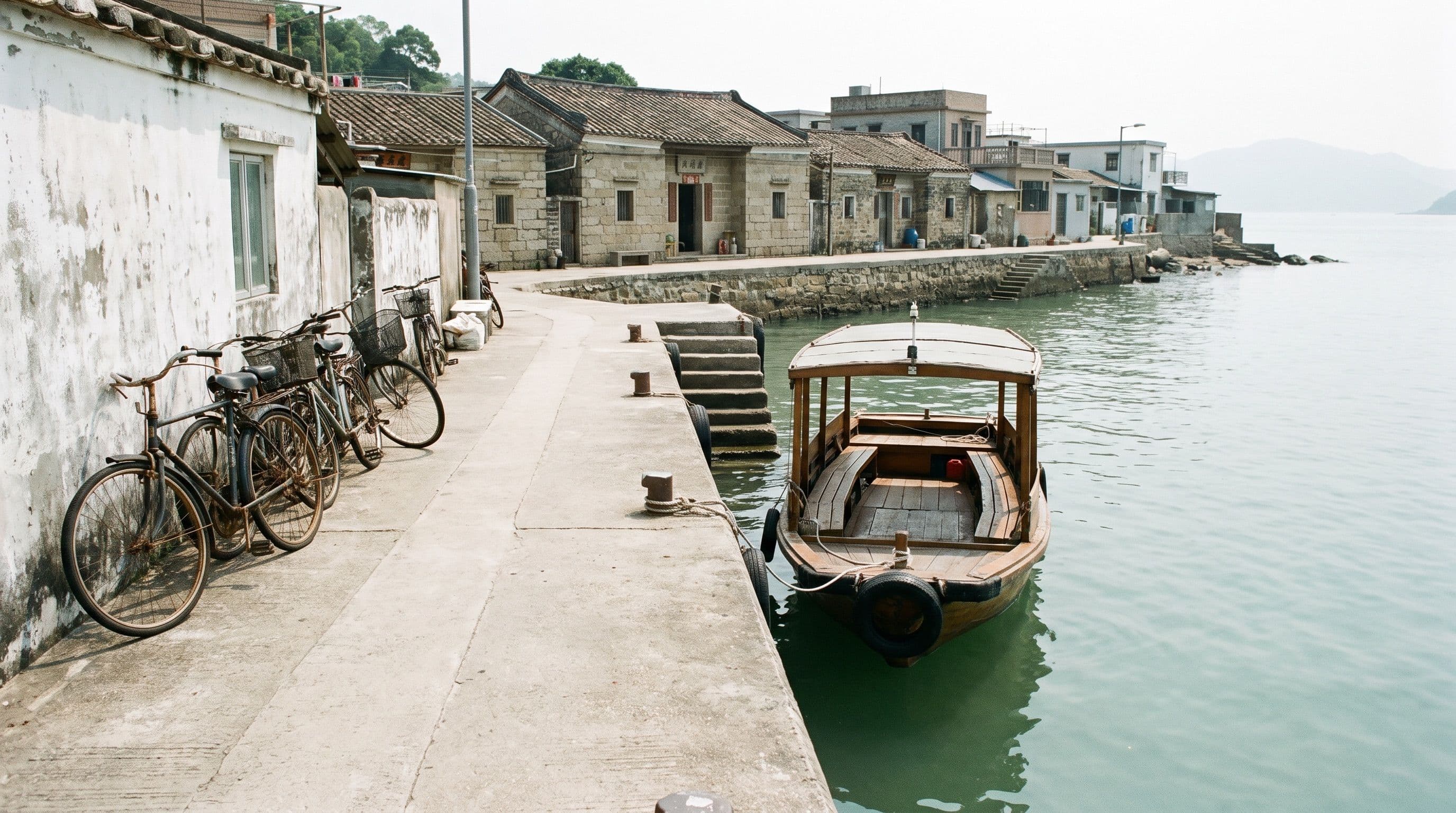
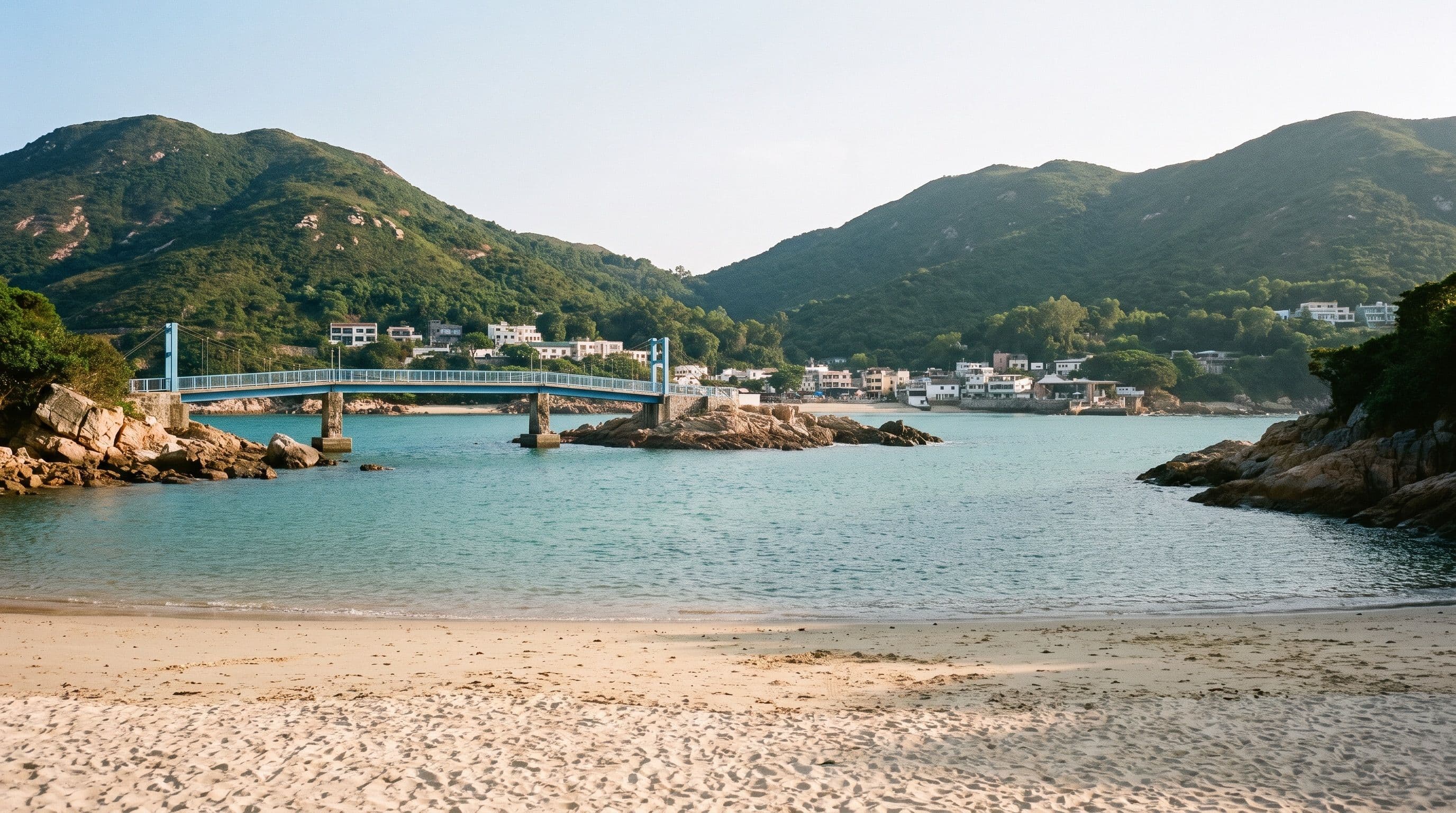
A Tap Mun grass island day trip is the one to pick if you want an outlying island without another day-tripper in sight. Tap Mun sits in the far northeast of the New Territories, in Tai Po District near Mirs Bay, and it's genuinely the hardest of Hong Kong's islands to reach: the ferry schedule is sparse, the crossing takes some planning, and that's exactly why it stays quiet. What's left on the ground is a grassy plateau, a scattering of feral cattle, and a fishing village that's down to around 100 residents from a peak of roughly 2,000 in the 1950s.
How to get to Tap Mun
Tsui Wah Ferry Service runs two kaito routes to Tap Mun, and they're not interchangeable, so pick the right one before you set out. The Wong Shek Pier route is the one most day-trippers use: take bus 94 from Sai Kung town to Wong Shek Pier (weekend and public-holiday services 96R and 289R also run there), then the kaito costs HK$11 on weekdays and HK$16 on weekends and public holidays. It's the frequent option, with 7 sailings each way on weekdays (from Tap Mun 7:45am to 6:00pm, from Wong Shek 8:30am to 6:30pm) and 12 each way on weekends (from Tap Mun 8:00am to 6:05pm, from Wong Shek 8:30am to 6:35pm).
The Ma Liu Shui Pier route is the one to avoid unless the timing genuinely suits you: it's a short walk from University MTR Station Exit B on the East Rail Line, but the kaito only runs twice a day on weekdays (8:30am and 3:00pm from Ma Liu Shui, returning from Tap Mun at 12:25pm and 6:45pm) with one extra midday sailing added on weekends. Miss the 3pm boat out and you're not getting to Tap Mun that day. Fares are higher too: HK$20 weekdays, HK$30 on weekends and public holidays. Either route takes cash or an Octopus card tapped at the pier or on boarding, so there's no need to queue for a paper ticket.
Whichever pier you leave from, write down your intended return sailing before you start walking. The Wong Shek boats are frequent enough to be forgiving; the Ma Liu Shui ones are not, and there's no taxi rank waiting to bail you out on a 1.69 sq km island.
What to do on Tap Mun
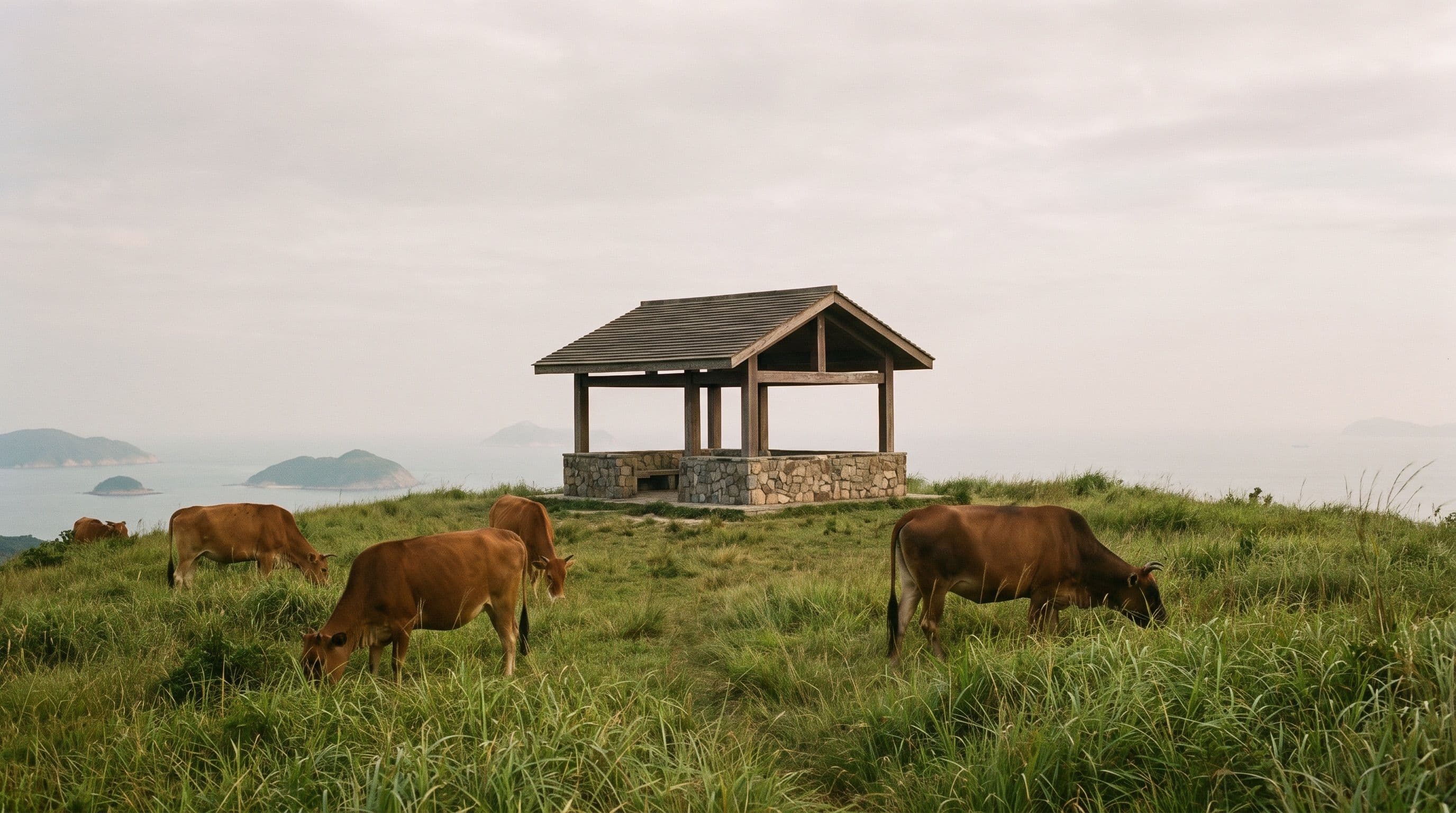
The cattle are the first thing you'll notice. They're feral, they wander the trails and the village lanes freely, and they've been there long enough that ignoring them is the local etiquette: don't feed them, and give them room on narrow paths. The grassy plateau above the village is the other reason people call this Grass Island, and the hilltop pavilion up there is the spot for it, a gazebo with panoramic coastal views that's popular with both day-hikers and the small crowd that comes out to camp and watch the stars.
Down in the village, Tin Hau Temple dates to 1737 and is a Grade II historic building, one of the older working shrines in this part of the New Territories. Down on the shoreline, Balanced Rock is the island's best-known landmark: two stacked boulders that locals have used as a navigation marker for generations, with a bit of legend attached to how the island got its name. Hoi Pong Street is the village's short commercial strip, dried seafood stalls, herbal tea stands and a handful of restaurants, and it's worth a slow walk in both directions since most of what there is to see on Tap Mun is within easy walking distance of the pier.
Where to eat on Tap Mun
Sun Yau Kee and Sun Wai Kee are the two go-to seafood restaurants on Hoi Pong Street, both built around what comes off the boats that morning. Sea-urchin fried rice and octopus balls are the dishes locals point tourists toward, with grass jelly dessert to finish. Neither place keeps late hours: this is an island that winds down as the afternoon ferries thin out, and shops and kitchens start closing as evening comes in, so don't leave lunch for the last boat back.
Is Tap Mun worth visiting?
Yes, if what you actually want is an island with almost nothing built on it. Tap Mun doesn't have Cheung Chau's bakery queues or a seafood-restaurant waterfront to browse for an hour; what it has is a plateau, cattle, one temple, one rock, and a village you can walk end to end before your return boat leaves. Budget a full morning to early afternoon: ferry over from Wong Shek, walk up to the pavilion, loop past Tin Hau Temple and Balanced Rock, eat on Hoi Pong Street, and time your ferry back with room to spare. A Sai Kung day trip pairs naturally with it, since Sai Kung town is where the Wong Shek-bound bus starts, and it's worth comparing Tap Mun against Hong Kong's other outlying islands on our ferry to the outlying islands guide before you commit to the trickiest one on the list.
Quick answers
How do I get to Tap Mun island? By kaito ferry, either from Wong Shek Pier (reached by bus 94 from Sai Kung, HK$11 weekdays/HK$16 weekends) or from Ma Liu Shui Pier near University MTR Station (HK$20 weekdays/HK$30 weekends, only 2 sailings a day).
Which ferry route should I take to Tap Mun? Wong Shek Pier, unless Ma Liu Shui's fixed 8:30am/3:00pm departure times happen to fit your schedule exactly. Wong Shek runs far more often and costs less.
Can I pay with an Octopus card on the Tap Mun ferry? Yes. Both the Wong Shek and Ma Liu Shui kaito routes take cash or Octopus at the pier or on boarding.
Are there really cows on Tap Mun? Yes, feral cattle roam the island's trails and village lanes. Don't feed them and give them space on narrow paths.
Is Tap Mun worth the trip? Yes, for a genuinely quiet, mostly undeveloped island, but it takes real planning around the ferry timetable, which is the main trade-off versus Cheung Chau or Lamma.