Is Central Market Hong Kong Worth Visiting?
Is Central Market Hong Kong Worth Visiting?
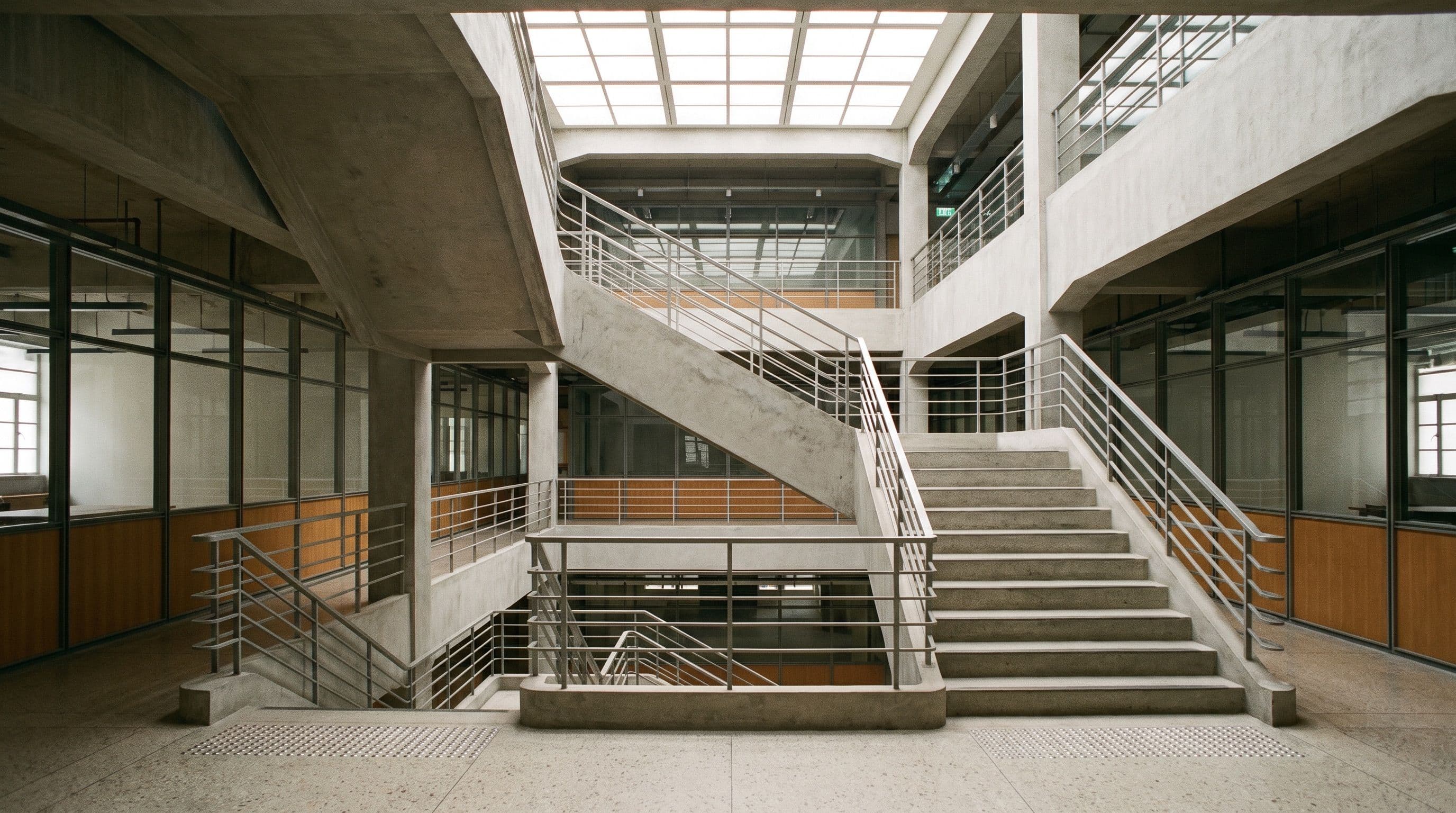
Yes, but only as a short stop, not a destination in its own right. I walked in expecting a market and walked out with a coffee and a photo of a staircase, which tells you most of what you need to know. Central Market isn't a market anymore in the way "Hong Kong market" usually means: no wet stalls, no haggling, no bargain hunting. It's a renovated 1939 Bauhaus building full of small retail kiosks, casual restaurants and a preserved central staircase, and it works best as a 30 to 45 minute break between the other heritage sites in the same few blocks.
What Central Market actually is now
The building at 93 Queen's Road Central and 80 Des Voeux Road Central started life as a food market on this site back in 1842, rebuilt more than once before the current structure went up between 1937 and 1938. It opened in May 1939 as a four-storey reinforced concrete market with around 200 booths, and it's one of only two Bauhaus-style market buildings left in Hong Kong. At its peak it was reportedly the biggest meat market in Southeast Asia. It closed to the public in March 2003 and sat mostly empty for 14 years before the Urban Renewal Authority spent 2017 to 2021 on a structural and heritage rehabilitation. It reopened on 23 August 2021, now run by Chinachem Group on a ten-year lease as a mix of shops, dining and event space. The building has been a Grade III historic building since 1996 and sits on the Central and Western Heritage Trail, and the revitalisation kept the original central staircase and structural bones visible, which is honestly the best reason to walk through even if you don't buy anything.
What's inside
Expect small kiosks and stalls more than sit-down restaurants: coffee counters, dessert stands, a few homeware and design shops, a Le Creuset outlet, ramen and mochi stalls, and rotating pop-up brand activations. It leans toward snacking and browsing rather than a proper meal or serious shopping. The open ground-floor space and public "Oasis" area run 08:00 to 22:00, while the shop floors are open 10:00 to 22:00 daily, and there's no entry fee anywhere in the building.
Should you actually visit?
Here's the honest split. If you came expecting a traditional wet market with fresh produce and fishmongers, you'll be disappointed. Some visitor reviews online make exactly that complaint: that it doesn't have the variety or the energy of a real market. That's a fair criticism if a "market" experience is what you're after. But judged as what it actually is, a renovated heritage building with a coffee break built in, it earns its spot on a Central walking route. The architecture is the actual draw for me: the exposed staircase, the original steel windows, and the way the building keeps its market bones under new paint. If you're the kind of traveller who reads the Big Buddha's dress code before you show up, this is that same instinct applied to a building instead of a temple.
Pair it with the rest of the heritage triangle
Central Market's own marketing groups itself with two other revitalised heritage sites within easy walking distance, and the pairing makes sense on the ground too. Tai Kwun, the former Central Police Station compound turned arts hub, is a short walk uphill, and PMQ, the old Police Married Quarters now packed with independent design studios, is a bit further up the same slope. If you want to walk between them the old-fashioned way rather than by taxi, the Central-Mid-Levels Escalator's lower section connects directly to Central Market via a dedicated flyover, so you can walk straight from the market onto the escalator without crossing a street, and ride it most of the way up toward both. Doing all three in one loop, market first since it's at the bottom of the hill, is a solid half-day without ever needing a taxi.
Getting there
Central Market sits right on top of Central MTR Station. Take Exit C and it's about a 3-minute walk, no real navigation required since you come up almost at the door. Buses 10, 101, 104, 37A and 90B also stop on Queen Victoria Street a minute's walk away if you're coming from elsewhere on the island. There's no dedicated visitor parking, so don't drive in.
Quick answers
Is central Hong Kong worth visiting? Yes. The Central district packs Victoria Harbour, the Peak Tram base, Central Market, Tai Kwun and PMQ into a compact, walkable area, so it's one of the most efficient parts of the city to sightsee without needing transit between stops.
What are the best markets to visit in Hong Kong? If you want an actual wet market with produce and fresh seafood, somewhere like the North Point street markets is closer to what you're picturing than Central Market, which today is a heritage food hall rather than a working market. Our guide to Hong Kong's best markets covers the ones that still function as real markets.
What to do at Central Market Hong Kong? Walk the preserved staircase and structural interior, grab coffee or a snack from one of the kiosks, browse the design and homeware stalls, and check what pop-up event or exhibition is running that week since the programming rotates often.
Is it worth visiting Central Market specifically, or should you skip it? Skip it only if you're tight on time and have to choose between it and Tai Kwun or PMQ, both of which have more to actually do. If you have the half-day for all three, or you're already walking past on the way up the escalator, it's worth the ten minutes.
Planning the rest of your trip? See our guide to Is Stanley Market in Hong Kong Worth Visiting? An Honest Answer.