PMQ Hong Kong: What It Is, How to Get There & Is It Worth a Visit
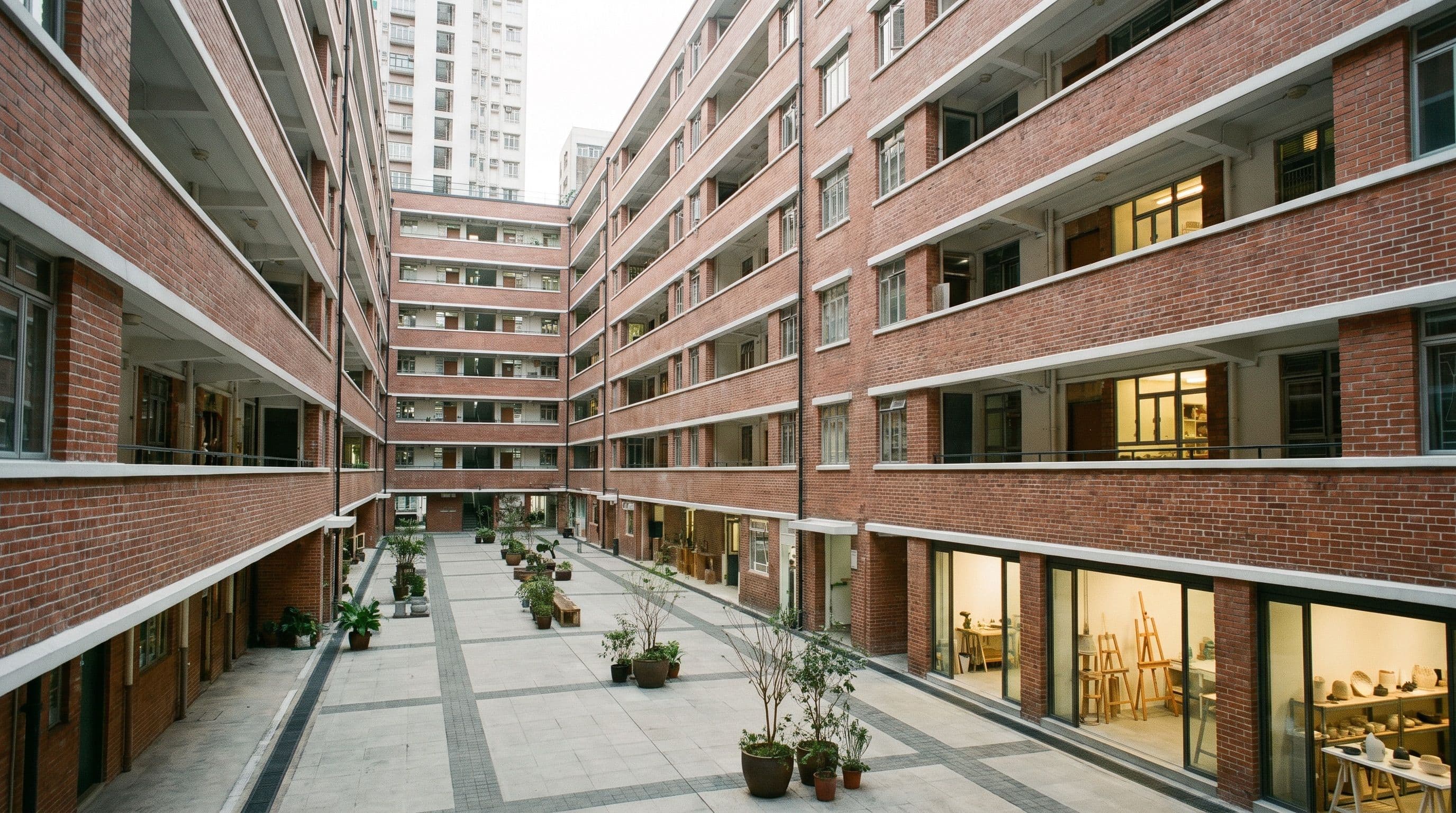
Short answer: yes, PMQ is worth visiting, especially if you like design, local makers or old Hong Kong buildings repurposed into something new. It's a free-to-enter former police residential block turned creative hub in Central, and it works as a 45-minute detour between meals or a half-day if you want to shop, eat and take a free heritage tour.
What PMQ actually is
PMQ sits at 35 Aberdeen Street in Central, on ground with a longer history than the building itself. The site was originally home to the Government Central School (later renamed Victoria College, then Queen's College in 1894), which was destroyed during the Japanese occupation and demolished in 1948. In 1951, the government rebuilt it as Hong Kong's first Police Married Quarters, with 140 single and 28 double units housing junior police officers and their families. The block was listed as a Grade III historic building in 2010, then closed for a HK$577 million revitalisation before reopening as PMQ in April 2014. Today the old residential units hold around 100 design studios, shops, galleries and bookstores across roughly 18,000 square metres, plus rotating pop-up exhibition spaces. You can still walk through a heritage tunnel that exposes the excavated foundations of the old Central School underneath.
Is it worth it? The honest verdict
For most visitors, yes, with a caveat. PMQ isn't a single "wow" sight the way the Peak or the Big Buddha is; it's a browsing destination, closer in spirit to Tai Kwun than to a viewpoint or a temple. If you like independent design, jewellery, homeware and small-batch goods you won't find in a mall, or you want a free look at a genuinely restored piece of colonial-era Hong Kong, it earns its spot on your itinerary. If browsing boutiques isn't your thing, you can skip it without missing much: there's no single exhibit or view that makes it a must. It's at its best on a weekend, when the open courtyard often runs pop-up markets and events on top of the regular shops, and it's a solid rainy-day option since most of the studios are indoors around the courtyard.
What to see and do
Wander the courtyard first to get your bearings, then work through the studio blocks. This isn't one big showroom; it's dozens of small independent spaces, so budget time to actually poke into a few rather than walking past. Worth seeking out: Bamboa Lifestyle for sustainable bamboo homeware, The Taste Library for a food-themed bookstore, The Little Finger for local jewellery design, and B'IN SELECT for curated lifestyle goods. If you want a hands-on souvenir, Oscary Art runs art-jamming sessions from around HK$200–250. For food, PMQ skews from casual to genuinely upscale: BKK does Thai street food for HK$50–150 a dish and Jessy Coffee covers all-day breakfast for HK$40–100, while Louise (Michelin-starred French) and ROUCOU (Japanese-French cheese omakase) run into the HK$1,000+ range for dinner or omakase, so book ahead for either. Don't skip the heritage tunnel: it's a free, low-key look at the excavated foundations of the old Central School, the site's original occupant before the police quarters were ever built.
Free heritage tours
PMQ runs two free tours if you want more than a wander. The Underground Interpretation Area is a 15-minute walk-in tour (no booking, capped at 30 people) through the excavated foundation remains of the old Central School. The longer PMQ Heritage Interpretation Tour is a guided 60-minute walk through seven historical spots on site, run daily in two slots, 2:00–3:00pm and 3:30–4:30pm; it's free but reservation-only, bookable from two months up to two weeks ahead, for groups of 4–20 people. It runs primarily in Cantonese, with English or Mandarin available if you arrange it in advance.
Getting there
The easiest route is MTR Sheung Wan Station, Exit E2: walk through Grand Millennium Plaza to Bonham Strand, cross at the zebra crossing, turn left onto Wellington Street, then right onto Aberdeen Street to reach PMQ, about 15 minutes on foot. From Central Station, take Exit C, head up Queen Victoria Street to the former Central Market, then ride the Central–Mid-Levels Escalator most of the way up before cutting over to PMQ. From Hong Kong Station (Airport Express), Exit E1 through IFC connects to the same elevated walkway and escalator route. Citybus route 26 stops nearby, and the Gilman Street or Jubilee Street tram stops are about a 10-minute walk. There's no dedicated visitor car park, so public transport is the easiest way in.
Hours, admission & how long to spend
Entry to PMQ itself is free: there's no ticket or gate. Studios and shops generally run 12:00pm–7:00pm (individual tenants vary), while cafés and restaurants run longer, roughly 9:00am–11:00pm. Budget 45 minutes to an hour for a quick loop of the courtyard and a few shops, or half a day if you're adding a sit-down meal, the art-jamming session, or one of the free heritage tours.
Quick answers
Is PMQ free to enter? Yes. There's no admission fee for the site itself; you only pay for what you buy, eat, or book (like an art-jamming session).
What are PMQ's opening hours? Studios and shops: generally 12:00pm–7:00pm, though individual tenants vary. Cafés and restaurants: roughly 9:00am–11:00pm.
What's the address and nearest MTR station? 35 Aberdeen Street, Central. The most direct route is MTR Sheung Wan Station, Exit E2, about a 15-minute walk.
What was PMQ before it was a creative hub? It was Hong Kong's first Police Married Quarters, built in 1951 on the former site of the Government Central School (later Queen's College). It was revitalised and reopened as PMQ in April 2014.
What else is nearby? The Central–Mid-Levels Escalator runs right past it, and Man Mo Temple is a short walk away, and both work well on the same Central heritage half-day. If you want more local design and market browsing after PMQ, Hong Kong's best markets are a natural next stop.
Planning the rest of your trip? See our guide to Lam Tsuen Wishing Trees: What They Are, How to Make a Wish & Getting There.