Is Kowloon Walled City Park Worth Visiting?
Is Kowloon Walled City Park worth visiting? Short answer: yes, if you're into history and don't mind that almost nothing of the actual Walled City is left. It's a free, manicured Chinese garden built on the site of what was once one of the most notorious, ungoverned slums on earth. If you're expecting to walk through the maze of makeshift towers and alleyways you've seen in photos, you won't find it. What you will find is a genuinely well-kept garden with a handful of real historical relics and a story worth knowing before you go.
What was actually here before the park
The site started as a small Chinese fort and maritime watch station. After the British took control of Hong Kong, the walled enclave was technically excluded from the handover treaty, so colonial authorities mostly left it alone. That gap in governance is what turned it into what it became: by the 1950s, the fort had grown into a dense maze of unlicensed towers packed with impoverished families living alongside drug dealers, gangs and fugitives, all crammed into about six acres. Former residents have described the alleyways as so tightly packed you could go days without seeing sunlight.
The British colonial government relocated the roughly 30,000 residents in 1993 and tore the structures down by 1994. The park opened on the site in 1995, designed as a Jiangnan-style Chinese garden rather than any kind of memorial to what stood there.
What's actually left to see
Almost none of the original Walled City survives, but the park keeps a handful of real pieces of it rather than pretending they never existed:
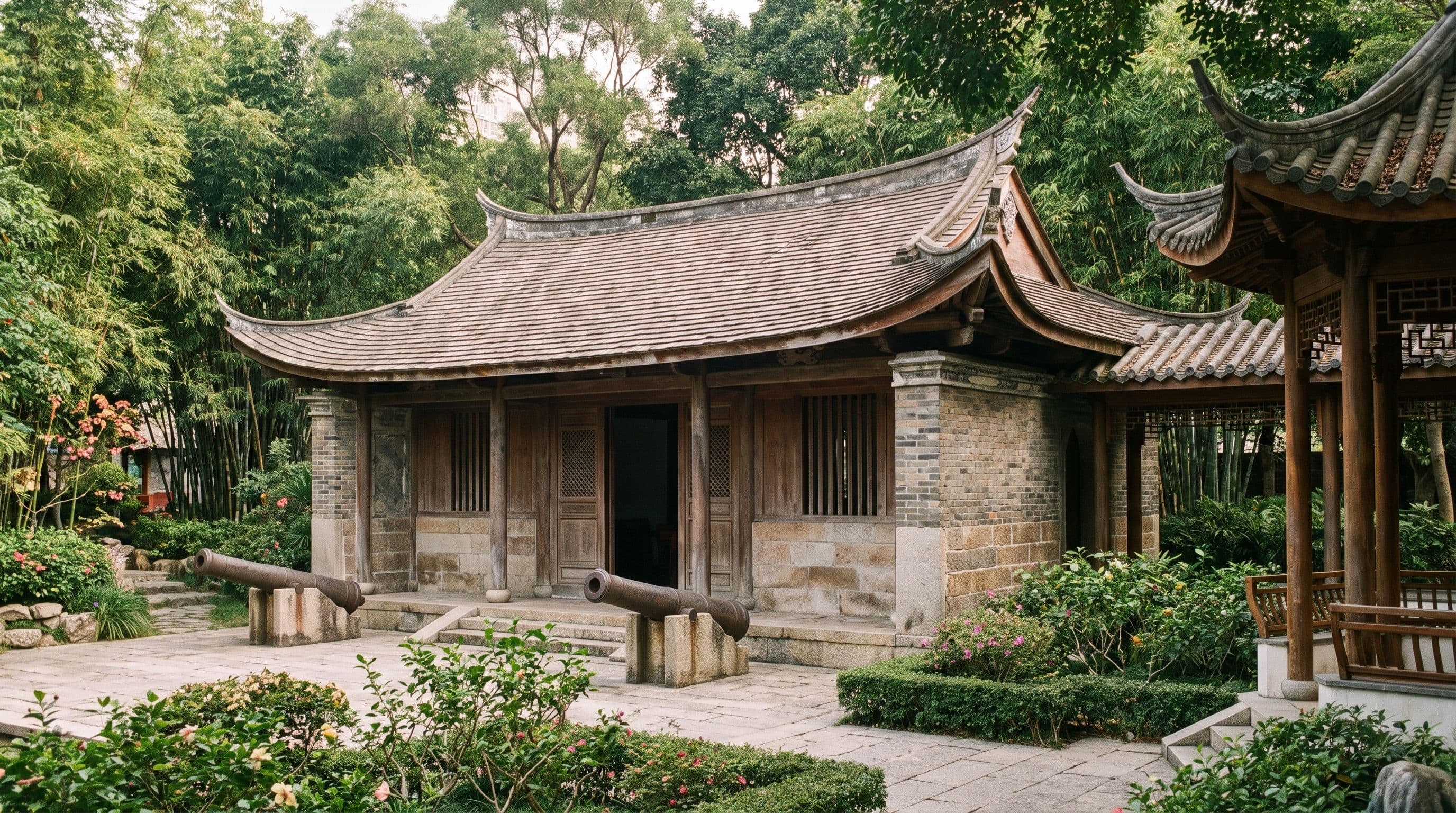
- The Yamen. The only original building still standing. It's a Qing-era administrative building in southern Chinese style, built from brick and granite with a traditional Chinese fir roof. Two cannons from 1802 sit out front, and inside are stone tablets, records and photographs of the Walled City's history.
- A City of Thousand Faces. A permanent exhibit that opened in 2009, with a bronze miniature model of the entire Walled City and a cross-section model showing what the packed interior looked like before demolition.
- The Old South Gate. The Walled City's original main entrance for over a century. When crews demolished the site in 1994, they uncovered granite plaques, paving stones, foundations and a drainage ditch here, and left them in place for viewing rather than clearing them.
- The gardens. Eight named Floral Walks, a Garden of Chinese Zodiac with 12 stone animal sculptures, ponds with turtles, and the Six Arts Terrace, still used today for traditional Chinese wedding ceremonies.
If you came hoping for six acres of crumbling towers, this will feel like a bait and switch. If you came for the history and don't mind that it's told through plaques and models rather than the real thing, it delivers.
How to get there, hours and admission
Take the MTR to Sung Wong Toi station and leave via Exit B3, then walk down Nam Kok Road. The park entrance is a few minutes on foot from there. Buses and green minibuses also serve the area if you're coming from elsewhere in Kowloon.
The park itself is open daily from 6:30am to 11pm. The exhibition room inside the Yamen keeps shorter hours: 10am to 6pm daily, closed on Wednesdays. Both the park and the exhibition room are free to enter; there's no admission fee anywhere on site.
Guided group tours run at set times on weekends if you want more context than the plaques give you; call ahead if you specifically want an English-speaking guide, since it isn't guaranteed on every tour.
How much time to set aside
This isn't a half-day attraction. Most visitors are through the gardens, the Yamen and the Old South Gate remnants inside 45 minutes to an hour, longer if you read every plaque or catch a guided tour. It works best as one stop on a wider Kowloon City day rather than a destination in itself: pair it with a walk around the surrounding neighbourhood rather than treating it as the whole outing.
Locals treat it as a normal city park day to day, doing tai chi, walking pet birds, or just sitting on the benches, which is honestly part of what makes it worth seeing. It's one of the few places in Hong Kong where you can stand in a quiet, ordinary garden and know exactly how loud and chaotic the same six acres used to be.
Pair it with other free, history-first stops
Kowloon Walled City Park fits a pattern of Hong Kong attractions that are genuinely worth visiting despite earning nothing on a ticket, so it pairs naturally with the rest of that list. If you liked the quiet-garden-over-loud-history trade, our guide to whether the Ten Thousand Buddhas Monastery is worth the climb covers a similar free, history-heavy detour on the Kowloon side. For a nature-first change of pace on the same no-admission-fee logic, see our take on whether Hong Kong Wetland Park is worth the trip. And if you want a ticketed theme park to balance a free-attraction day, we've broken down whether Ocean Park is worth the ticket price.
Quick answers
Is Kowloon Walled City Park worth visiting? Yes, if you're interested in the history. It's free, well-kept, and keeps real relics like the Yamen and the Old South Gate remains. It's not worth a special trip if you want to see the actual former Walled City, since almost nothing of it remains.
What happened to Kowloon Walled City Park? It's the site of the former Kowloon Walled City, an ungoverned enclave that grew into a dense slum after WWII. The British relocated its roughly 30,000 residents in 1993, demolished the structures by 1994, and opened the current Chinese garden park in 1995.
Is Kowloon Walled City Park free? Yes. Both the park and the exhibition room inside the Yamen are free to enter.
Are there guided tours at Kowloon Walled City Park? Yes, guided group tours run at set times on weekends. Call ahead if you specifically want an English-speaking guide, since it's not guaranteed on every tour slot.
Planning the rest of your trip? See our guide to Is Repulse Bay Worth Visiting?.
Planning the rest of your trip? See our guide to Is Hong Kong Park worth visiting?.