Is Man Mo Temple Worth Visiting?
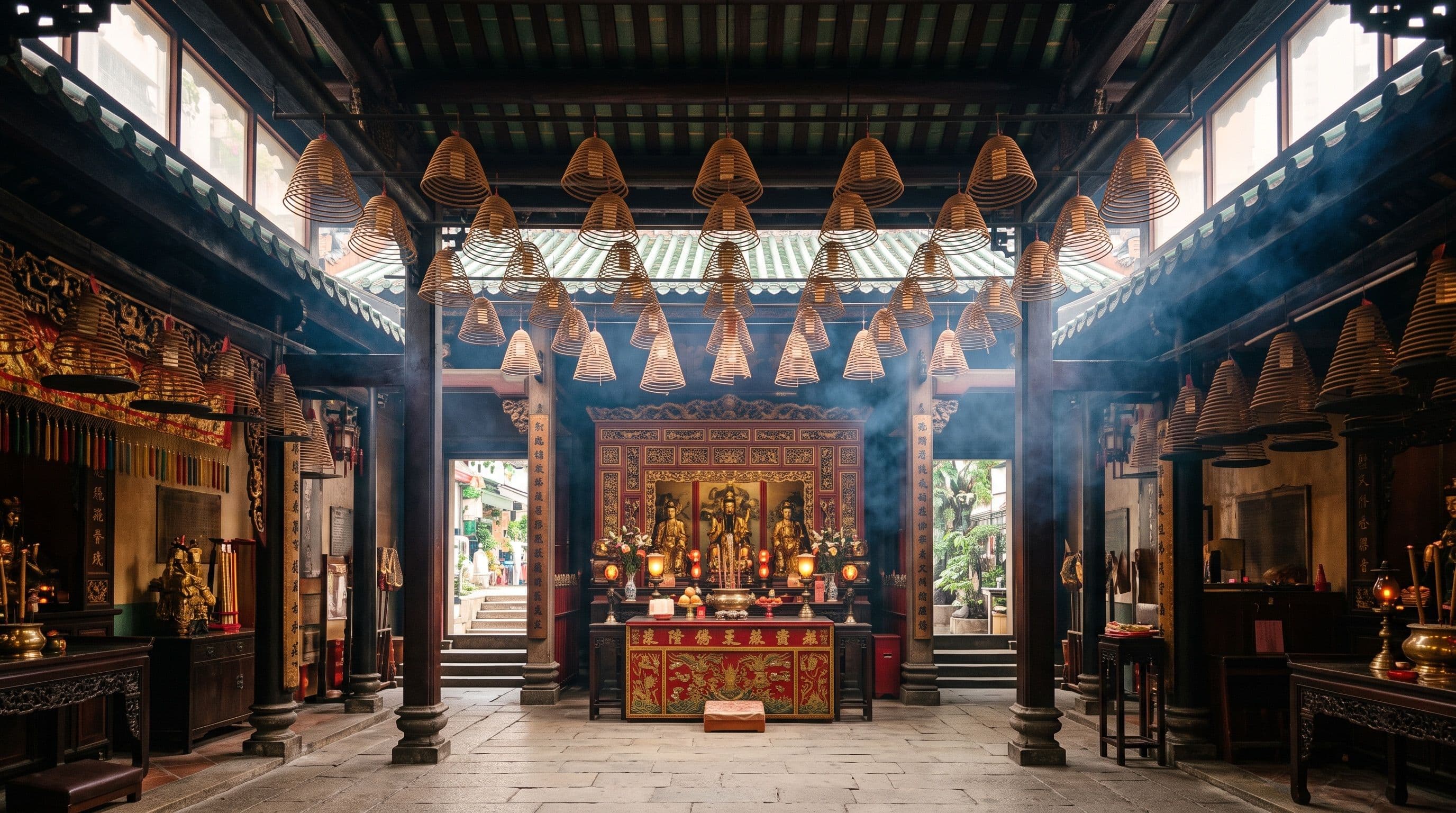
Is Man Mo Temple worth visiting? Yes, and it's one of the few Hong Kong attractions you can genuinely fit into a spare 20 minutes. It's free, it's a short uphill walk from Sheung Wan MTR, and it delivers one of the most photogenic interiors in the city: dozens of spiral incense coils hanging from the ceiling, thick with smoke, over a temple that's been standing on Hollywood Road since the 1800s. It's not a half-day attraction on its own, but paired with the antique shops around it, it easily earns its spot on a Sheung Wan afternoon.
What Man Mo Temple is (and why it's famous)
Man Mo Temple was built between 1847 and 1862, funded by wealthy Chinese merchants serving Hong Kong's growing Cantonese immigrant community in the early colonial period. It's now a Grade I historic building and one of the oldest temples on Hong Kong Island. The complex is actually three connected buildings: Man Mo Temple itself, Lit Shing Kung (a shrine to a large group of other deities), and Kung Sor, a former assembly hall once used to settle community disputes, now home to a small ancestral hall and souvenir counter.
The name comes from the two gods it's dedicated to: Man Cheong, the God of Literature, and Mo Tai (also known as Kwan Tai), the God of War. Scholars once prayed to Man Cheong before exams; the pairing with a martial god reflects the two things Cantonese communities valued most, academic success and physical strength. The temple still holds a bronze bell cast in 1847 and a sedan chair from 1862 among its relics.
How to get there, hours and entrance fee
Man Mo Temple sits at 124-126 Hollywood Road in Sheung Wan. Take the MTR Island Line to Sheung Wan Station, leave via Exit A2, and walk roughly 8 to 10 minutes uphill along Hollywood Road. It's also a stop on the Big Bus Hong Kong hop-on-hop-off route, so if you've already got a pass, this is an easy one to fold in without extra planning.
It's open daily from 8am to 6pm and admission is free. There's no ticket and no booking required at any point.
What to see inside
The first thing you'll notice is the incense: large spiral coils, each one a multi-day offering, hang from the ceiling in tight rows, and the whole main hall stays hazy with smoke. Past the entrance you'll find the two main altars, along with the temple's older relics on display, and in Lit Shing Kung, shrines to dozens of guardian gods beyond just Man Cheong and Mo Tai. It's a working temple, not a museum, so you'll see locals lighting incense and praying alongside the tourists taking photos.
If you want to take part rather than just look, incense is available for free near the entrance, or you can pay around HK$20 for a premium bundle. The custom is to light three sticks, hold them up to your forehead while you bow three times, then place them in the urns outside the main hall.
How much time to set aside
Realistically, 20 to 30 minutes covers the temple itself unless you're waiting out a queue for photos. It's small enough that lingering much longer means re-walking the same few rooms. The better plan is to treat it as one stop on a Hollywood Road afternoon: the antique shops and curio stalls run in both directions from the temple entrance, and Cat Street Market, a few minutes further along, is worth the extra half hour if you like browsing vintage odds and ends. Avoid visiting around Chinese New Year or the temple's main deity birthdays, when it gets considerably more crowded than a normal afternoon.
Pair it with the rest of Sheung Wan
Man Mo Temple works best as an anchor for a wider walk rather than a destination on its own, and Sheung Wan and the neighbouring Mid-Levels give you plenty to add to it. If you're heading up the hill anyway, our guide to the Central-Mid-Levels Escalator covers the world's longest outdoor covered escalator system, which starts nearby and climbs straight through the neighbourhood. Already have a Big Bus ticket for the day? Check our breakdown of whether the Big Bus hop-on-hop-off tour is worth it before you commit to a full loop. And if temples are your thing, we've also covered what to know before visiting Wong Tai Sin Temple on the Kowloon side, a louder, busier contrast to Man Mo's smaller scale.
Quick answers
How long should you spend at Man Mo Temple? About 20 to 30 minutes for the temple itself. It's small, so most visitors pair it with a longer walk around Hollywood Road and Cat Street Market.
What is Man Mo Temple famous for? Its spiral incense coils hanging from the ceiling, its history dating to 1847-1862, and being dedicated to the God of Literature and the God of War side by side.
Is Man Mo Temple free? Yes. Admission is free every day, with only a voluntary donation box and optional paid incense (around HK$20) if you want to take part in the rituals.
Is Man Mo Temple worth visiting? Yes, especially if you're already near Hollywood Road or Sheung Wan. It's free, quick to see, and one of the most visually striking interiors in Hong Kong, though it's not worth a special trip on its own if you're not already in the area.
Planning the rest of your trip? See our guide to Is the Hong Kong Zoological and Botanical Gardens Worth Visiting?.