Wong Tai Sin Temple, Hong Kong: What to Know Before You Visit
Wong Tai Sin Temple is the one Hong Kong sight where you'll stand next to someone shaking a cylinder of bamboo sticks, muttering a wish, and genuinely meaning it. It's a working Taoist shrine in north Kowloon, not a museum piece, and that's exactly what makes it worth the detour. Here's what to actually know before you go: how to get there, what it costs, and how the fortune-telling works.
What Wong Tai Sin Temple is (and why it's famous)
The temple traces back to 1915, when a Taoist named Leung Yan-am set up an altar to Wong Tai Sin, "the Great Immortal Wong," in Wan Chai. After his shop burned down in 1918, he took it as a sign to build a permanent shrine, and the current complex at Chuk Yuen Village, on the southern slope of Lion Rock, was completed in 1921. It stayed a private altar for decades and only opened fully to the public in 1956.
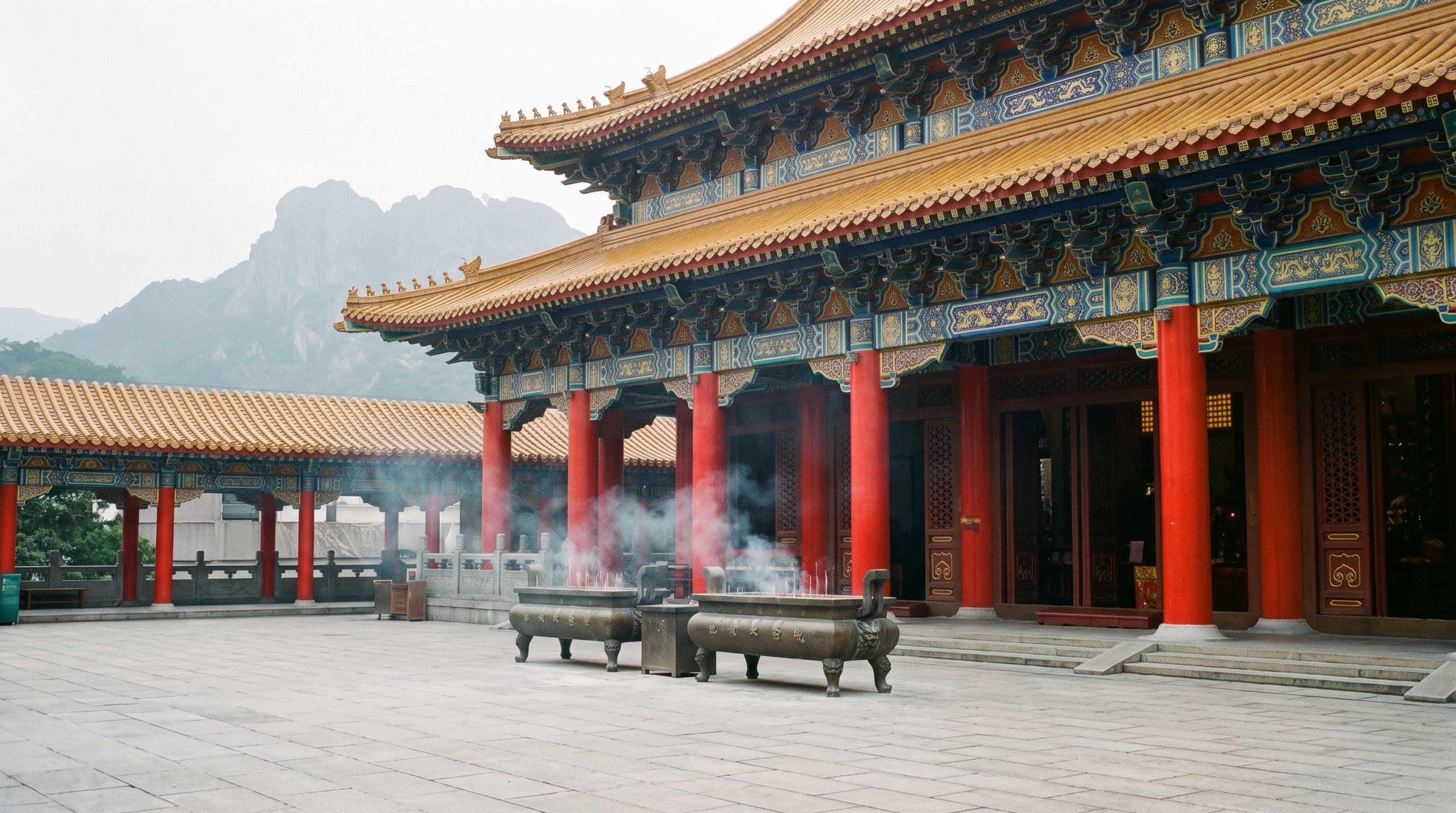
What sets it apart from Hong Kong's other temples is that it deliberately blends three traditions at once: Confucianism, Taoism and Buddhism, rather than sticking to one. The Three-Saint Hall alone honours Lü Dongbin, Guan Yin and Lord Guan side by side. Add the red-pillared main hall, the gold roof with blue friezes and yellow latticework, and a Nine-Dragon Wall modelled on one of Beijing's, and it's easy to see why this is the temple most first-time visitors are pointed toward.
How to get to Wong Tai Sin Temple
This is one of the easiest attractions in Hong Kong to reach, which is part of why it's such a popular half-day add-on. Take the MTR Kwun Tong Line to Wong Tai Sin station and leave via Exit B2 or B3: B3 is signposted directly for the temple and Temple Mall North. From either exit it's a 2 to 3 minute walk and you genuinely can't miss the entrance.
Opening hours and entrance fee
The main temple is free to enter and opens daily from around 7am to roughly 5pm (a few sources list slightly different closing times, from 4:30pm to 5:30pm, so don't plan on cutting it fine: aim to arrive by mid-afternoon). Inside the grounds there's also a separate underground worship hall with its own paid admission for a more elaborate ritual; the main temple experience, incense and all, costs nothing.
What to see inside
Beyond the main hall and the Nine-Dragon Wall, the grounds reward slowing down. The Confucian Hall and Yue Heung Shrine sit alongside carved stone friezes and courtyards thick with incense smoke, especially in the early morning when devotees come to pray before work. It's a working place of worship first, so treat it with the same quiet respect you'd give any active shrine. This isn't a photo backdrop, even though it often ends up in everyone's Hong Kong album.
How kau cim fortune-telling works
This is the temple's signature ritual and the reason so many visitors linger. You light incense, kneel before the main altar, silently make a wish or ask a question, then shake a cylindrical bamboo container of numbered sticks, called kau cim, until exactly one falls out. That number corresponds to a printed fortune slip, which you take to one of the fortune-tellers working in the stalls around and behind the temple for an interpretation. Many of them also read palms and faces. Prices vary by fortune-teller and how much detail you want, so ask what's included before you sit down.
Dress code and etiquette
There's no strict enforced dress code, but this is an active place of worship, not a tourist attraction dressed up as one. Cover shoulders and knees as a courtesy, keep your voice down near the main altar, and ask before photographing anyone who's actively praying. Locals visit to ask for real things: health, luck, a way through a hard year, and the etiquette follows from taking that seriously.
Pair it with Chi Lin Nunnery
Wong Tai Sin sits one MTR stop from Diamond Hill, home to Chi Lin Nunnery and Nan Lian Garden, a wooden Buddhist nunnery complex built without a single nail, free to enter daily from around 9am to 4:30pm. The two make a natural half-day pairing: one loud, incense-thick and Taoist, the other quiet and Buddhist, and both within easy walking distance of their own MTR exits.
Make it a full Hong Kong day
Wong Tai Sin works well as the cultural anchor of a mixed day rather than the whole day itself. If you're chasing more of Hong Kong's spiritual side, Lantau Island's Ngong Ping 360 cable car up to the Big Buddha is the obvious next stop, just a longer transit hop away. Travelling with kids and want to balance the temple's quiet with something livelier, the theme-park side of the city has you covered: see our guides to Hong Kong Disneyland's best rides and whether Ocean Park is worth the ticket price. And if you'd rather close the day on the water, a sunset sail on the Aqua Luna red-sail junk across Victoria Harbour is a fitting contrast to a morning spent shaking fortune sticks.
Quick answers
What is Wong Tai Sin Temple famous for? Its kau cim fortune-telling ritual and its blend of Confucian, Taoist and Buddhist worship under one roof, plus the Nine-Dragon Wall and gold-roofed main hall.
How do you pray at Wong Tai Sin Temple? Light incense at the burners near the entrance, approach the main altar, kneel, and make your wish silently before shaking the kau cim sticks if you want a fortune reading.
Is there a dress code for Wong Tai Sin Temple? No fixed rule is enforced, but covering shoulders and knees is the respectful standard for an active place of worship.
What is the most famous temple in Hong Kong? Wong Tai Sin Temple is generally considered it: the busiest and best-known, thanks to its central Kowloon location and its fortune-telling tradition.
Planning the rest of your trip? See our guide to Chi Lin Nunnery & Nan Lian Garden: What to Know Before You Visit.