Is the Big Buddha in Hong Kong Worth It? An Honest Take
Is the Big Buddha in Hong Kong worth it? Short answer: yes, for most first-time visitors it is, as long as you go in decent weather and treat it as a half-day trip rather than a quick photo stop. The statue itself is genuinely impressive, and the ride out to it is half the reward. But it is not a hidden secret, it can get crowded, and the cable car is the real cost. Here is an honest look at what you actually get, so you can decide before you commit half a day to it.
What you're actually going to see
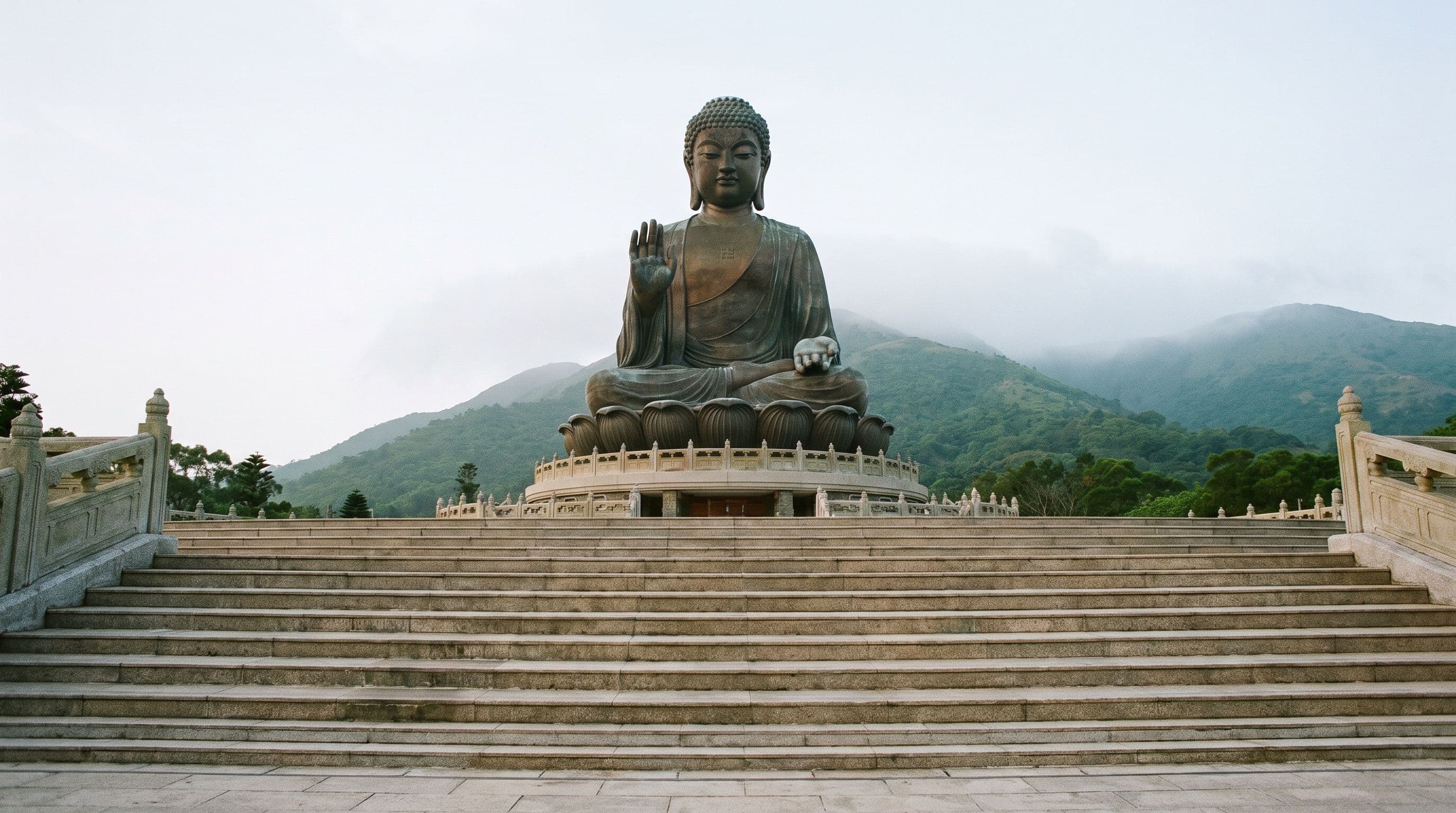
The Big Buddha, properly called the Tian Tan Buddha, is a seated bronze statue of Buddha Shakyamuni on the Ngong Ping plateau of Lantau Island. It stands 26.4 metres tall (about 34 metres including the altar base it sits on) and weighs roughly 250 tonnes, which makes it one of the largest outdoor seated bronze Buddhas in the world. It was completed and opened to visitors in 1993, and it sits around 482 metres above sea level, so on a clear day the views off the platform stretch across the island and out to sea.
Up close it is bigger than photos suggest. The Buddha faces north, one hand raised in a gesture of reassurance, and six smaller bronze figures known as the Offering of the Six Devas kneel around the base. It is part of the working Po Lin Monastery just across from it, so this is a religious site, not a theme park, and it rewards a slower, quieter visit than most Hong Kong attractions.
Getting there: is the cable car worth it?
You reach the Buddha in two stages. First get to Tung Chung, about 35 to 45 minutes from Central or Kowloon on the MTR Tung Chung Line (it is also only a short hop from the airport, which makes this a solid layover option). From Tung Chung you have a choice, and it is the choice that decides how good your day is. Our full guide on how to get to the Big Buddha covers the exact routes and current fares.
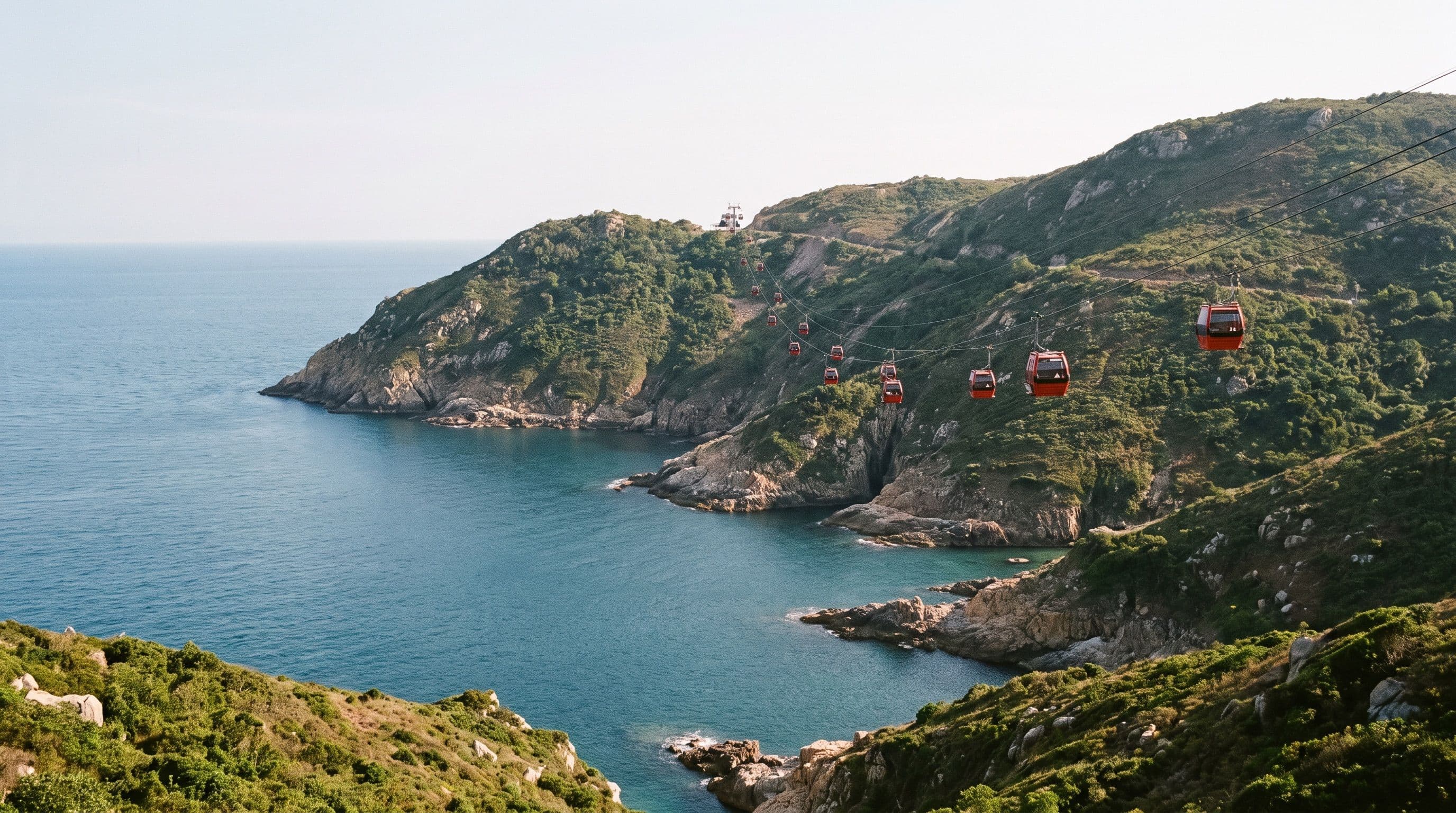
The scenic option is the Ngong Ping 360 cable car, a 25-minute, 5.7-kilometre glide over green hills and Tung Chung Bay. It is the single most memorable part of the trip for a lot of people, and if your budget stretches to it, take it at least one way. The trade-off is price and queues: a round-trip ticket is comfortably the biggest expense of the day, and the line can be long on weekends and holidays. Booking ahead lets you skip the main queue, and our Ngong Ping 360 ticket guide breaks down the cabin types. The budget alternative is the much cheaper local bus from Tung Chung, which gives you the winding mountain road instead of the aerial view. Either way, you just tap on and off with your Octopus card.
The 268 steps
From Ngong Ping Village it is about a 10-minute walk to the foot of the statue, and then 268 steps up to the platform. There are no escalators (the climb is meant to be part of the experience), so on a hot, humid Hong Kong afternoon it is a real effort. Take your time, stop for photos on the way up, and carry water. If the climb is a genuine problem, the Buddha is still striking from the base, and there is step-free access on request.
Beyond the Buddha
The statue is the headline, but the reason a visit fills half a day is everything around it. Po Lin Monastery sits directly across, free to enter, with an incense-filled forecourt and three golden Buddhas inside the main hall. Behind it, the Wisdom Path is a quiet loop of wooden columns inscribed with the Heart Sutra, and it is routinely overlooked. If you have the time and legs for it, the fishing village of Tai O is a short bus ride further on. Treat the Buddha as the anchor of a Lantau day, not the whole day, and it is far better value.
What it costs and how long to stay
Here is the part that surprises people: seeing the Big Buddha is free. You pay nothing to climb the steps, stand on the platform, or walk through Po Lin Monastery. The only ticketed part is the small exhibition hall inside the podium (around HK$78, which includes a voucher for the monastery's vegetarian restaurant), and that is optional. Your real spend is transport, and mostly the cable car. Plan on a minimum of about four hours door to door from the city, and closer to a full day if you add Tai O.
Quick answers
Is it worth visiting the Big Buddha in Hong Kong? For most first-timers, yes, especially in clear weather and as part of a Lantau day trip. The statue is genuinely impressive and the cable car ride is a highlight. It is less essential if you are short on time or the forecast is foggy, since low cloud can wipe out the views entirely.
How long do I need at the Big Buddha? Around two to three hours on site to enjoy the statue, monastery and Wisdom Path without rushing, or roughly four hours including travel from the city. Add Tai O and it becomes a full day.
Is there a dress code for the Big Buddha? It is a religious site, so cover your shoulders and knees, particularly inside the monastery. We cover this in full in our Big Buddha dress code guide.
Do you need to pay to see the Big Buddha? No. The statue and Po Lin Monastery are free. You only pay to get there (the cable car or bus) and, if you want, for the optional exhibition hall inside the base.
So, is the Big Buddha worth it?
Yes, with two honest caveats: go on a clear day, and build the trip around the cable car and the wider Lantau area rather than treating the statue as a 20-minute tick-box. Do that and it is one of the more rewarding half-days in Hong Kong. Book the cable car ahead to skip the worst of the queue and you have removed the main thing people grumble about.
Planning the rest of your trip? See our guide to Is the Big Bus Hong Kong Tour Worth It? An Honest Hop-On Hop-Off Review.