Things to Do in Sham Shui Po: Street Food, Apliu Street and a Half-Day Old Kowloon Walk
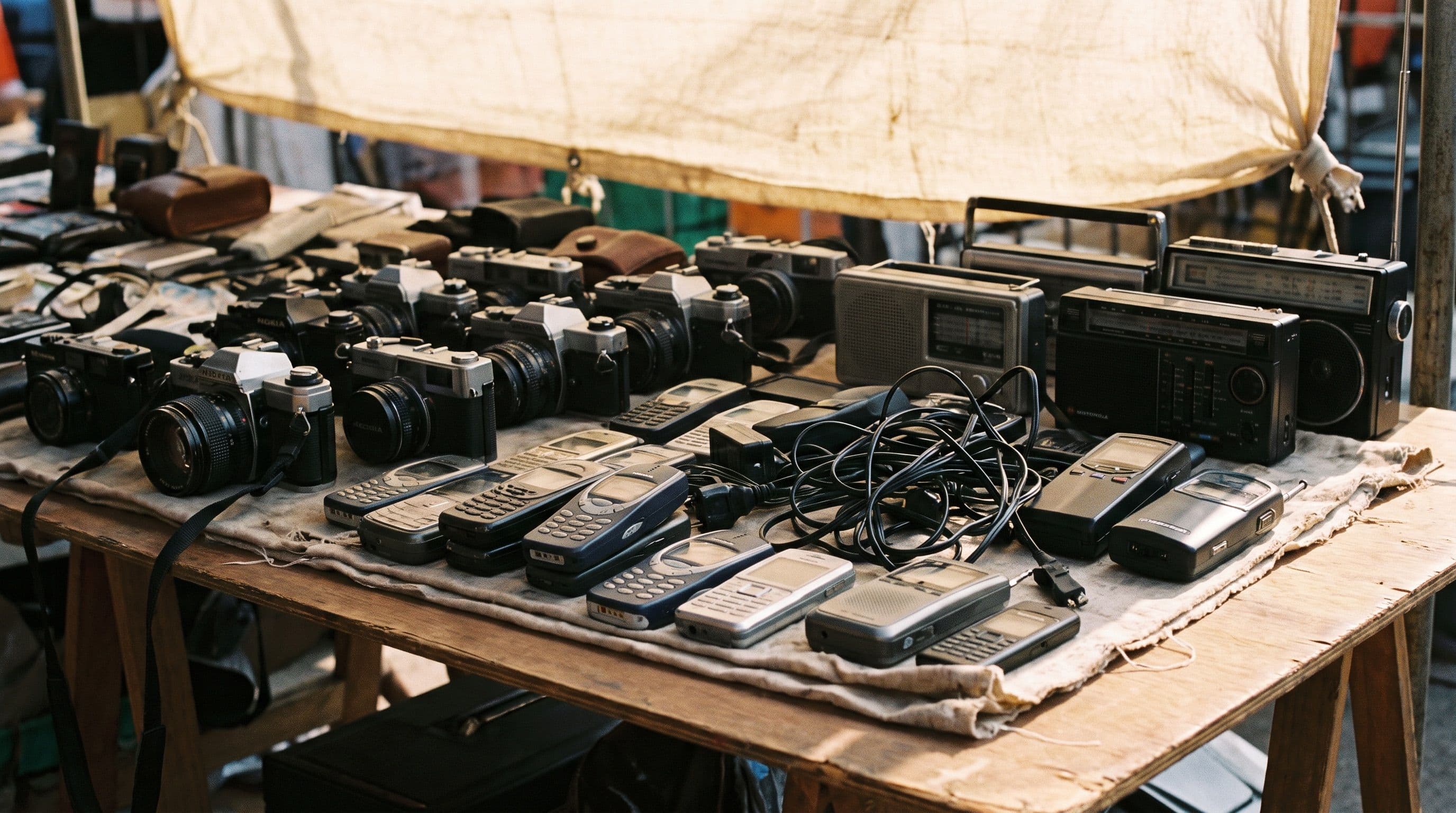
Most of the Sham Shui Po things to do worth your time cost almost nothing: a street of secondhand electronics, a street of toys, three streets of buttons, ribbons and beads, and some of the cheapest food in the MICHELIN Guide. This corner of northwest Kowloon was built on textiles, garments and hardware, and by the early 1980s it was the most densely populated district in Hong Kong. The factories have gone north, but the trade streets are still there. Here is what to see, what to eat, and how to walk it in half a day.
The short version
- Station: Sham Shui Po MTR, on the Tsuen Wan line, one stop from Prince Edward. Prince Edward is about 10 minutes on foot from the Tai Nan Street end.
- Best time: late morning to early evening, when the stalls and shops are open.
- How long: half a day covers the streets below with two food stops.
- Cost: free to walk. The noodle and rice roll shops below are in the MICHELIN Guide's cheapest price band.
- Bring cash. Two of the best food stops are cash only.
Apliu Street and the gadget streets
Apliu Street is the reason most visitors come. Its stalls and permanent booths sell electronics of every age: phone accessories, chargers, cables, old film and digital cameras, radios, speakers and vintage appliances. A lot of it is secondhand, which is where the low prices come from. The market runs along Apliu Street between Yen Chow Street and Nam Cheong Street. The retro digital camera trend has made it a stop for anyone hunting an early-2000s compact. Test anything before you pay.
Nearby, Fuk Wa Street has computer stores, tech accessory shops and video game sellers, and Golden Computer Arcade is the indoor version for consoles, games and hardware. Its corridors are narrow, and one guide found them packed at 8pm on a Sunday.
Toy Street (Fuk Wing Street)
Ask anyone for Toy Street and they will point you to Fuk Wing Street. The MICHELIN Guide counts more than 30 toy shops along it, with stock spilling onto the pavement: model kits, board games, building blocks, party supplies and cheap stationery. The toy section sits between Pei Ho Street and Nam Cheong Street, a short walk from the MTR.
Come close to Chinese New Year, Mid-Autumn or Christmas and the whole street is hung with festive decorations. It is also, usefully, where two of the food stops below are.
The fabric, button and leather streets
Sham Shui Po was the centre of Hong Kong's textile trade, and the craft-supply streets are what is left of it. Each has a nickname from what it sells:
- Ki Lung Street (Button Street): buttons, fabric and fashion accessories, plus a few leatherwork shops.
- Nam Cheong Street (Ribbon Street): ribbons, trims and market stalls.
- Yu Chau Street (Bead Street): beads and sewing supplies, sold in small quantities to walk-in customers.
- Tai Nan Street (Leather Street): once a hub for leather tanneries, now a mix of old leather suppliers, DIY leather workshops, design shops and places to eat.
Luen Cheong Leather on Tai Nan Street was established in 1948, and some of the newer leather shops sell DIY kits and run classes. If you want a souvenir you made yourself, this is the street to ask around on.
Old Kowloon buildings worth a look
In a city that demolishes old buildings readily, Sham Shui Po has kept a few. Three are easy to fit into a walk:
- 170 Yee Kuk Street: a photogenic traditional tenement building, listed by the Tourism Board.
- Nam Cheong Pawn Shop, 117 Nam Cheong Street: a Grade III listed pawnshop building that still has its saloon doors and the classic pawnshop sign of a bat holding a coin.
- 58 Pei Ho Street: a Grade II listed three-storey tenement that was originally the Cheng Fung Pawn Shop. In recent years it has housed a Chinese herb shop, Dai Kam Lung, with herbs in sacks and glass jars.
If old streets are what you came for, our self-guided walking tour of Central is the Hong Kong Island counterpart to this walk.
What to eat in Sham Shui Po
This is the other reason to come, and it is cheap. All five of these are in the MICHELIN Guide:
- Lau Sum Kee (Fuk Wing Street): wonton noodles since 1956. The third generation of the family still kneads the dough with a bamboo pole for springier noodles, and the wontons use whole prawns. Open 12:00 to 22:00 daily. Cash only.
- Hop Yik Tai, 121 Kweilin Street: the rice roll shop. Order the cheung fun with soy, sesame, sweet and chilli sauces and sesame seeds, and eat it from the plate in the alley like everyone else. Cash only.
- Kung Wo Beancurd Factory, 118 Pei Ho Street: making its own tofu since 1893. Get the tofu pudding, and the pan-fried stuffed tofu if you are still hungry.
- Tim Ho Wan, 9-11 Fuk Wing Street: one of the dim sum chain's early branches, with more than 20 items, all made in-house. The baked barbecue pork buns are the order.
- Man Kee Cart Noodles, 121 Fuk Wing Street: cart noodles where you choose your own toppings from a long list, with a house-made chilli sauce.
For a cha chaan teng stop, the Tourism Board points to Gold Garden Cafe at 314 Castle Peak Road (technically Cheung Sha Wan) for egg tarts, milk tea and satay beef noodles, and Hing Fat Noodle House for pork chop noodles.
A half-day Sham Shui Po walk
The district is a compact grid, so you can do it in one loop on foot:
- Start at Sham Shui Po MTR and head straight for Apliu Street while the stalls are filling up.
- Cut across to Fuk Wa Street for Golden Computer Arcade if you are into games or gadgets.
- Eat on Kweilin Street and Fuk Wing Street: rice rolls at Hop Yik Tai, then noodles at Lau Sum Kee or Man Kee.
- Walk Toy Street, then turn onto Pei Ho Street for the old pawnshop building and tofu pudding at Kung Wo.
- Finish on the craft streets: Ki Lung Street, Yu Chau Street, Nam Cheong Street for the pawnshop, then Tai Nan Street for leather, and walk out to Prince Edward MTR.
Prince Edward is also the station for the goldfish, flower and bird markets, so this loop joins up with our things to do in Mong Kok if you want to make a full day of it. If markets are the point of your trip, see our best markets in Hong Kong roundup for how Apliu Street compares with the rest.
Is Sham Shui Po worth visiting?
Yes, if you want to see an ordinary Hong Kong neighbourhood at work rather than a tourist strip. It is one of the oldest and poorest districts in the city, and it feels that way: crowded pavements, worn tenements, shops that sell one thing and have sold it for decades. One travel guide found the markets less touristy than Mong Kok's, with stalls that cater to locals and do not inflate prices.
It is not the place for designer shopping or polished sights. If you are on a tight budget, it pairs well with our 3-day Hong Kong budget itinerary, since a filling lunch here costs very little.
Quick answers
Why is Sham Shui Po famous? For its themed trade streets (electronics on Apliu Street, toys on Fuk Wing Street, fabric, buttons, beads and leather on the craft streets), its old tenement buildings, and cheap local food, including several shops listed in the MICHELIN Guide.
Is Sham Shui Po safe? It is a working-class district, not a dangerous one. The markets get crowded, and one travel guide warns about pickpockets there, so keep your phone and wallet in a front pocket or a zipped bag.
What to shop at Sham Shui Po? Electronics and old cameras on Apliu Street, games on Fuk Wa Street, toys on Fuk Wing Street, and fabric, buttons, beads and leather on the craft streets.
What to eat at Sham Shui Po? Rice rolls at Hop Yik Tai, wonton noodles at Lau Sum Kee, tofu pudding at Kung Wo Beancurd Factory, dim sum at Tim Ho Wan, and cart noodles at Man Kee. Carry cash, because Lau Sum Kee and Hop Yik Tai do not take cards.