Best Taxi App in Hong Kong: Uber, FlyTaxi, DASH and the Fleet Apps
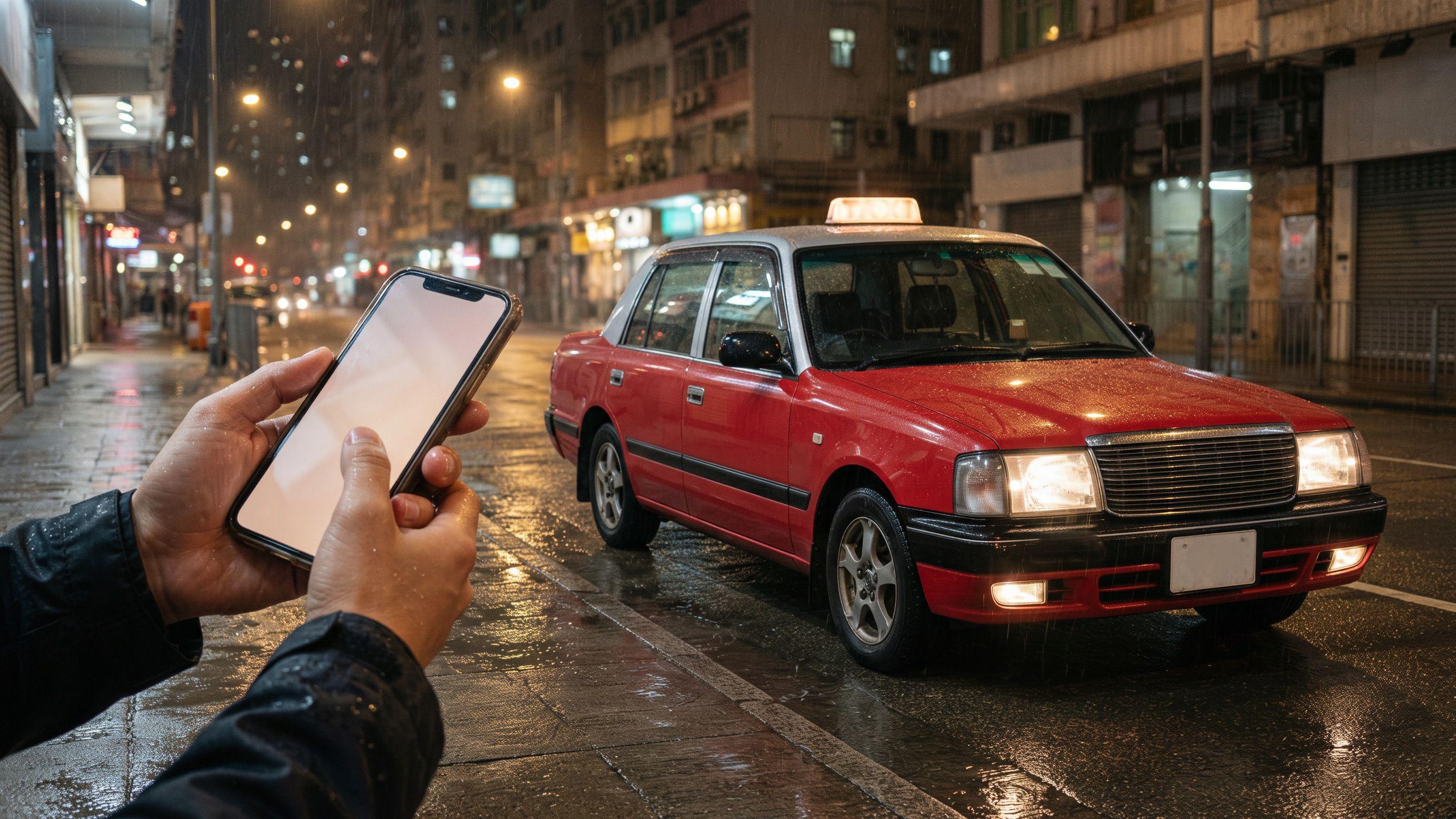
The best taxi app in Hong Kong for a visitor is Uber, and that is less of an opinion than it was two years ago. The two local apps most guides still recommend have both been bought by Uber: HKTaxi closed on 1 April 2025, and FlyTaxi is due to be folded into the Uber app by the end of 2026. So the useful question now is what to install next to Uber, and when you can skip the apps and put your arm out.
The short answer
Install Uber and book one of its taxi options, which sends a licensed Hong Kong cab to your pin with the destination already typed in. Add DASH if you want to pay street taxis by card, and one of the five government-licensed fleet apps if you want a newer car booked ahead for an airport or border run. Skip HKTaxi, which no longer exists, and don't build a trip around FlyTaxi.
Uber: the one app that covers most trips
Uber sells two different things in Hong Kong, and they are easy to mix up. Its taxi options (the app lists Uber Taxi and Meter Taxi) book a real licensed cab, the same red, green or blue taxi you would flag down yourself. UberX and the other private-car options send a driver in their own vehicle.
The taxi side is the reason to have the app. Uber bought HKTaxi in 2021, moved its riders across when that app shut on 1 April 2025, and then bought FlyTaxi in May 2026. You type the destination in English, the driver sees it in the app, and the fare goes on the card you already have on file. For anyone who cannot pronounce their hotel's street in Cantonese, that is the whole argument. The price side of the choice is in our Uber vs taxi comparison.
The private-car side is still waiting for its paperwork. Hong Kong passed a law in October 2025 to license ride-hailing platforms, and the Transport Department said on 30 October 2026 that eight companies had applied. Uber, DiDi, Amap and Singapore's Tada have all confirmed they are among them. The department says it aims to announce the approved platforms within the year, and local press expect the first licences in late November or early December. Until a platform is on that list, its private cars are running without a licence. Its taxi bookings were never the problem.
FlyTaxi: still on the App Store, not for long
FlyTaxi was the local favourite: founded in 2013, 17,000 App Store ratings, and a map that shows the free cabs around you. It only books metered taxis and it picks the right taxi colour for your route by itself.
Two things count against it for a visitor. Payment is between you and the driver. The app's own listing says to ask for PayMe or Octopus in the remarks box and to confirm with the driver before you set off, so there is no card on file. And Uber, which bought FlyTaxi in May 2026, has said the stand-alone app will be shut down once its service is merged into Uber's by the end of 2026. It was still live and updated in late October. If you are landing in December or later, assume it is gone and use Uber's taxi options instead.
DASH: card payment in street taxis
DASH is the local app worth a look if you would rather hail on the street and still not handle cash. Its listing describes two jobs. You can book a taxi and set preferences such as baggage space or car model. Or you can add a card to your account and use it to pay in what DASH describes as hundreds of taxis you flag down yourself. The app is in English and Chinese. The catch is coverage: only taxis signed up to DASH take the in-app payment, so treat it as a bonus when the cab you stop has it.
The five fleet apps: newer cars, booked ahead
Hong Kong now has five government-licensed taxi fleets: Amigo, Big Bee Taxi, Big Boss Taxi, Joie and SynCab. Each has its own app and booking website. The Transport Department's pitch is newer vehicles, trained drivers, online booking and cashless payment as standard.
Pricing works differently from a street hail. A pre-booked fleet taxi charges either the metered fare plus a booking fee agreed in advance, or a lump sum agreed before the trip starts. Hail the same car on the street and it is plain meter. Amigo's listing, for example, offers fixed-price fares for airport and border trips, card payment in the app and a fare estimate before you confirm.
Fleet taxis also get their own pickup points. The Transport Department lists about 101 designated stopping places across 17 locations, including the airport, West Kowloon high-speed rail station, some Airport Express stations, Kai Tak Cruise Terminal and Disneyland. That makes a fleet app a sensible pick for one pre-booked ride with luggage.
Octopus Easy Ride and DiDi
Octopus added a taxi feature called Easy Ride to its app in 2026. It books and pays for a taxi in one place by pulling in existing fleets and booking platforms, and Octopus put the launch supply at around 8,000 taxis. Octopus has not said whether the separate Octopus for Tourists app carries it, so check your version before relying on it.
DiDi runs in Hong Kong through the same app people use in mainland China, and its listing mentions an English interface and international bank cards. It makes sense if you already have DiDi set up for a mainland leg of the trip. I would not install it just for Hong Kong when Uber does the same job.
Do you need a taxi app at all?
Often, no. Taxi stands sit outside most hotels, malls and MTR stations, and a red taxi starts at HK$29 for the first 2km on the Transport Department's fare table. Since 1 April 2026 every taxi has had to offer at least two electronic payment methods, one QR-code based and one not, as well as cash. So the old reason to book through an app (no cash on you) matters less than it did.
The apps earn their place in three situations: heavy rain, the late-afternoon driver shift change, and any pickup from a quiet street where empty cabs don't pass. A booked ride can also cost a little more than a hail. The official fare table adds HK$5 for a telephone booking, and fleets charge their own agreed booking fee. Colours, tolls and luggage charges are covered in the Hong Kong taxi guide.
Every app here needs mobile data at the kerb, which is the moment hotel wifi runs out. Sort that first with our guide to an eSIM for Hong Kong. Taxi apps are one slot on the phone, too: the route planners, bus countdowns and the Octopus app are in our pick of the best transport apps for Hong Kong.
Quick answers
What is the best app for booking a taxi in Hong Kong? Uber, using its taxi options. It books a licensed cab, works in English and charges your card. FlyTaxi still works for now but is being merged into Uber by the end of 2026.
Which taxi service is best in Hong Kong? For a short hop, any red taxi from a stand. For a pre-booked airport or border trip with luggage, one of the five licensed fleets (Amigo, Big Bee Taxi, Big Boss Taxi, Joie, SynCab), which take bookings by app or website.
Does Hong Kong have Uber or Grab? Uber, yes. Grab does not run rides here, and neither does Lyft. Tada, Amap and DiDi also operate and have applied for the new ride-hailing licences.
Is it cheaper to take a taxi or Uber in Hong Kong? A taxi hailed on the street is the baseline: the meter and nothing else. Booking the same taxi through an app or by phone can add a booking fee. The app is buying you certainty, not a lower fare.
Can you use DiDi in Hong Kong? Yes. The mainland DiDi app works in Hong Kong and lists an English interface, though most visitors will find Uber simpler.
Is HKTaxi still working? No. The HKTaxi app closed on 1 April 2025 and its riders were moved to Uber.