Do I Need Cash in Hong Kong? Cards, Octopus & Where Cash Still Wins
Do I need cash in Hong Kong? Yes, but less than you probably think. A bank card or phone covers hotels, malls, chain restaurants and the MTR gates, and an Octopus covers nearly everything small. Cash is for what is left: topping up a physical Octopus, red minibuses, market stalls, the cheapest places to eat, and a backup for taxis. This page goes through where each one works in 2026, where cash still wins, and how much I would actually carry.
The short answer: three things in your pocket
- A contactless bank card or phone wallet for anything with a proper till, and for MTR gates and most buses.
- An Octopus for transport and small purchases. Octopus says its phone version is accepted at nearly 190,000 points across the city.
- A few hundred Hong Kong dollars in small notes and coins for the gaps below.
You can get through a short trip on a card and an Octopus if you stay on the main tourist track. Step into a market or a no-frills noodle shop and you will want notes.
Where a card or phone is enough
The MTR. You can tap a Visa, Mastercard or UnionPay contactless card, or a phone or watch carrying one, straight on the gates. MTR's own page now says this includes the Airport Express. Three catches: only the designated gates with the contactless symbol take bank cards, you are charged the adult Octopus fare with no child or senior concession, and it does not work on Light Rail or MTR buses.
Buses. KMB and Long Win readers take contactless Visa, Mastercard, UnionPay, JCB and American Express, plus Apple Pay, Google Pay and Samsung Pay. Citybus lists Visa, Mastercard and UnionPay contactless for its Cityflyer airport buses. Cash works too, but it asks for the exact fare in the fare box.
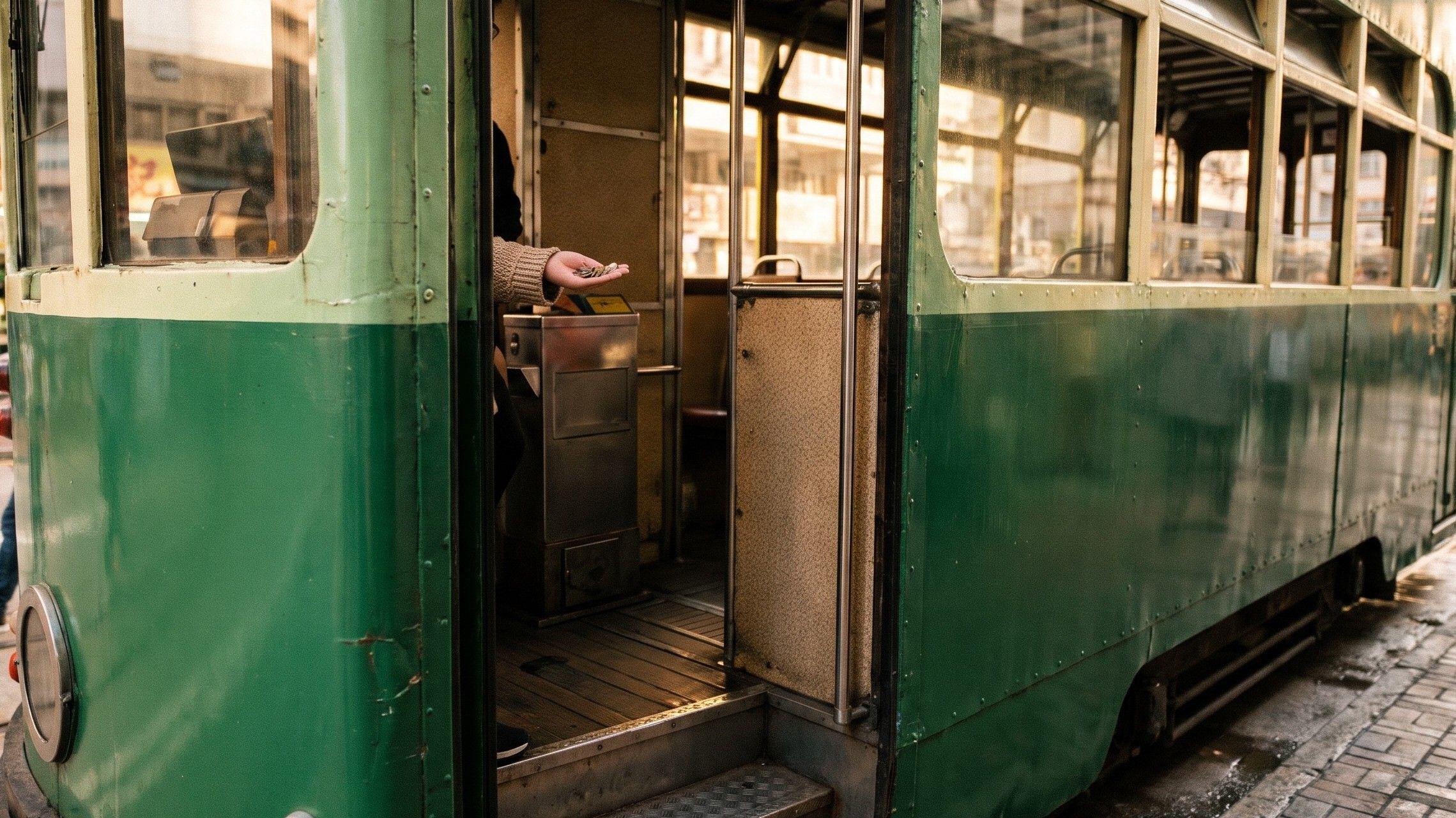
Trams and the Star Ferry. The trams take contactless cards and phone wallets as well as Octopus and coins. The cash catch on the tram is that no change is given. The Star Ferry turnstiles do take cash and give change, and the fares are small enough that coins cover it, as our Star Ferry price guide shows.
Hotels, malls and larger restaurants. Visa, Mastercard and UnionPay are the common networks. Some smaller shops set a minimum spend before they will take a card.
Where cash still wins
- Topping up a physical Octopus. This is the one that catches people. The HK$39 Tourist Octopus comes with no stored value, and Octopus's instructions for reloading a physical card are cash, at stations and shops, up to a balance of HK$3,000. The only non-cash route it lists for a physical card is a Weixin Pay mainland wallet. So the card that replaces cash needs cash to get going.
- Red minibuses. Green minibuses all take Octopus. Red ones are often cash only. Our Hong Kong minibus guide explains how to tell them apart.
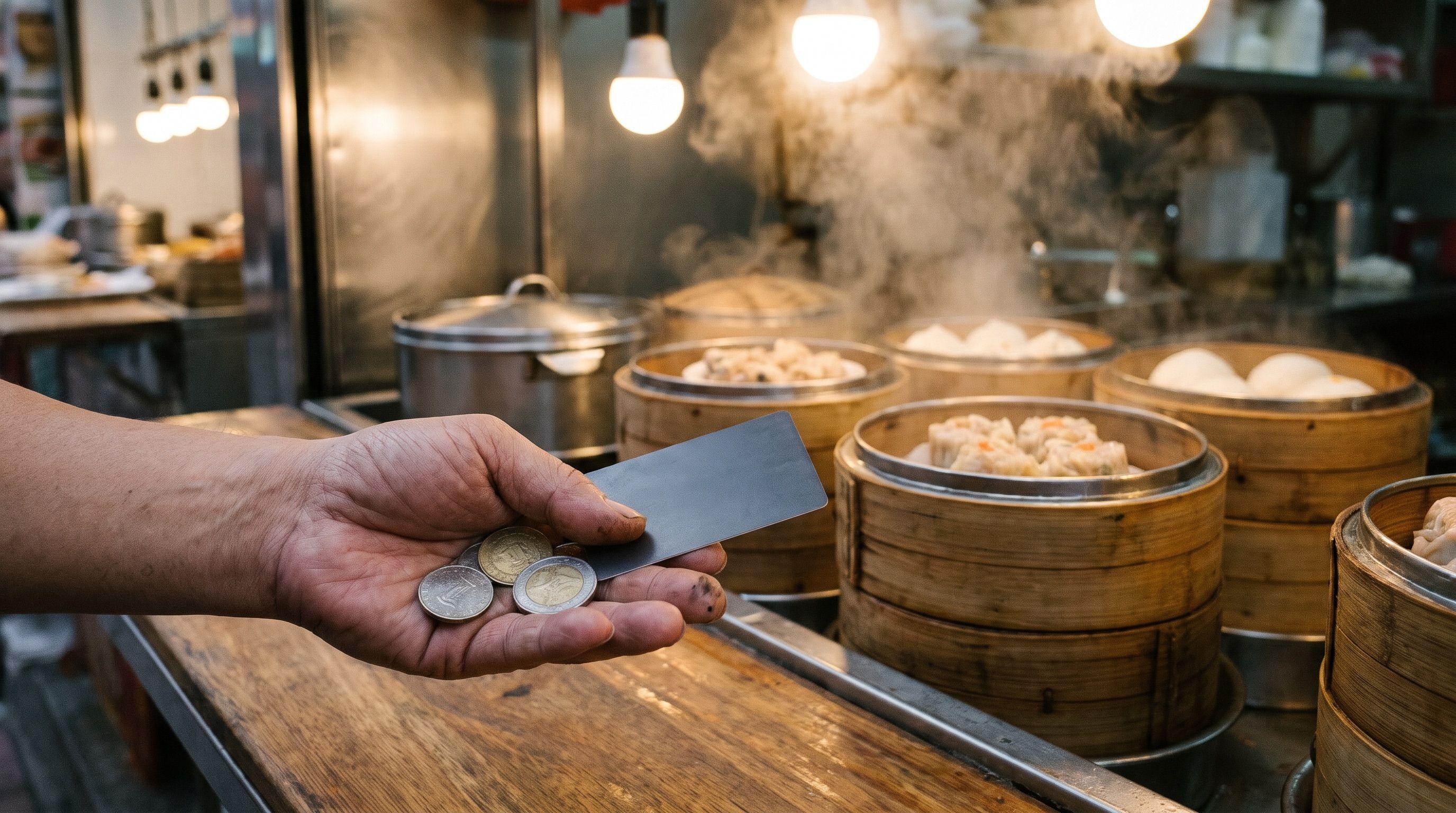
- Street markets, wet markets and dai pai dongs. Expect to pay in notes at market stalls and open-air cooked-food stalls, and at many hole-in-the-wall dim sum and noodle shops.
- Temple donation boxes and small offerings.
- Taxis, as a backup. See the next section.
Taxis: better than they were, still carry cash
Hong Kong taxis were mostly a cash business until this year. Since 1 April 2026 the Transport Department has required every taxi driver to offer at least two electronic payment methods: one QR code method (it names AlipayHK, WeChat Pay HK and BoC Pay as examples) and one non-QR method (Octopus, credit cards or the local Faster Payment System). Cash is still accepted.
Read that rule closely. The driver picks which two. A cab that offers AlipayHK and Octopus has met the requirement without taking your Visa. The accepted methods are shown on stickers on the taxi window, so check before you get in, or ask. An Octopus with enough balance is the most likely thing to work, and a HK$100 note always does. Our Hong Kong taxi guide covers fares and booking apps.
Octopus on your phone: the way to skip cash top-ups
If you have an iPhone or Apple Watch, the Octopus App for Tourists puts an Octopus in your Apple Wallet, and you can top it up with a Visa, Mastercard or UnionPay card issued outside Hong Kong. Octopus says there is no top-up fee, the minimum top-up is HK$100 and the balance limit is HK$3,000. Huawei phones registered in the Chinese Mainland, Macao or Singapore get a similar wallet version topped up with UnionPay.
As of November 2026, Octopus's tourist pages list no equivalent for other Android phones. If that is you, buy the physical card and feed it cash. We list the sales points in where to buy an Octopus card in Hong Kong.
How much cash should I carry?
My rule of thumb, not an official figure: take out about HK$500 to HK$1,000 on arrival and see how fast it goes. A day of trams, ferries and market snacks uses very little of it, and taxis are what eat into it. Add more if you plan serious market shopping or a meal at island seafood stalls, and remember that some of it goes straight onto a physical Octopus.
A few practical points:
- The notes. Hong Kong dollar notes come in $10, $20, $50, $100, $500 and $1,000. Small notes are easier at a stall, so break the big ones at a shop with a proper till.
- The rate. The Hong Kong dollar is pegged to the US dollar and sits close to HK$7.8 to US$1, so prices are easy to convert.
- ATMs. Overseas Visa and Mastercard cards generally work at Hong Kong bank ATMs. If the machine offers to charge you in your home currency, decline and take Hong Kong dollars, because that conversion rate is poor. Your own bank may add a withdrawal or foreign transaction fee, so one larger withdrawal beats several small ones.
- Tipping. You do not need a tipping float. Restaurants often add a 10 per cent service charge to the bill, and taxi drivers do not expect a tip, though rounding up the fare is common.
Quick answers
Do I need cash in Hong Kong if I have an Octopus card? Still a little. A physical Tourist Octopus is topped up with cash, and red minibuses, many market stalls and some small restaurants do not take Octopus at all. With an Octopus on an iPhone, topped up by card, you can get by on very little cash.
Is 500 HKD enough for a day? As pocket cash for transport, snacks and small purchases, yes, comfortably, as long as bigger bills such as hotels, attraction tickets and sit-down dinners go on a card. As a whole daily budget including those, no.
Do you have to pay tax in Hong Kong? Not on shopping. Hong Kong has no VAT, GST or other sales tax, so the shelf price is the price and there is no tourist tax refund to claim. The extra line on a restaurant bill is the service charge, not a tax.
Can I pay by credit card in Hong Kong taxis? Sometimes. Every taxi must now offer two e-payment methods, but credit cards are only one of the options a driver can choose. Check the window stickers and keep cash or an Octopus ready.
Can I use my bank card on the MTR instead of buying an Octopus? Yes, at the designated contactless gates, at the adult Octopus fare. Children and seniors lose their concession fares that way, so a Child or Elder Octopus is still the cheaper choice for them.