Hong Kong MTR with a Stroller: Lifts, Rush Hour & What to Ride Instead
Taking the Hong Kong MTR with a stroller is the easy part of a family trip here, and almost everything else on wheels is the hard part. The trains are the one mode of transport where a pram genuinely works: nearly every station has a lift, the carriages are roomy outside rush hour, and under-3s ride free. The trouble starts when you leave the station, because this city is steep, packed and built on stairs. Here is how the MTR actually goes with a stroller, which other transport to skip, and where wheels make sense at all.
Riding the Hong Kong MTR with a stroller: how it actually goes
The system is in better shape than most first-timers expect. Of the MTR's 93 stations, 90 have step-free access from street to concourse, by lift or ramp, so on nearly any route you can get from the pavement to the platform without folding anything. The catch is not whether a lift exists but where it is: stations are big, exits can sit a long way apart, and the lift is rarely next to the exit you wanted. Check the station map on the wall before you tap in, and expect to queue for the lift at busy interchanges, because you will not be the only one waiting with wheels.
Timing matters more than the hardware. Weekday mornings and early evenings the trains are packed enough that an open stroller becomes a problem for you and everyone around you. Aim for mid-morning to mid-afternoon and the same carriages feel spacious. If you want help planning a step-free route between stations, the HKeMobility app covers MTR route planning and is worth downloading before you fly.
Buses and trams: fold it or skip them
This is where the stroller stops being useful. On Hong Kong's buses you must fold the stroller to board, which means carrying a child, a folded pram and your bag aboard while the bus waits. Doable with two adults, miserable with one.
The old double-decker trams on Hong Kong Island are worse: you board at the rear through a turnstile, and the aisles are narrow with steep stairs to the top deck. They are a brilliant ride with a child old enough to sit on your lap, and at a flat HK$3.30 for adults they cost almost nothing, but treat them as a sit-down attraction rather than a way to move a sleeping baby. Our Hong Kong tram guide covers how the boarding and paying works if you decide it is worth the fun.
The Star Ferry is the stroller-friendly win
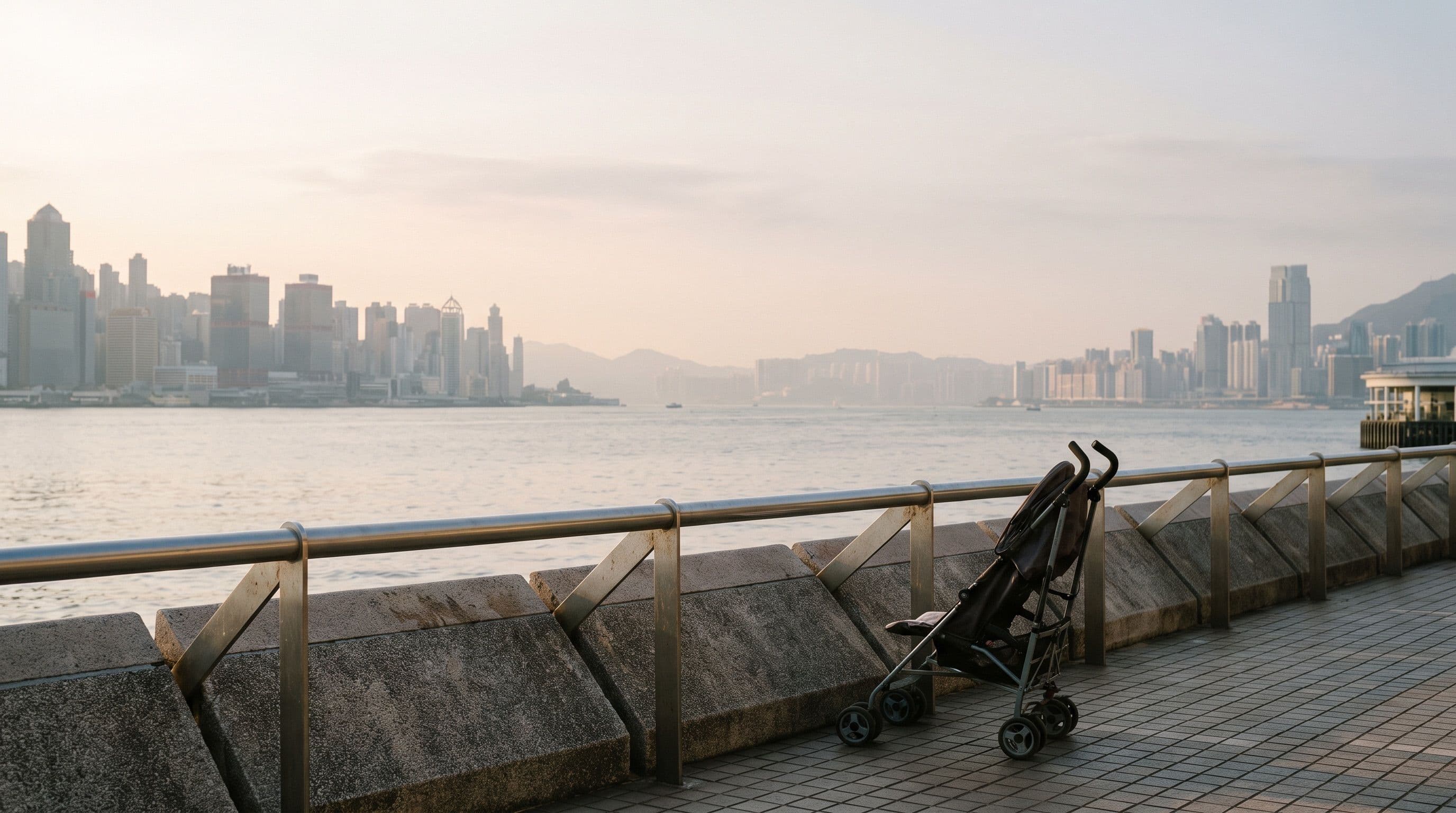
The one transport ride I would plan around with a pram is the Star Ferry across Victoria Harbour. Boarding is flat, the crossing takes about ten minutes, and the commuter fare runs HK$4.0 to HK$6.50 depending on deck and day, so it doubles as one of the cheapest harbour cruises in the world. The boarding ramp between pier and boat can be steep at low tide, so take it slowly, but there are no stairs to fight and the view keeps small passengers quiet better than any app. Fares, timetables and which side of the boat to sit on are in our Star Ferry guide.
Taxis when you are done fighting for lifts
Taxis are cheap by big-city standards and the honest answer for the end of a long day. The stroller folds into the boot, and drivers deal with tourist families constantly. Two things to know: Hong Kong law does not require a car seat in a taxi, so bring a portable harness if you want one, and you may be charged a small fee per item of luggage in the boot, the pram included. Uber and the local ride-hailing apps work the same way and save you flagging one down kerbside with a buggy and a bag.
Where a stroller works on foot, and where it does not
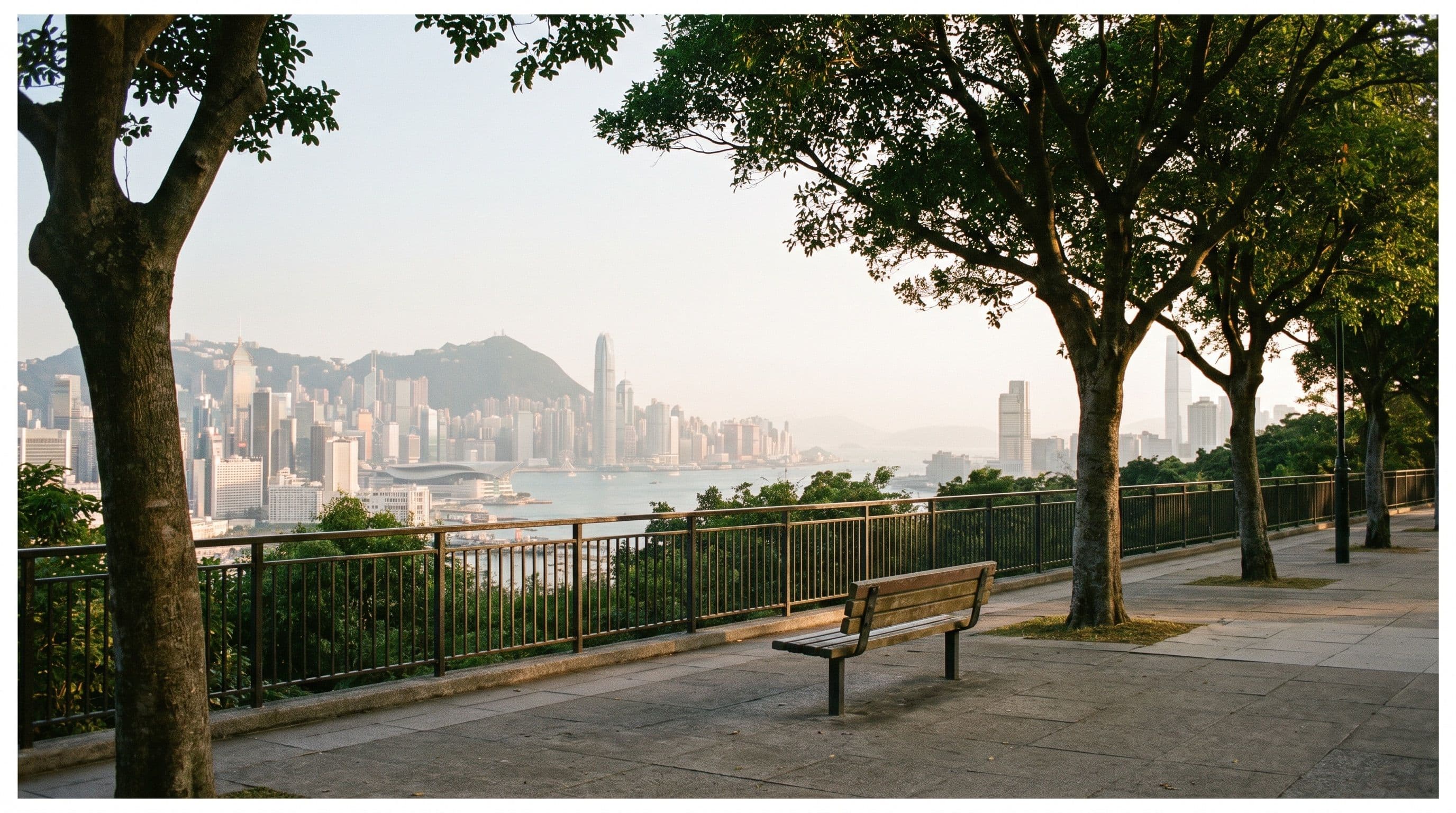
Hong Kong on foot is the real filter. The flat, wide, stroller-friendly stretches are the Tsim Sha Tsui waterfront promenade, Hong Kong Park above Admiralty and Kowloon Park. The places to leave the pram behind are Mong Kok's packed streets, the hills of Central above Queen's Road, and the Mid-Levels escalator, which is exactly what it sounds like: a moving staircase, not a stroller route.
That is why most parents who have done this trip end up carrying both: a lightweight, easily-folded stroller for the flat promenades and museum days, and a carrier for everything else. Steps rule out wheels at some of the biggest sights too, from boarding the Peak Tram to the 268 steps up to the Big Buddha. One more thing nobody warns you about: many smaller local restaurants have no space for an open stroller next to your table, so a pram that folds one-handed earns its keep at lunch as well. If you are travelling with a child under one, our guide to Hong Kong with a baby goes deeper on the carrier-first approach.
What your kids pay on all of this
The fare rules are kind to stroller-age children. Under-3s travel free on the MTR, so the child in the pram costs nothing on the trains. From 3 to 11, kids pay a discounted concessionary fare on the MTR, the main buses and the ferries, and a Child Octopus card applies that discount automatically every time they tap. One card per child; you cannot tap the same card twice at a gate.
Quick answers
Is the Hong Kong MTR stroller friendly? Yes, by the standards of a dense old city. 90 of the 93 stations have step-free street-to-concourse access by lift or ramp, and carriages are roomy outside rush hour. Plan for lift queues at big interchanges and avoid weekday peak times.
Do kids need an Octopus Card in Hong Kong? Under-3s do not, since they ride the MTR free. Children aged 3 to 11 should have a Child Octopus so the discounted child fare applies automatically when they tap on the MTR, buses and ferries.
Is public transport free for kids in Hong Kong? Free under 3 on the MTR. From 3 to 11 children pay a reduced concessionary fare rather than travelling free, and from 12 they pay the adult rate.
Stroller or baby carrier for Hong Kong? Both, if you can. The MTR, the Star Ferry and the flat waterfront promenades reward a lightweight stroller; the hills, buses, trams and stair-heavy sights all favour a carrier.
The short version: build your days around the MTR and the Star Ferry, keep the stroller light enough to fold one-handed, and let the lifts, not the escalators, decide which station exit you use. Do that and the pram earns its place in the luggage.
Planning the rest of your trip? See our guide to What to Pack for Hong Kong With a Toddler.