Hong Kong With a Baby or Infant: What Actually Works
Hong Kong with a baby or infant is more doable than it looks from the plane. The city is compact, the MTR is air-conditioned and lift-equipped, and shopping malls treat baby care rooms as standard, not a bonus. The one adjustment most parents get wrong: this is a carrier city more than a stroller city. Here is what actually works, sorted by what trips people up.
Getting around with a baby or infant
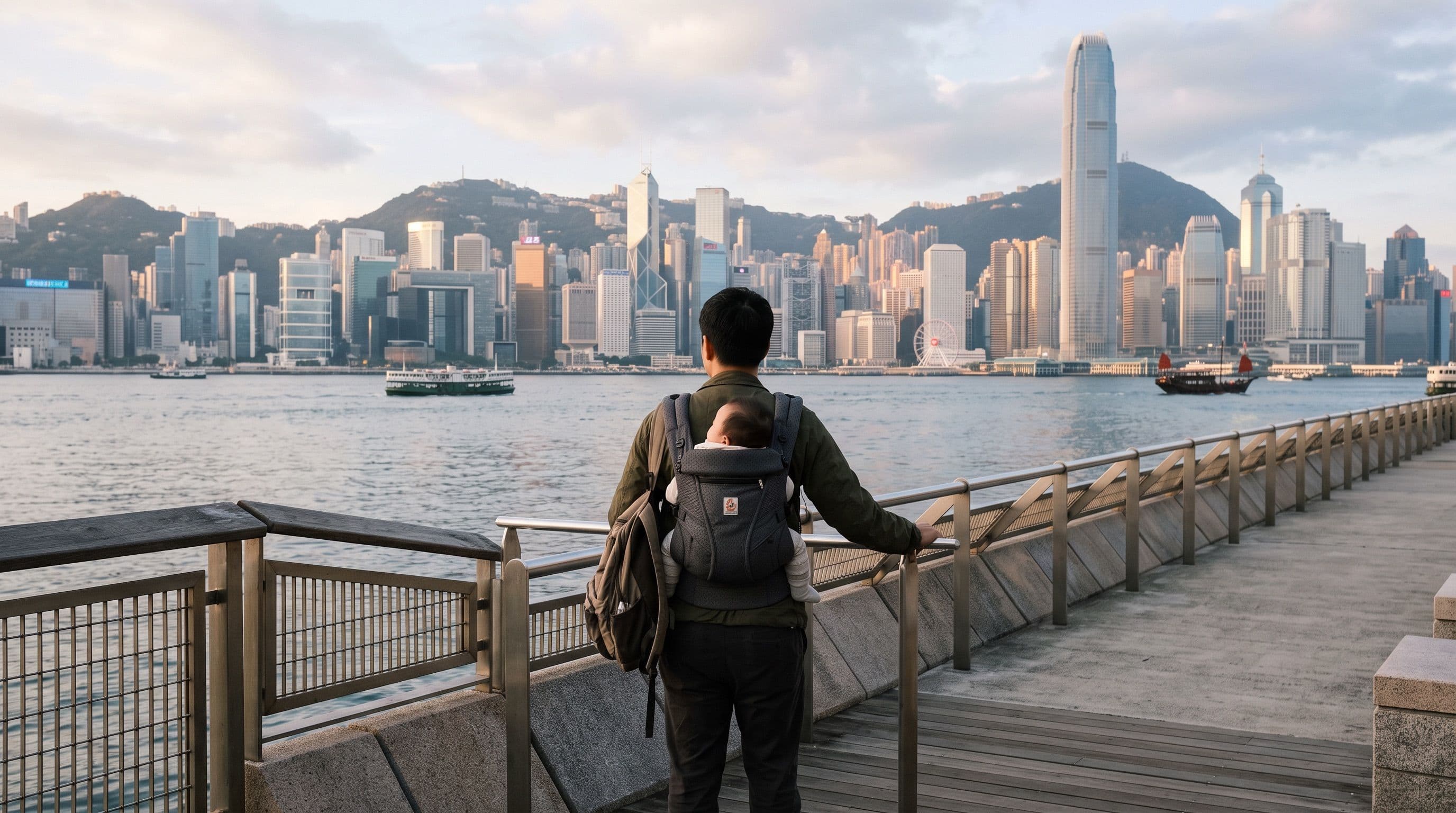
The MTR is the backbone of a Hong Kong trip and it is genuinely baby-friendly: stations have lifts, and staff will point you to them if you ask. The catch is rush hour: trains get packed on weekday mornings and early evenings, so aim for mid-morning or early afternoon with a pram in tow. A carrier sidesteps the problem entirely, which is why most families who have done this trip end up leaving the stroller at the hotel for anything beyond a flat, open route like the harbourfront promenade. Under-3s travel free on the MTR, so you only need to sort out fares for the adults.
Taxis are affordable by big-city standards and worth using when a nap has gone sideways. Hong Kong law does not require a car seat in a taxi, but bring a portable seat or harness if you want one, since it will not be provided. Ride-hailing apps work the same way as taxis for this purpose and save you flagging one down with a buggy and a diaper bag.
The Star Ferry across Victoria Harbour is pram-friendly and one of the easiest wins with a baby: a ten-minute crossing, a flat fare, no stairs to fight, and a skyline view that keeps them staring instead of fussing. Trams and double-decker buses are more fun than functional with an infant: narrow aisles and high steps make them harder work with a stroller, so save them for when your baby is old enough to ride in a carrier and enjoy the view.
Baby care rooms and nursing facilities
This is where Hong Kong quietly over-delivers. Malls including Harbour City, Pacific Place and IFC Mall run proper baby care rooms with changing tables and nursing rooms, not just a fold-down table bolted to a bathroom wall. If a nappy change or a feed is overdue, heading into the nearest big mall is a faster fix than hunting for a public toilet. Between malls, department stores and MTR interchange stations are your backup. Ask at customer service if you cannot spot one.
Where to stay with a baby
Location matters more than star rating with an infant, because it decides how far you carry a sleeping baby at the end of a day. Tsim Sha Tsui and Central both put you within walking distance of the harbourfront, the Star Ferry and an MTR station, which cuts down on transfers. Ask before booking whether the hotel provides a cot free of charge. Some do as standard, others charge a daily fee, and it is a five-minute email that saves a bad surprise at check-in. If this is your first Hong Kong trip and you are still deciding how many days to spend and where, a first-time itinerary framework is worth building around your baby's pace rather than a typical visitor's.
What to pack (and what to skip)
Leave the full-size pram at home if you can. A lightweight, easily-folded stroller with good sun coverage handles Hong Kong's tropical sun better than a bulky travel system, and a carrier covers everything the stroller cannot: cable cars, temple steps, crowded markets. Pack more water and a spare outfit than you think you need; the humidity means babies overheat and soak through clothes faster than you would expect at home. Nappies and Western baby food brands are easy to find in supermarkets and pharmacies like Watsons and Mannings, so you do not need to over-pack on that front.
Air quality varies day to day. On days when it dips, it is worth shortening outdoor time and leaning on the indoor options below instead.
What to do (and skip) with a baby in Hong Kong
Keep the itinerary loose. A harbourfront stroll at Victoria Harbour, a Star Ferry crossing, and a slow morning at Hong Kong Park in Central cover a full day without pushing a baby's limits. Victoria Peak is worth the trip, but go by carrier rather than stroller. The tram platform and the lookout paths get crowded, and steps at the top are easier without wheels.
The Big Buddha on Lantau Island is a bigger undertaking: the Ngong Ping 360 cable car ride is a highlight babies often enjoy, but the 268 steps up to the statue mean a carrier is essential, not optional, and it is worth checking how to get to the Big Buddha before you go so the cable car queue does not eat your baby's whole nap window. Treat it as a half-day trip and build a rest afterward into the plan.
If you want a full day out with more structure, Ocean Park has stroller-friendly paths through its Waterfront area and a cable car and funicular that count as attractions in their own right. It works well for a baby who is happy to nap in transit between exhibits, and it is easy to reach directly by MTR. Skip the trams and skip pushing for two attractions in one day; with an infant, one well-paced outing beats a packed itinerary every time.
Quick answers
Is Hong Kong a good place to visit with a baby? Yes. The MTR is lift-equipped and air-conditioned, baby care rooms are standard in major malls, and Western baby supplies are easy to find, which covers the basics better than most big cities.
Is Hong Kong safe for toddlers and infants? Yes, it is a low-crime, walkable city with good hospitals. The main things to manage are heat, humidity and occasional poor air quality rather than safety risks, so pace outdoor time and check conditions before a big excursion.
Where to stay in Hong Kong with a baby? Tsim Sha Tsui or Central, for the combination of MTR access, walkable harbourfront and short transfers from the airport. Confirm cot availability with the hotel directly before booking.
What is the 5-3-3 rule for babies? It is a general infant nap guideline, not specific to Hong Kong: roughly 5 hours awake, a 3-hour first nap, then 3 more hours awake before bedtime. It is a useful loose template for resetting a young baby's schedule once you land in Hong Kong's time zone, though every baby's rhythm is different.
Planning the rest of your trip? See our guide to Hong Kong With Kids: How Many Days Do You Actually Need?.