Hong Kong Waterfall Hike Guide: Ng Tung Chai, Bride's Pool & Three Easy Falls
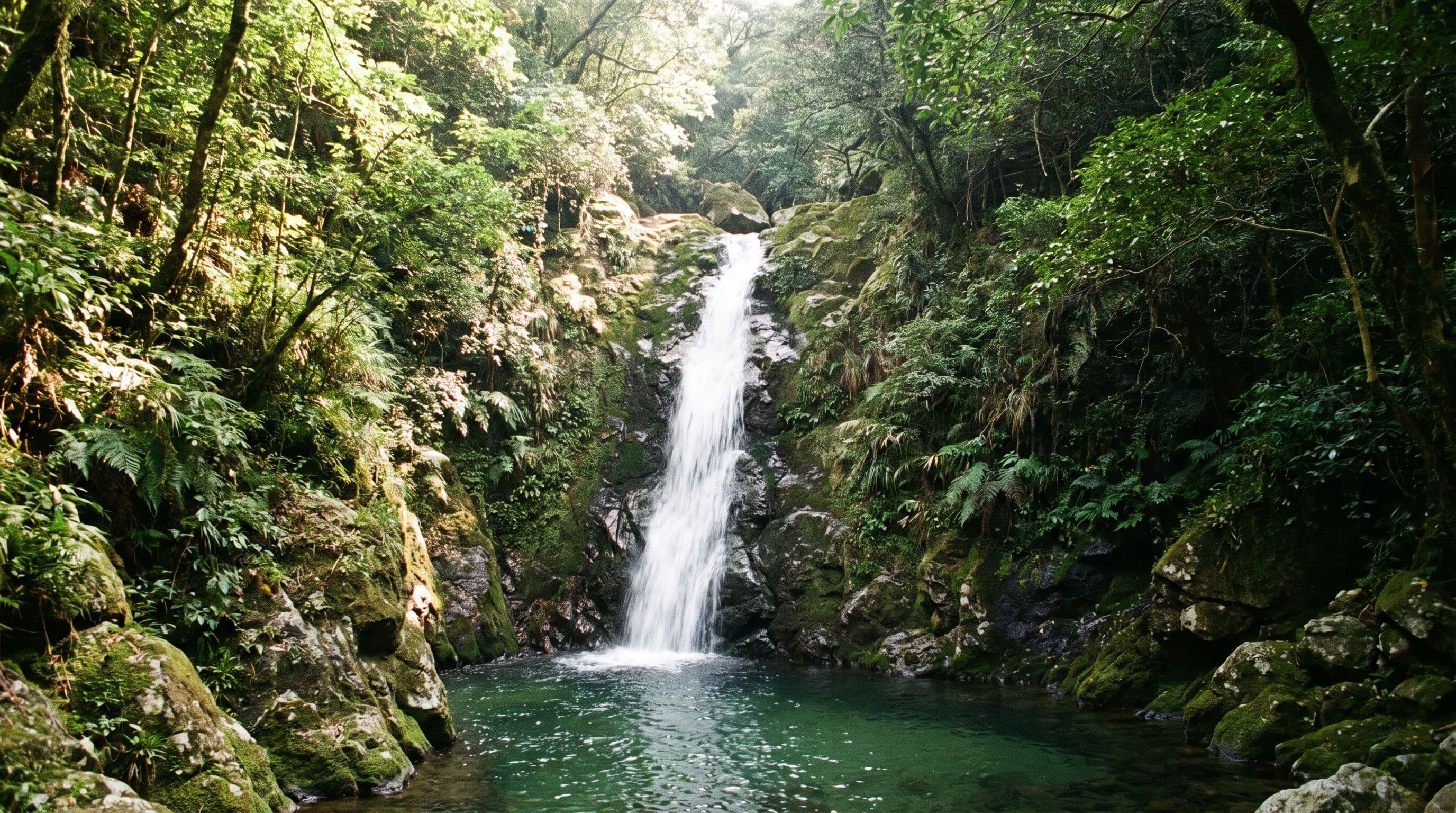
The best Hong Kong waterfall hike is Ng Tung Chai, and it is not close: four falls stacked up a forested ravine on the north side of Tai Mo Shan, the biggest a single 35-metre drop that is the highest in the city. But it is a steep, slippery climb, and most people asking want something gentler. So this guide covers five: Ng Tung Chai for the full-day hikers, Bride's Pool for the picnic crowd, and three easy ones (Silvermine on Lantau, Waterfall Bay on Hong Kong Island, Little Hawaii near Po Lam) reached from an MTR station or a ferry pier with no scrambling. Bus routes and fares are from the operators' and Transport Department data; walking times come from the trail reports named. There is also an honest section on the season, because a waterfall in January is not the one in the photos.
Hong Kong waterfall hikes at a glance
- Ng Tung Chai (Tai Po): four falls, the biggest 35 m. Steep, 2 to 3 hours up and back. Bus 64K or minibus 25K from Tai Po Market.
- Bride's Pool (Plover Cove): a waterfall into a 25 m-wide pool, a nature trail, barbecue sites. Easy. Minibus 20R, or bus 275R on Sundays and public holidays, from Tai Po Market.
- Silvermine Waterfall (Mui Wo, Lantau): three sets of falls about an hour's flat walk from the ferry. Easy. Sun Ferry from Central Pier 6.
- Waterfall Bay (Pok Fu Lam): the fall that gave Hong Kong its name, in a park beside Wah Fu Estate. A staircase, not a hike. Bus 4 from Central.
- Little Hawaii (Tseung Kwan O): a terraced stream and an old dam on a short signed trail, 20 to 35 minutes' walk from Po Lam MTR. Easy.
Ng Tung Chai: the one worth the sweat
Ng Tung Chai is a Hakka village in Lam Tsuen, and the trail behind it climbs into a ravine inside Tai Mo Shan Country Park that has been a Site of Special Scientific Interest since 1979. The park calls the four falls Well, Middle, Long and Straggling-hair; the hiking blogs call the same four Bottom, Middle, Main and Scatter. Long Falls, the third one up, is the 35-metre drop. Tai Mo Shan gets the highest rainfall in Hong Kong, more than 3,000 mm a year, which is why this stream keeps running when others dry to a trickle.
Getting there: East Rail to Tai Po Market, then KMB bus 64K (HK$9.6, the Yuen Long West route) to the Ng Tung Chai (Pak Ngau Shek) stop on Lam Kam Road. Green minibus 25K from the Wai Yan Street terminus at Tai Po Market (HK$7.1) also stops at the village. From the road it is about 700 metres up Ng Tung Chai Road, past a small car park, to the trailhead. A few minutes in, past the Man Tak Yuen temple, comes a fork with an information board: the right-hand path goes straight up Tai Mo Shan and misses every waterfall, so take the one signed "Tai Mo Shan via Waterfalls".
Hong Kong Living puts the first fall about 15 minutes past that fork, the middle one under 10 minutes further and the main fall about 30 minutes beyond, and rates the out-and-back at 6 km, 2 to 3 hours and roughly 300 metres of climbing. From the bus, budget 30 to 40 minutes to the first pool. The path is irregular stone steps, steep and narrow in places and slick when wet, so wear real shoes. Nothing is sold on the route; carry water and food.
The temptation at the main fall is to swim, and the blogs that rank for this hike will tell you to. I do not. There are flash-flood warning signs along the stream for a reason, and the rocks around the pools are slippery even in dry weather. Treat it as look-but-don't-swim and stay on the marked trail. If you want more, the path continues to the 957 m summit, about 895 metres of climbing from the village, which I cover in my Tai Mo Shan hike guide along with the bus down.
Bride's Pool: the easy family one in Plover Cove
Bride's Pool is the famous spot in Plover Cove Country Park in the north-east New Territories. The park describes the pool as about 25 metres across and 2 metres deep, with a waterfall feeding it and a legend to go with it: a bride being carried to her wedding in stormy weather drowned here when a porter slipped. Mirror Pool is close by, and the Bride's Pool Nature Trail starts near the pool's outlet and runs up past potholes in the rock to the cascade. The two minibus stops before the pool are the Chung Pui and Chung Mei barbecue sites, which tells you what kind of day most locals make of it.
Getting there is the catch. From Tai Po Market station, green minibus 20R runs to Wu Kau Tang (HK$11.7, about 37 minutes) with a stop called Bride's Pool on Bride's Pool Road. On Sundays and public holidays KMB bus 275R does the same run (HK$12.7, about 36 minutes) with its own Bride's Pool stop. The cheaper KMB 75K (HK$6.7) and minibus 20C (HK$8.8) only go as far as Tai Mei Tuk, a taxi ride or a long walk short of the pool. If you are making a day of it, the bike path, barbecue area and dam at Tai Mei Tuk are in my Tai Mei Tuk and Plover Cove day trip.
Silvermine Waterfall: the ferry one on Lantau
Silvermine is the one I recommend to anyone with a half day and no hiking kit. Take Sun Ferry from Central Pier 6 to Mui Wo (35 to 40 minutes; HK$33.50 adult on weekdays, HK$48.50 on Sundays and public holidays). The waterfall path starts less than 2 km from the pier and takes about an hour at a stroll, passing three sets of falls known locally as the Lower Falls, Pearl Falls and Main Falls. Part way up, a signed path leads to Silvermine Cave, the entrance of the silver and lead mine that opened in March 1886 and had closed by the time Britain leased the New Territories in 1898. Only the first 10 metres or so are open; the rest is sealed for safety and for the bats. The beach and bike shops fill the rest of the day; the full plan is in my Mui Wo day trip guide.
Waterfall Bay: the one that named Hong Kong
This is the waterfall with the best story and the least water. Waterfall Bay in Pok Fu Lam sits between Wah Fu Estate and the Bel-Air towers at Cyberport, and the fresh water it poured into the sea is the usual explanation for the name "fragrant harbour": British and European sailors refilled their casks here, and Lord Amherst's ships used the bay as their rendezvous in 1816, the voyage that produced the first English-language mention of Hong Kong. Then Pok Fu Lam Reservoir was finished in 1863, the streams feeding the fall were dammed, and the flow has been modest ever since.
It is Waterfall Bay Park now, off Waterfall Bay Road from Wah Fu Road, and a staircase trail leads down to a rocky, sandy shore where you see the fall from below. At low tide you can also reach the ruins of a Second World War pillbox and searchlight position. Citybus 4 runs from Central to Wah Fu (South) in about 35 minutes for HK$7.1; the 40M from Exhibition Centre station (HK$7.5) also ends at Wah Fu. Go after rain and treat it as an hour's detour, not a hike.
Little Hawaii: the short forest trail near Po Lam
Little Hawaii is a stream and an old dam on a short signed trail between Tseung Kwan O and the village of Tseng Lan Shue, and it is the one families take young children to. From Po Lam station on the Tseung Kwan O line (HK$15.80 from Central with an Octopus), leave by Exit C and follow the signs through Tseung Kwan O Village to the trailhead; the blogs that walk it put that stretch at 20 to 35 minutes. About 5 minutes up the trail is a four-way signpost (Yau Yue Wan, Tseung Kwan O Village, Au Tau, Tseng Lan Shue). Turn towards Au Tau for the Lin Yuen Terrace Falls, a gentle quarter of an hour away; the Little Hawaii Dam is another 20 minutes or so from the junction. The fall spreads down a slope in steps rather than dropping, which is why it photographs better than it sounds.
The trail is about 1.6 km from Tseng Lan Shue down to Tseung Kwan O, almost all downhill that way. Walk through to Tseng Lan Shue and KMB 91 (HK$8.4) stops there for Diamond Hill station. Bring repellent, because the shaded falls are mosquito country, and on a sunny weekend the downstream pool is busy with families. The rocks are mossy and slippery, so keep your children on the bank.
When to go: the honest bit about the dry season
Hong Kong gets about 80 percent of its rain between May and September; June and August are usually the wettest months and December and January the driest, according to the Observatory. Waterfalls follow that curve. In summer, and in the day or two after a heavy downpour at any time of year, all five run properly. From roughly November to February, Ng Tung Chai and Bride's Pool hold up best, because Tai Mo Shan is the wettest place in the territory and both catchments are big. Save Silvermine and Waterfall Bay for after rain: Nest Property's advice for Silvermine is "just after, or even during, spells of heavy rain", and the reservoir has taken most of Waterfall Bay's water since 1863.
The flip side is that the dry season is when hiking is pleasant and the wet season is when streams flood. So my rule is simple: go a day or two after rain, not during it, never under a rainstorm or thunderstorm warning, and never when the stream is high. Stay on the marked trails and out of the water. I have left the Sai Kung stream-trekking routes out on purpose; scrambling up a riverbed is a different sport with its own risks. If you are new to Hong Kong's hills, my beginner's hiking guide covers what to carry and the easy trails to start on.
Quick answers
Which is the best Hong Kong waterfall hike? Ng Tung Chai, for the four falls and the 35-metre Long Falls. For an easy one, Silvermine at Mui Wo: a ferry, a flat hour's walk and three sets of falls.
How long is the Ng Tung Chai waterfall hike? About 6 km out and back from the bus, 2 to 3 hours with time at the pools and roughly 300 metres of climbing. Continuing over Tai Mo Shan makes it a 10 km, five-hour day.
What is the tallest waterfall in Hong Kong? Long Falls, also called Main Fall, at Ng Tung Chai: a drop of 35 metres on the north slope of Tai Mo Shan.
Can you swim at Hong Kong waterfalls? People do, but the streams flash-flood and the rocks are slippery, so I treat all five as look-but-don't-swim. For a swim, Mui Wo has a beach at the bottom of the Silvermine path.
When is the best time for a waterfall hike in Hong Kong? A day or two after heavy rain, which mostly means May to September. In the dry months the big-catchment falls, Ng Tung Chai and Bride's Pool, hold up best.