Lam Tsuen Wishing Trees: What They Are, How to Make a Wish & Getting There
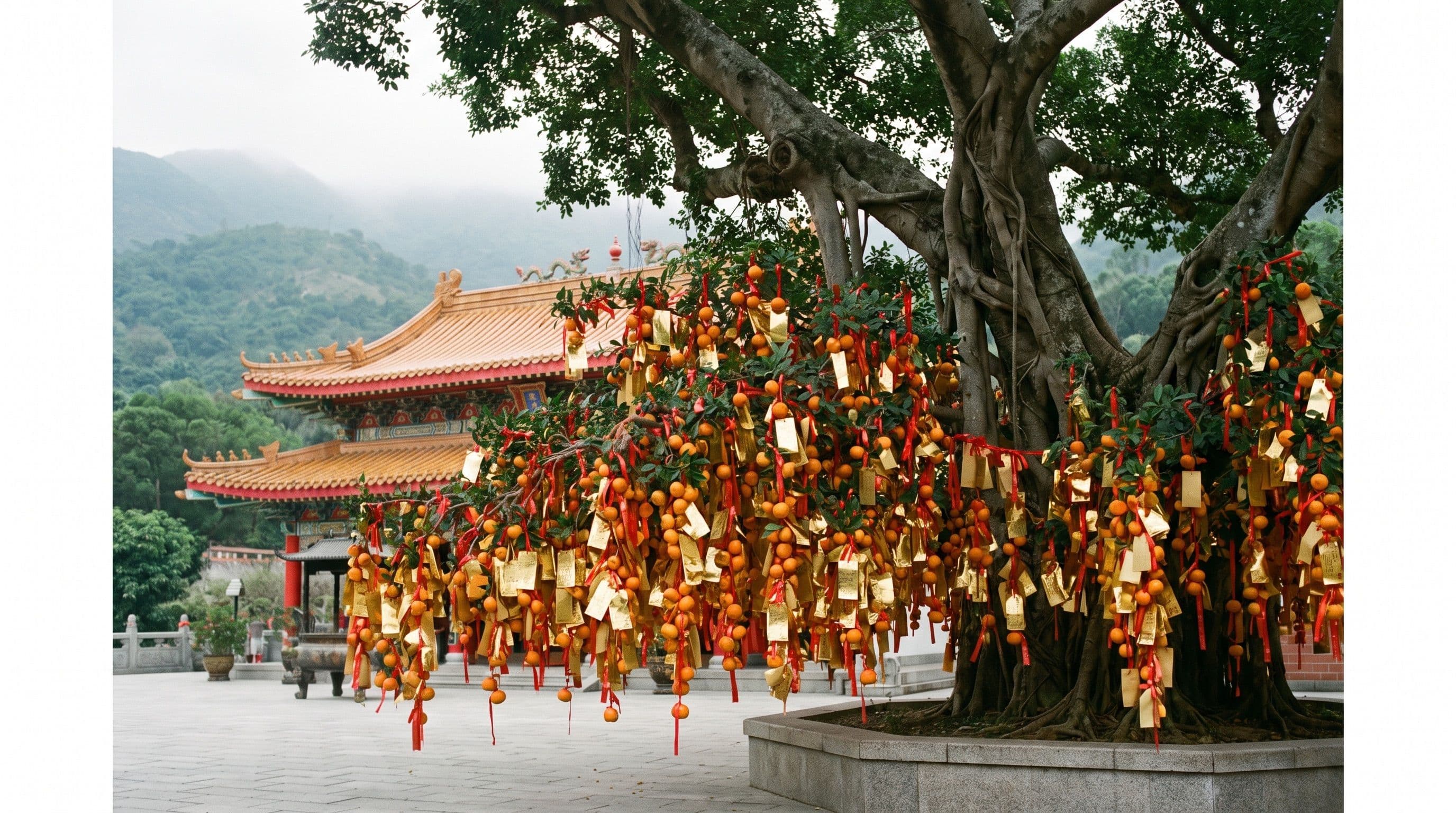
The Lam Tsuen Wishing Trees are the one Hong Kong shrine where the whole point is to throw things at a tree and hope. Tucked into the New Territories near Tai Po, this is where locals have come for generations to write a wish on a piece of paper, tie it to an orange, and hurl it into the branches. It sounds like a tourist gimmick until you're standing there during Lunar New Year with a few hundred other people doing exactly that. Here's what the tradition actually is, how it works today, and how to get there.
What the Lam Tsuen Wishing Trees actually are
The trees sit beside the Tin Hau Temple in Fong Ma Po Village, Lam Tsuen, in the Tai Po district of the New Territories. The temple itself dates to around 1768 or 1771, built during the reign of the Qianlong Emperor in the Qing dynasty, and it's still the anchor of the site. The wishing custom is older than any single tree standing there now: it traces back to fishermen who burned joss sticks and left offerings at trees dedicated to the earth god on their way through the valley, and it grew into today's practice after a widely told local legend, that a wish made at a hollow camphor tree here cured a sick man, or turned around a struggling student's grades, depending on which version you hear.
There are four wishing trees on the site today, and each one is assigned a different kind of wish: one for career, study and wealth, one for marriage and pregnancy, a third for anything at all, and a fourth, purpose-built tree that's the one visitors actually throw things at.
Is the wishing tree real?
Not the one you'll be throwing oranges at, no. The original was a camphor tree, replaced over the decades first by a bauhinia and then by a banyan, each eventually giving out under the weight of offerings. On 12 February 2005, the fourth day of Chinese New Year, a branch of the banyan tree broke under the accumulated weight of joss paper and oranges and injured two visitors, a 62-year-old man and a 4-year-old boy. The government banned throwing offerings at the real tree immediately afterward. Wooden racks went up so people could still hang joss paper without stressing the living tree, and in late 2009 an artificial 25-foot tree, shipped in from Guangzhou, was installed specifically so the throwing tradition could carry on safely with light plastic oranges instead of real ones. That plastic tree, hung with paper wishes, is what you see and photograph today. The real banyan is still there, fenced and recovering, a few steps away.
How the wish-throwing ritual works
Vendors near the entrance sell a "bao die," a bundle of a small paper card (or a real or plastic orange, depending on which stall) with a red string attached. You write your name, date of birth and wish on the yellow joss paper, tie it to the orange, and throw it up into the branches of the artificial tree. Land it in a fork of a branch and it's supposed to mean your wish comes true; if it falls straight back down, the traditional read is that you asked for too much. It takes more tries than it looks like it should. If you'd rather not throw anything, there are also wooden wishing boards sorted by Chinese zodiac sign, where you write your wish on a joss paper and hang it directly, no aim required.
Getting to Lam Tsuen from central Hong Kong
There's no MTR station at the site itself, so the trip is train plus a short bus or minibus hop. Take the East Rail Line to Tai Po Market station and leave via Exit A1. From there, catch KMB bus 64K, or green minibus 25K, and get off at the Fong Ma Po stop, roughly a dozen stops in; the wishing trees are directly across the road. A taxi from Tai Po Market or the next stop up the line, Tai Wo station, is the easiest option if you're travelling with kids or don't want to work out bus timings.
Opening hours, entrance fee and best time to visit
It's free, and it's an open-air shrine rather than a ticketed attraction, so there's no hard closing time in the way a museum has one, though listings generally give hours of roughly 9am to 5pm for the main wishing-tree area. Go on a weekday morning if you want the place close to empty. Go during Lunar New Year, specifically the first and fifteenth days of the lunar first month, if you want to see it the way it's actually meant to be seen: packed, loud, and genuinely festive, with the Hong Kong Well-Wishing Festival running food stalls, wishing lanterns and a lantern display for the year's newborns alongside the tree itself.
What else to see nearby
The Tin Hau Temple next door is worth five minutes on its own, and Lam Tsuen sits in the same Tai Po district as the reservoir and dam walk at Tai Mei Tuk and Plover Cove, so the two pair naturally into one New Territories day if you have a car or don't mind a second bus leg. If temples are your thing, Kowloon has two of the city's best a short ride away: the incense-thick Wong Tai Sin Temple and the quieter, wood-built Chi Lin Nunnery and Nan Lian Garden. And since the last leg out here is by bus or green minibus rather than rail, it's worth knowing how Hong Kong's minibuses actually work before you go: they're Octopus-payable, but you flag them down and call out your stop like a local.
Quick answers
Is the Lam Tsuen wishing tree real? The tree you throw wishes at is an artificial one installed in 2009, after a series of real trees (camphor, then bauhinia, then banyan) each failed under the weight of offerings. The last real banyan tree is still on site, fenced off and recovering.
What is the purpose of the wishing tree? Visitors write a wish on joss paper, tie it to an orange, and throw it into the tree's branches. If it catches and hangs on a branch, tradition says the wish comes true.
Is it free to visit Lam Tsuen Wishing Trees? Yes. It's an open shrine with no entrance fee, generally accessible during daylight hours, roughly 9am to 5pm.
When is the best time to visit? Lunar New Year, especially the first and fifteenth days of the lunar month, when the Hong Kong Well-Wishing Festival runs alongside the trees. For a quiet visit, go on an ordinary weekday morning instead.