What to Wear to the Big Buddha in Hong Kong (Can You Wear Shorts?)
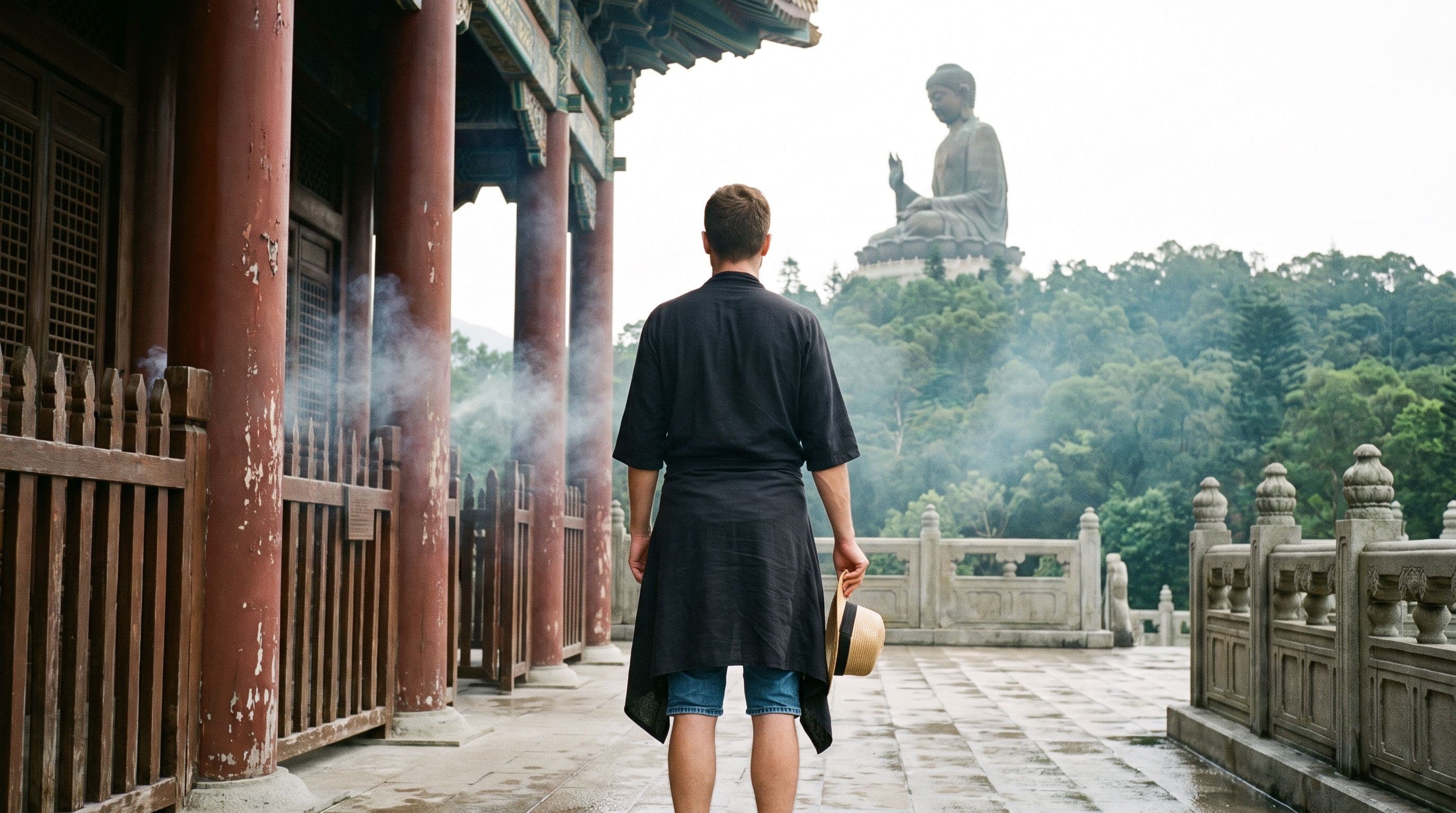
What to wear to the Big Buddha in Hong Kong, in short: cover your shoulders and cover your knees, not the beach-day outfit you might have planned. That's the whole rule, but it matters more here than at most Hong Kong attractions because the Tian Tan Buddha sits right beside Po Lin Monastery, a working Buddhist monastery, not a museum. Here's exactly what that means for shorts, tank tops, and what to actually pack.
The actual rule: shoulders and knees covered
The standard you'll see repeated by people who've been is simple: no sleeveless tops or tank tops, and no shorts or skirts above the knee. That applies to men and women. It's not a strict security-checkpoint pat-down like some temples in Southeast Asia, but it is a real cultural expectation at an active place of worship, and staff and monks at Po Lin do notice. Think "modest and covered," not "beachwear."
Can you wear shorts to the Big Buddha?
Knee-length shorts or longer are generally fine. Short shorts, the kind that sit well above the knee, are the specific thing multiple visitor accounts flag, especially for anyone heading into Po Lin Monastery itself rather than just the outdoor statue platform. The safe move is to dress as if you'll be walking into the monastery, because most people visiting the Buddha do exactly that in the same trip.
Do you need long pants?
Not necessarily. Full-length trousers are the safest option, but a knee-length skirt, dress, or pair of shorts covers the same rule. What actually causes problems is showing bare shoulders (vest tops, spaghetti straps, strapless dresses) or a hemline well above the knee. If your outfit covers both of those, you're fine in pants or not.
What to bring if you're not sure you'll be covered
Some visitors mention being able to borrow a shawl or wrap at the entrance if they turn up under-dressed, but don't plan your day around that being available. Pack a lightweight scarf, sarong, or wrap top you can tie around your waist over shorts, or throw on over bare shoulders, and you've solved the problem without needing to buy or borrow anything on the day. It packs down to nothing and does double duty as sun protection, which you'll want anyway on a shadeless hillside platform.
If you're travelling light and didn't pack anything extra, a full-length T-shirt worn loose can substitute for a wrap over bare shoulders in a pinch, and a beach towel or travel blanket tied at the waist works the same job as a sarong. Neither is elegant, but both solve the actual problem, which is coverage, not fashion.
Visiting with kids
There's no separate published rule for children, so the safest approach is to dress the whole group by the same standard, shoulders and knees covered, rather than assume young kids get a pass. If you're planning the wider trip around a family day, our Hong Kong with kids guide covers what else to pack for a day that also involves 268 steps in the heat.
Does the dress code apply to the statue, the monastery, or both?
Both, in practice. The Tian Tan Buddha and Po Lin Monastery share the same hillside site on the Ngong Ping plateau, and most visitors move between the outdoor statue platform and the monastery's main hall in the same visit. Treat it as one dress code for the whole stop rather than trying to work out which part is stricter.
Other practical packing notes
Beyond the dress code, this is an exposed, uphill visit: you'll climb the Tian Tan Buddha's 268 steps to the platform with no shade, so wear closed-toe shoes with grip and bring water and sunscreen or a hat. Hong Kong humidity makes the climb feel harder than the step count suggests, so light, breathable, ankle-covering-optional layers work better than anything heavy. You'll walk through Ngong Ping Village before you reach the entrance, which is a good spot to adjust your outfit if you need to.
Quick answers
Is there a dress code for the Big Buddha? Yes. Cover your shoulders and knees for both the statue platform and Po Lin Monastery. No sleeveless tops, no short shorts or skirts.
Can I wear shorts to the Big Buddha? Knee-length or longer, yes. Short shorts risk being turned back, particularly at the monastery entrance.
Do I need pants for Big Buddha? No, they're not required specifically. Any bottom that reaches the knee, trousers, a longer skirt, or knee-length shorts, meets the rule.
What if I turn up under-dressed? Don't count on borrowing a wrap on-site. Bring a scarf or sarong you can tie on over shorts or bare shoulders, just in case.
The takeaway
Cover your shoulders, cover your knees, and you won't think about the dress code again once you're there. It's a small thing to plan around compared to the rest of the day, and it's worth getting right before you commit to the trip out to Lantau. If you're still deciding whether the whole stop is worth your time, we've covered that honestly in whether the Big Buddha is worth it, and the general rules are also laid out in our Big Buddha dress code guide if you want the fuller picture.
Planning the rest of your trip? See our guide to Big Buddha Hong Kong Entrance Fee: What's Free and What You Pay For.