Hong Kong's Light Rail: Routes, Fares & How to Ride It
Most visitors never touch the Light Rail, and most never need to. It's a separate network from the MTR trains you'll use in Central or Kowloon: an open, street-level tram system that only covers Tuen Mun and Yuen Long in the northwestern New Territories. But if your trip includes Hong Kong Wetland Park, a stay out that way, or you're just trying to figure out why your MTR map suddenly shows a tangle of numbered lines out west, here's how it actually works.
It isn't the MTR you're picturing
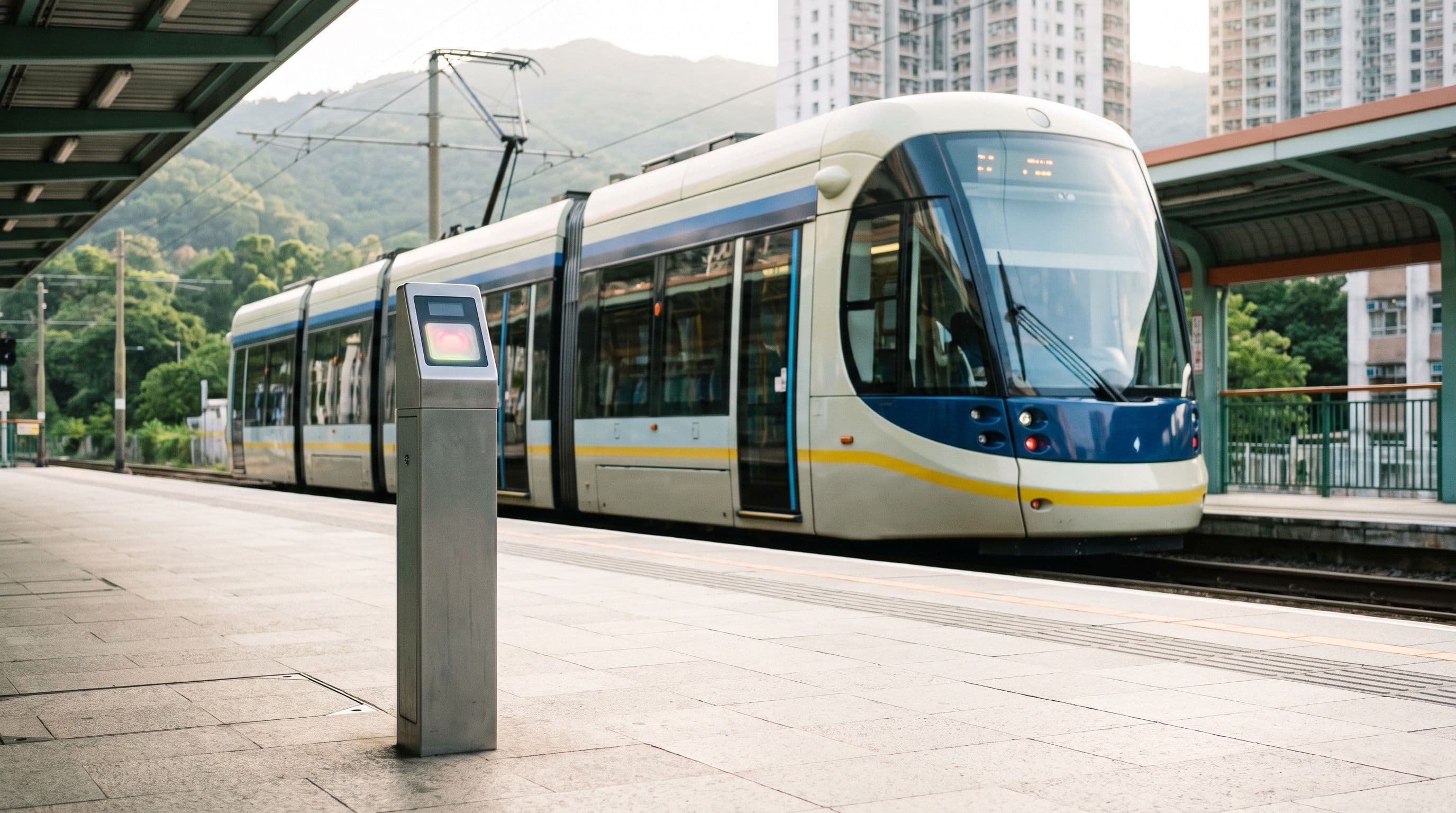
The Light Rail is a light rail system, not the underground/elevated heavy-rail MTR that runs through the rest of the city. It opened in 1988 and predates the 2007 merger that folded the old KCR network into MTR. Instead of enclosed stations with platform gates, most Light Rail stops are just an open platform on the street, sometimes shared with road traffic at a crossing. There are 68 stops across the network, spread over roughly 36km of track through Tuen Mun and Yuen Long.
Routes: numbered, not coloured
Unlike the MTR's colour-coded lines, Light Rail routes are identified by number, shown on the front of each tram. You don't need to memorise the network, just check the route number and direction against a platform map before boarding, since several different routes can stop at the same platform. Broadly:
- Routes 505, 507 and 751 run through Tuen Mun, including Tuen Mun Ferry Pier.
- Routes 610, 614, 615 and 761P serve Yuen Long.
- Routes 705 and 706 run through Tin Shui Wai, and are the ones you want for Hong Kong Wetland Park.
The network connects to the heavy-rail Tuen Ma Line at four interchange stations: Tuen Mun, Siu Hong, Tin Shui Wai and Yuen Long. That's normally how you'll arrive: ride the Tuen Ma Line out from the city, then switch to a Light Rail platform for the last stretch.
The part that trips people up: you tap in AND tap out, yourself
There are no ticket gates. Each platform has standalone Octopus validators, and it's genuinely on the honour system: you tap in before boarding and tap out after you get off, at a validator on the platform, not on the tram itself. Inspectors do random checks, and skipping a tap (in either direction) is treated as fare evasion. Coming from the gated MTR, it's easy to walk straight onto a Light Rail platform and forget the whole tap in/out step exists, so build in the habit of tapping twice, not once.
Fares
Paying with Octopus is charged by how many stops you actually travel, deducted automatically once you tap out:
- 1–3 stops: HK$4.90 adult, HK$2.20 child, HK$2.00 elderly/disabled
- Longer rides scale up from there, topping out at HK$7.40 adult for the longest journeys across the network
Buying single-journey tickets from a platform machine instead works differently, priced by fare zone rather than by stop:
- 1–2 zones: HK$5.50 adult, HK$2.50 child/elderly
- 3 zones: HK$6.50 adult, HK$3.50 child/elderly
- 4–5 zones: HK$7.50 adult, HK$4.00 child/elderly
Octopus works out cheaper or about the same on almost every real trip, and it's the only option that also carries your fare across an MTR transfer without buying a separate ticket.
Operating hours
Most routes run from around 5:10am to 1:30am the next day, though the exact first and last departures vary slightly by route (Route 505, for example, runs roughly 5:30am to 1:10am in one direction). It isn't a 24-hour service, so if you're relying on it late at night in Tuen Mun or Yuen Long, check the specific route's last-train time on the platform display rather than assuming the network-wide window applies to your stop.
When a tourist actually needs it
For almost anyone based near Central, Tsim Sha Tsui or Causeway Bay, the honest answer is: you probably won't ride the Light Rail at all. If you're staying in Tuen Mun or Yuen Long for a ferry connection, a hotel deal, or to visit family, you'll use it constantly and the tap in/out habit becomes second nature within a day. Everyone else is more likely to already be using the Hong Kong tram (ding ding) to get around Hong Kong Island, the Star Ferry to cross the harbour, a cross-harbour tunnel bus for a direct run between Kowloon and the Island, or a ferry out to the outlying islands, none of which touch the Light Rail network at all.
Quick answers
Can I use my Octopus card on the Light Rail? Yes, and it's the easiest way to ride. Tap the standalone validator on the platform when you board and again when you get off; the fare is calculated automatically by how many stops you travelled.
Is the Light Rail the same as the MTR? It's run by the same company and shows up on the same fare system and network map, but it's a separate, street-level tram network that only serves Tuen Mun and Yuen Long. It doesn't connect to the rest of the MTR except at four interchange stations.
Is the Light Rail 24 hours in Hong Kong? No. Most routes run from roughly 5:10am to 1:30am the next day, with small variations by route, so it's not an overnight option.
Do I need a separate ticket for the Light Rail? No, if you're using Octopus or the MTR Tourist Day Pass, both work exactly as they do on the rest of the MTR network. Single-journey tickets are also sold from platform machines if you're not carrying either.
Unless Wetland Park or a New Territories stay is on your itinerary, you can safely ignore all of this. But if you do end up on a Light Rail platform, the one habit worth remembering is simple: tap in, and don't forget to tap out.
Planning the rest of your trip? See our guide to Star Ferry Price in Hong Kong: Fares, Passes & the $2 Octopus Trick.