Hong Kong Taxi Scams: How to Avoid Getting Overcharged
Most "Hong Kong taxi scam" warnings online are recycled from generic Asia travel listicles that don't describe anything that actually happens here. The real risks in Hong Kong are narrower than that, and almost all of them are preventable once you know what's legal and what isn't. Here's what the scams actually look like, what's just a confusing but legitimate charge, and what to do if a driver really does try to overcharge you.
The one real scam: refusing to use the meter
Every licensed Hong Kong taxi, red, green or blue, is legally required to run on the meter. If a driver quotes you a flat price before you've even got in, instead of starting the meter, that's the actual scam, not a grey area. Say "by the meter, please" or just point at it, and get out if they refuse. Off-meter price negotiation is treated as overcharging by the Transport Department, and it's the single most common way tourists get caught out.
Why a "doubled" toll usually isn't a scam
The charge that confuses people even when nothing illegal is happening is the tunnel toll. Cross one of the harbour tunnels and the toll on your fare can run close to double the signposted one-way rate. That's standard, documented practice, not a markup: a taxi that carries you across the harbour has to drive back empty, paying the toll a second time for a trip with no paying passenger, so the two-way toll is built into the metered fare on tunnel crossings. It's genuinely confusing the first time you see it on the meter, but it isn't something to argue with the driver about.
Real overcharging, and what happens to drivers who do it
Actual overcharging is still enforced, not just a policy on paper. In 2026, undercover "decoy" operations caught drivers in Central, on Lantau Island, and in Sai Kung, each one an officer posing as an ordinary passenger before revealing themselves once the driver asked for an inflated fare; the Sai Kung operation alone led to seven arrests for overcharging, attempted overcharging, and failing to display the meter or driver ID. One recent conviction: a driver who charged HK$150 for a ride from the Peak Tram station in Central that should have cost about HK$42, close to three and a half times the metered fare. Because it was his third offence, he got three months in jail and an eight-month driving ban on top of it. The maximum penalty on the books is six months' imprisonment and a HK$10,000 fine. Hong Kong police logged 443 overcharging complaints in 2022, the most recent year the government has published a figure for, so it isn't rare, but it is something the system actively acts on.
Where it's most likely to happen
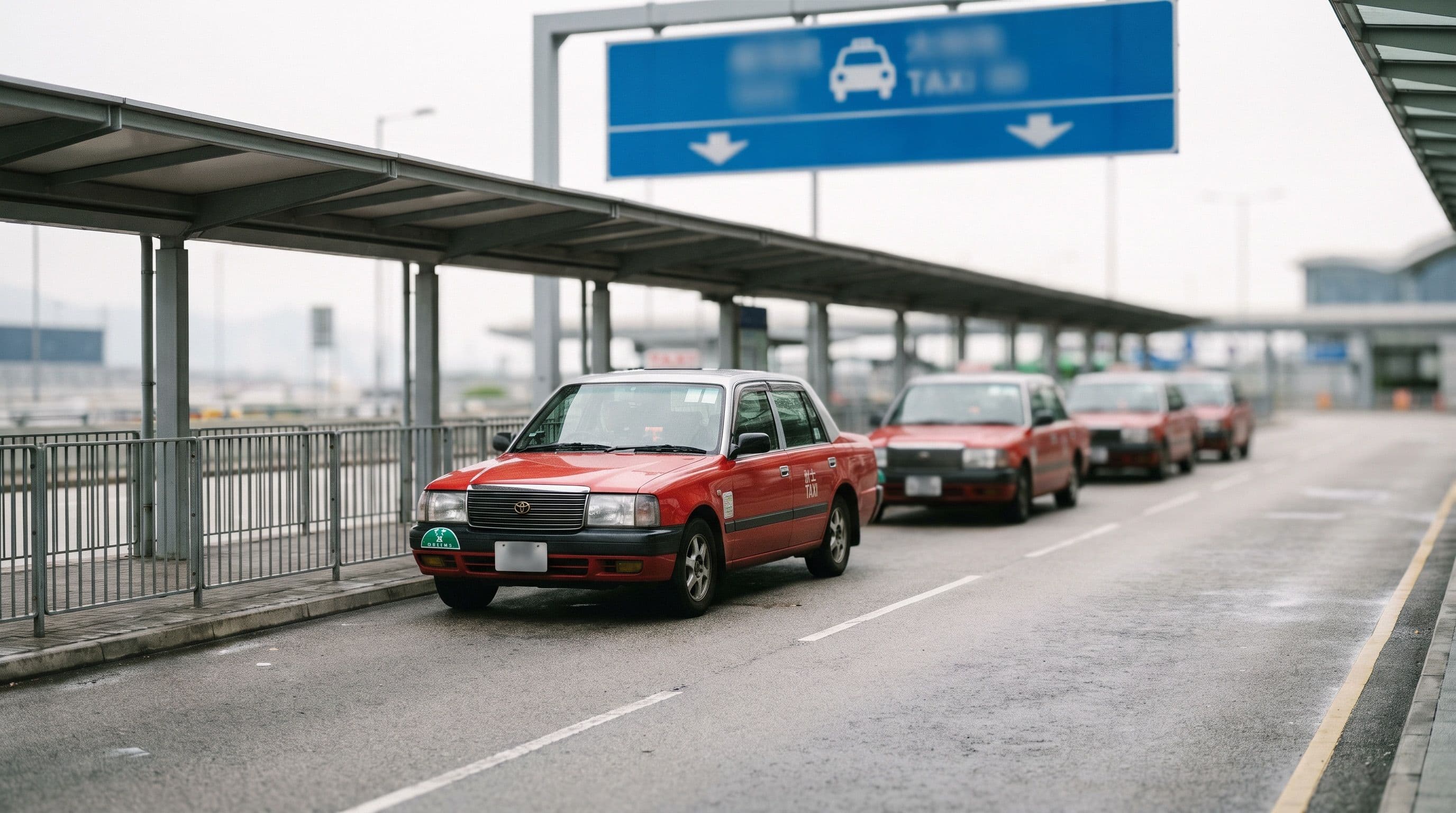
Airport arrivals and cruise terminals are the spots where unlicensed touts approach before you've reached the real taxi queue, offering a "cheaper" ride in an unmarked car. That's not a taxi at all, it's an unlicensed hire car with no meter and nobody accountable if something goes wrong. Walk past anyone who approaches you before you're in line; the official taxi rank at the airport is clearly signed and queued, and it's the only one worth using. Late-night tourist strips like Tsim Sha Tsui's waterfront and Lan Kwai Fong are the other common spots for a driver to try the flat-rate approach instead of the meter, usually because they're counting on you not knowing better. If you're out that late anyway, it's worth knowing what else is still running after midnight, since a last train or night bus sidesteps the whole problem.
If you think you've been overcharged
Ask for a printed receipt before you pay. It carries the taxi's registration number, which is what the Transport Department and police need to actually follow up on a complaint. Report it through the 1823 Call Centre, the Transport Complaints Unit, the Transport Department directly, or the police. The Transport Department aims to send an interim reply within 10 working days and a substantive one within 21. It won't get your money back at the curb, but a registration number and a timestamp is enough for them to act on, and repeat offenders do lose their licences, as the three-month jail sentence above shows.
Quick answers
How do I know if a Hong Kong taxi driver is trying to scam me? The main warning sign is a driver quoting a flat price before starting the meter, or refusing to turn the meter on at all. A legitimate fare is always metered, tunnel tolls and small luggage fees aside.
Is it legal for a taxi to charge double for a tunnel toll? Yes, on a harbour tunnel crossing. The fare legitimately includes the two-way toll, since the driver is paying it in both directions for one paying trip.
What should I do if I'm overcharged? Get a printed receipt for the registration number first, then report it to the 1823 Call Centre or the Transport Department rather than arguing with the driver on the spot.
Do I need to tip Hong Kong taxi drivers? No. Rounding up to the nearest dollar is common and appreciated, but tipping isn't expected the way it is in North America.
None of this is a reason to avoid taxis here. It's still one of the fastest ways to cross town, and the Uber Taxi option books you the same metered, licensed cab without having to flag one down yourself. The scams are narrow, well-documented, and easy to spot once you know the two real ones.