Che Kung Temple, Hong Kong: What to Know Before You Visit
Che Kung Temple, Hong Kong: What to Know Before You Visit
Che Kung Temple in Hong Kong's Sha Tin district is worth the detour if you're already in the New Territories or want a working temple without the Instagram crowds. It isn't as famous overseas as Wong Tai Sin or the Big Buddha, and on most days that's exactly the point: a giant golden statue of a Song dynasty general, a courtyard full of spinning pinwheels, and none of the tour-bus energy. Here's what it actually is, how to get there, and when to go (or avoid).
What Che Kung Temple is
Che Kung Temple is dedicated to Che Kung, a general from the Southern Song dynasty (1127 to 1279) who was honoured for suppressing a rebellion and, according to local legend, for helping end an epidemic in Sha Tin during the late Ming dynasty. The story goes that residents built the temple after uncovering old writings about his epidemic-clearing reputation, and the outbreak subsided the day construction finished. That legend is why people still come here to ask for protection and good health, not just general luck.
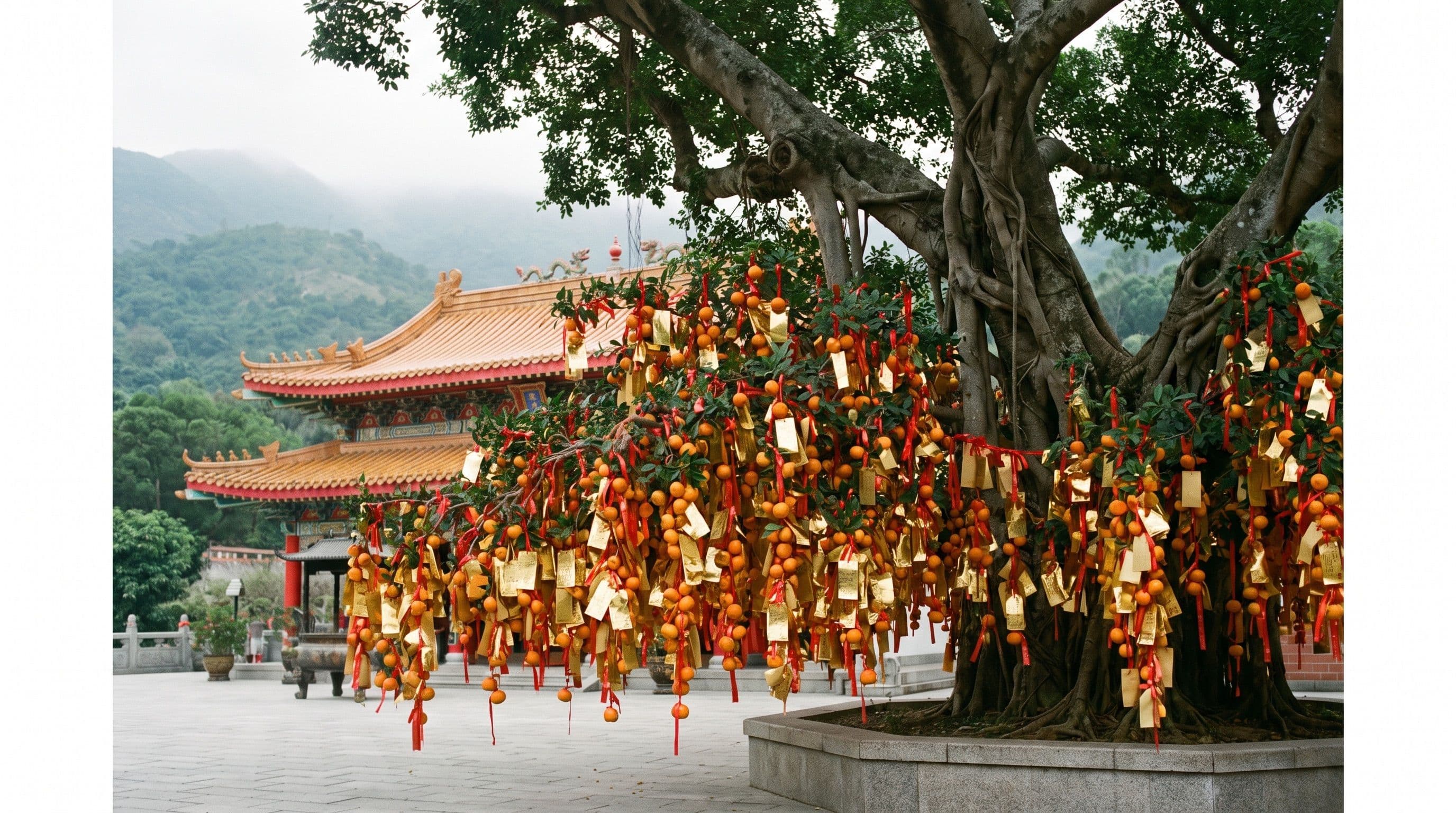
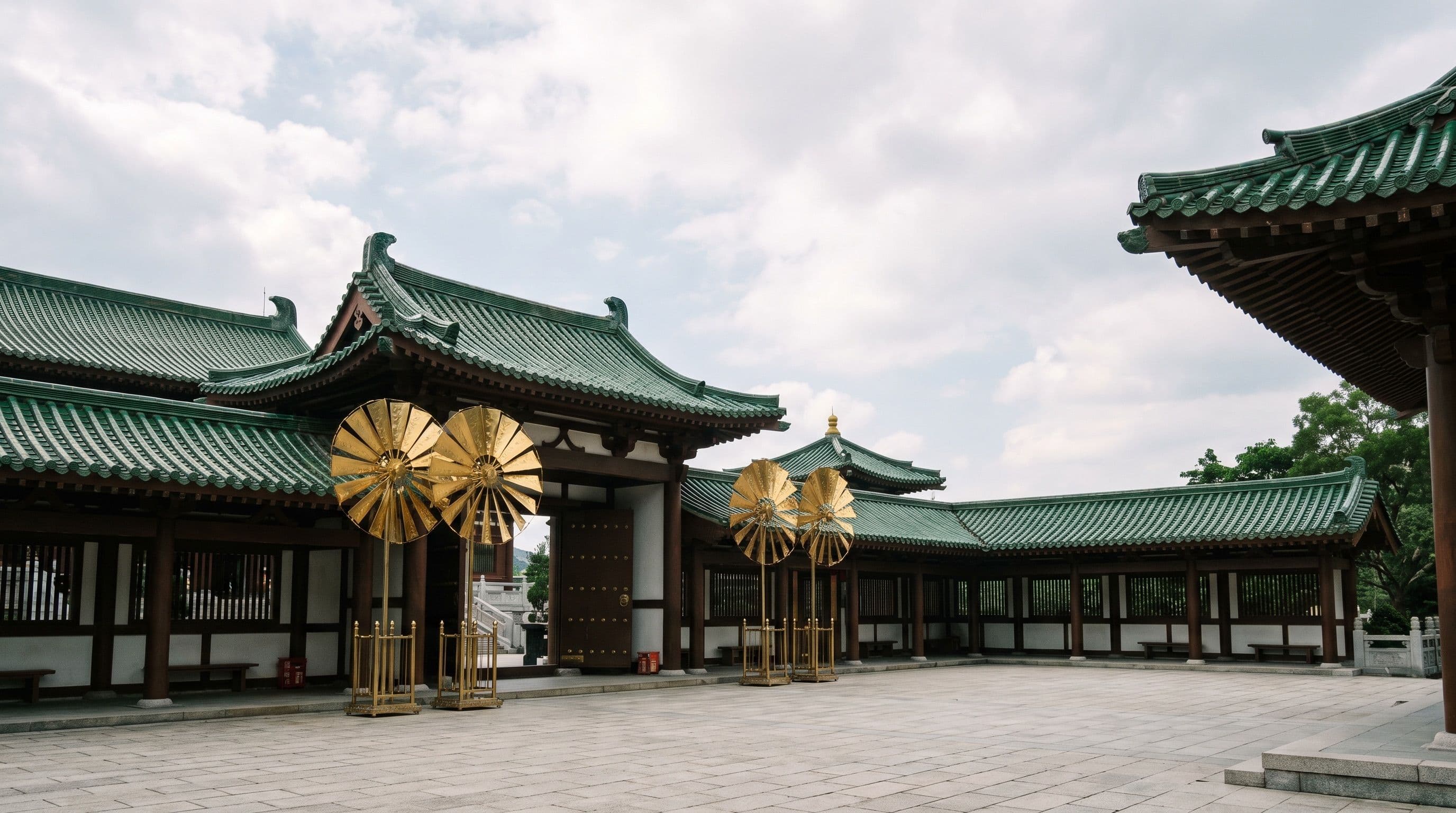
The temple's origins trace back to the end of the Ming Dynasty, and it was renovated in 1890. The current building, the one you'll actually walk into, was rebuilt in 1993 to 1994 at a cost of HK$48 million, roughly eight times the size of the original, in front of the older structure. That original temple still stands behind it and is classified as a Grade II historic building, though it's only occasionally open to visitors. Inside the main hall of the newer building is a large statue of Che Kung, flanked by a fan-bladed pinwheel that's the temple's signature feature.
How to get to Che Kung Temple
This is one of the easier New Territories temples to reach. Take the MTR Tuen Ma Line (the old Ma On Shan Line, renamed after the network's cross-harbour merger) directly to Che Kung Temple station, and the temple is a short walk from the exit. Alternatively, get off one stop earlier at Tai Wai station and walk about 10 minutes along Che Kung Miu Road, the road the temple sits on and is named after.
Opening hours and admission
The temple is open 8:00am to 6:00pm daily, according to the Chinese Temples Committee, which administers it. Admission is free, but donations toward the temple's upkeep are customary and welcomed. There's no ticket booth and no queue to get in on a normal day.
The Che Kung Festival and the pinwheel ritual
There are four Che Kung festival days a year on the lunar calendar, but the one that matters is the 2nd day of the first lunar month, Che Kung's birthday, right after Lunar New Year. On that day roughly 100,000 people pass through, including local government officials, to worship, beat the "Drum of Heaven," and spin the temple's golden pinwheels. Tradition holds that spinning one clockwise with your left hand carries your good luck into the new year, while spinning it counterclockwise turns bad luck around. If you want to see the temple at its most alive, that's the day, but expect serious crowds and traffic restrictions around Tai Wai. If you'd rather have the courtyard mostly to yourself, any other day works fine, since the pinwheels are there year-round for anyone to spin.
Is it worth the trip?
On its own, Che Kung Temple is a 20 to 30 minute stop: walk the courtyard, see the statue, spin a pinwheel if you're curious, and move on. It's not a full afternoon's worth of sightseeing by itself, and if your itinerary is tight and central-Hong-Kong-only, it's fair to skip it. I'd still point a first-time visitor toward it over a second trip to Wong Tai Sin, just for the contrast: same tradition, a fraction of the crowd. Where it earns its place is as a stop on a Sha Tin morning, since it sits close to two other things worth seeing in the same district.
Pair it with the rest of Sha Tin, or Hong Kong's other temples
Che Kung Temple is one MTR stop from Sha Tin station, home to the hillside Ten Thousand Buddhas Monastery, another free, low-crowd temple site and a natural same-morning pairing. If you're building out a fuller cultural day or comparing temples across the city, Wong Tai Sin Temple in Kowloon is the busier, more famous counterpart, Chi Lin Nunnery and Nan Lian Garden add a quieter Buddhist contrast, and Hong Kong Island's Man Mo Temple is worth a look if you're spending time in Central or Sheung Wan instead.
Quick answers
What is Che Kung Temple known for? Its giant golden statue of General Che Kung and the fan-bladed pinwheel beside it, which worshippers spin for good luck. It's also known for the huge Lunar New Year crowds on Che Kung's birthday, when around 100,000 people visit in a single day.
What is the most famous temple in Hong Kong? That's generally Wong Tai Sin Temple in Kowloon, the most visited overall. Che Kung Temple is more specifically famous for its Lunar New Year luck-turning ritual, which draws some of the biggest single-day crowds of any Hong Kong temple.
How do you pray at Che Kung Temple? Light incense and make an offering at the main hall, then step outside to the pinwheel: spin it clockwise with your left hand to carry good luck into the year ahead, or counterclockwise to turn around a bad one. Divination sticks are also available for those who want a fortune reading.
What is the oldest temple built in Hong Kong? Not this one, despite its history reaching back to the Ming dynasty. The current building was rebuilt in 1993 to 1994, and even the older Che Kung Temple in Ho Chung, Sai Kung, which dates to the mid-16th century, predates the Sha Tin temple most visitors come to see.