The Lantau Peak Sunrise Hike: The 4:50am Bus, the Stairs & Whether to Do It at All

The Lantau Peak sunrise hike is the one Hong Kong walk that starts with an alarm at 3:45am, and it earns it. At 934 metres, Lantau Peak (Fung Wong Shan, or Phoenix Mountain) is the city's second-highest summit, and on a clear morning you watch the sun come up over the South China Sea with planes gliding into the airport below you. I'll be straight with you: the climb is a relentless staircase in the dark, the logistics matter more than the fitness, and if you get the timing wrong you stand on a cold ridge in fog. Here is how to get it right.
The trail at a glance
- Height: 934m. Only Tai Mo Shan (957m) is higher in Hong Kong.
- Route: Lantau Trail Section 3, starting from Pak Kung Au, the pass on the road between Tung Chung and South Lantau.
- Ascent: 90 to 120 minutes of steep, rocky stone stairs. The first 1.2km barely lets up.
- Descent: back to Pak Kung Au in 1 to 1.5 hours, or onward to Ngong Ping in roughly 1 to 2 hours.
- Difficulty: hard. Not technical, but sustained and exposed in places. Fine without a guide if you can handle stairs for an hour and a half.
Getting to the trailhead in time for sunrise
You want to be at Pak Kung Au around 90 to 120 minutes before dawn. Take the MTR to Tung Chung, walk to the bus terminal by Exit B, and catch New Lantao Bus 3M, 11 or 23 towards Ngong Ping or Mui Wo. Get off at Pak Kung Au, the stop at the top of Tung Chung Road before the bus drops into South Lantau. The ride takes about 25 minutes and costs around HK$17 on Octopus.
The sunrise-hiker standby is the 4:50am departure, but check the New Lantao Bus app before you commit. Not every route starts that early, weekday and weekend timetables differ, and weekend services towards Ngong Ping tend to start earlier precisely because of sunrise hikers. There are also guided sunrise climbs at around HK$1,200 a head, which mostly buys you the transport problem solved.
Some hikers skip the bus maths entirely by staying overnight near Ngong Ping and walking up the western side from there. It is a shorter pre-dawn climb, and you descend past the trailhead you would otherwise have started from.
The climb in the dark
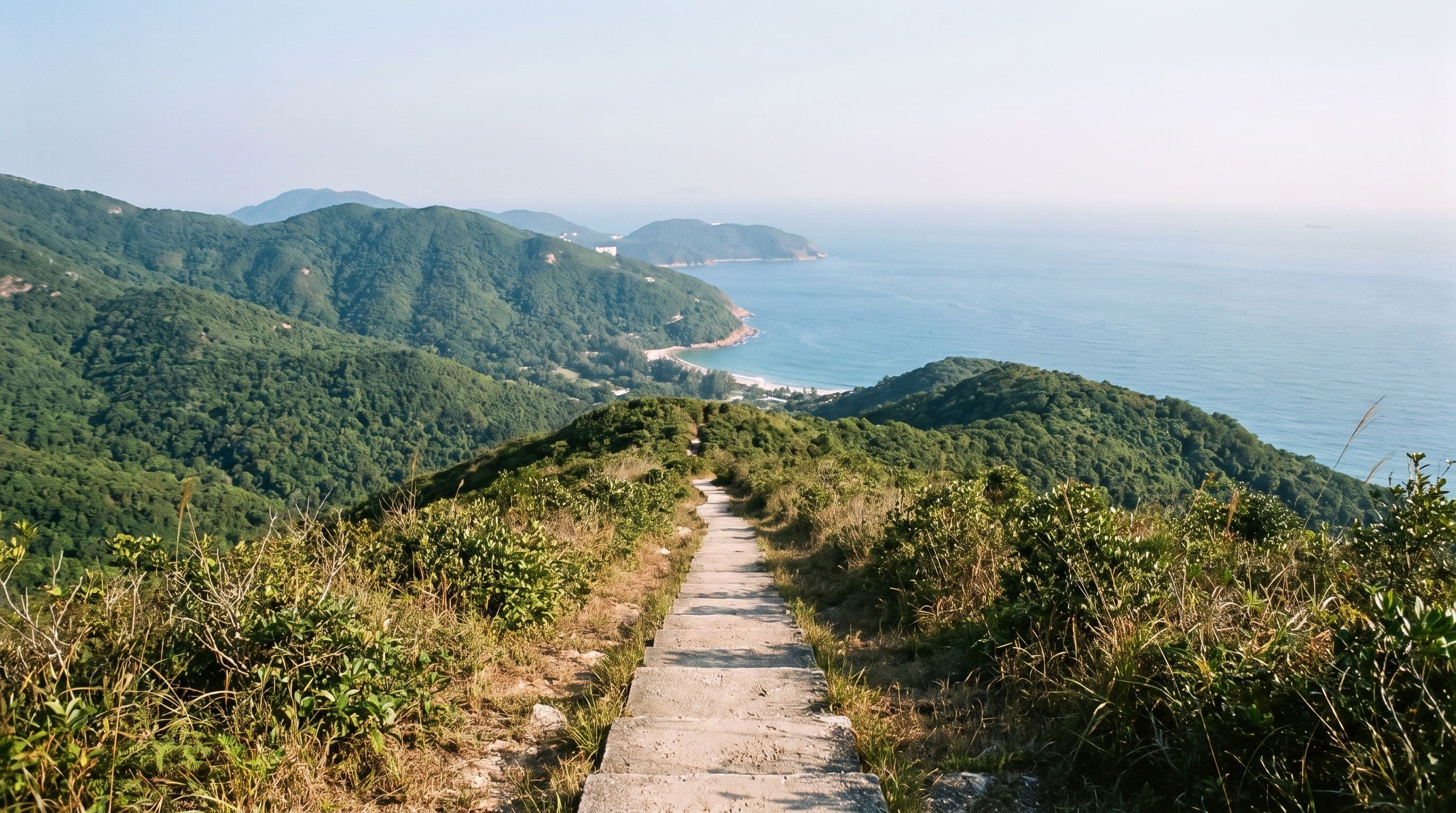
Cross the road at Pak Kung Au carefully (it is a blind crest and cars come through quickly), find the Lantau Trail Section 3 marker, and start up. The first 45 to 60 minutes are the hardest part of the whole morning: steep stone stairs, one after another, with no warm-up section. In headlamp light the staircase feels endless. A headlamp is not optional, and neither is water. There are no refill points anywhere on the trail.
Around 700 metres of altitude the gradient finally eases and the trail opens onto the upper ridge. This is where the first views arrive: Tung Chung and the airport glowing below, and on very clear nights the lights of Macau and Zhuhai across the water. The summit is a broad, open ridge with rock outcrops marking the top.
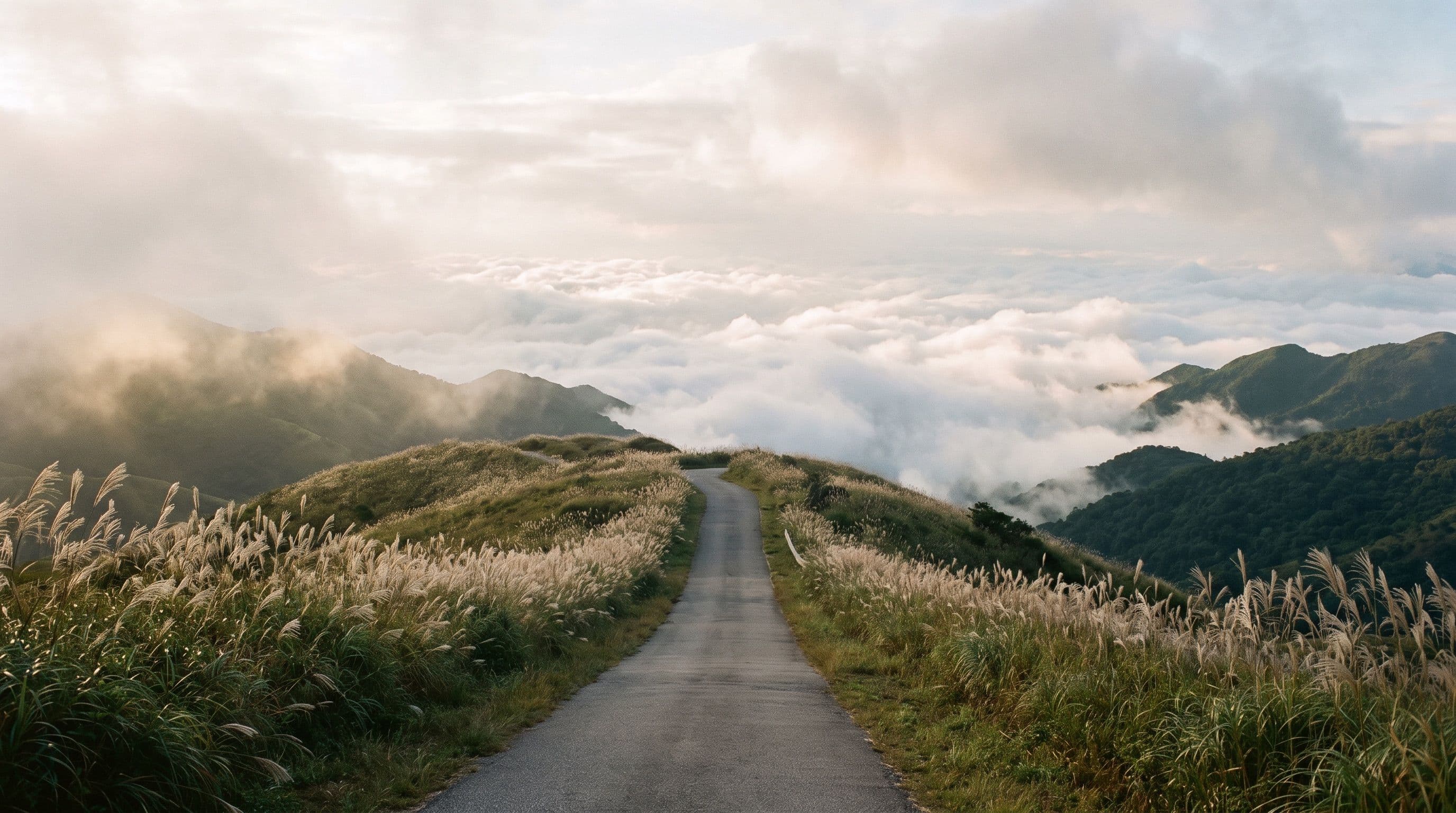
Then you wait. The summit sits a good 10 degrees cooler than the valley, and the wind is constant, so bring a proper windproof layer even in the warmer months. When the light comes, it comes fast: the coastline sketches itself in grey, the airport's lights dim as the sky takes over, and if the cloud sits below the summit you get the sea-of-clouds morning the trail is famous for. Fog is common before 7am, so check the Hong Kong Observatory forecast the night before, and check the exact sunrise time while you are at it.
Getting down: Ngong Ping or back the way you came
Most people continue along the trail to Ngong Ping rather than reversing the stairs. The descent is gentler, takes roughly 1 to 2 hours through open grassland with long views south, and drops you at Ngong Ping Village next to the Big Buddha. After a pre-dawn start you will be very ready for the vegetarian meal at Po Lin Monastery, though note the kitchen serves from 11:30am.
One thing the sunrise timing quietly breaks: the cable car. Ngong Ping 360 opens at 10am on weekdays (9am on weekends and public holidays), and at sunrise pace you will walk into the village well before that. Either linger over the Buddha and breakfast until it opens and ride the cable car down, or take bus 23 back to Tung Chung, about 40 twisty minutes. Also check the operator's announcements before you plan around the cable car at all: it shuts for scheduled maintenance from 8 to 18 September 2026, for example.
When the Lantau Peak sunrise hike is worth it (and when it is not)
October to April is the season. November to February brings the clearest, driest mornings and the most comfortable climbing temperatures. Summer sunrises exist, but cloud is more frequent, the humidity makes the stairs genuinely punishing, and you should carry at least two litres of water per person. Skip the hike entirely in rain or when a thunderstorm or typhoon signal is up: the upper sections are exposed and wet stone stairs are treacherous. If anything goes wrong, call 999 and quote the number on the nearest Lantau Trail distance post.
If you want a big Hong Kong view without the alarm clock, the Dragon's Back is far gentler, and the Lion Rock hike gets you a skyline view without the pre-dawn logistics. Lantau Peak at dawn is for the morning you want the hard one.
Quick answers
How hard is the Lantau Peak hike? Hard. The ascent from Pak Kung Au is 90 to 120 minutes of steep, sustained stone stairs with little respite. You need reasonable fitness and proper shoes, but not a guide or any technical skill.
How long is the Lantau Peak sunrise hike? About 4km return from Pak Kung Au if you go back the same way. The popular sunrise circuit (up from Pak Kung Au, down to Ngong Ping) takes 4 to 5 hours including time on the summit; call it a half day with transport.
Where is the best place to hike for a sunrise in Hong Kong? Lantau Peak is the classic answer: it is high enough to sit above the cloud line, faces the open sea, and the trailhead is reachable by an early public bus. Tai Mo Shan is higher, but Lantau Peak's position above the airport and the Pearl River Delta makes the better dawn.
Do I need a guide for Lantau Peak? No. The trail is marked (Lantau Trail Section 3), and the crux is timing, not navigation. Guided sunrise climbs run at around HK$1,200 if you would rather not solve the 4:50am bus yourself.
Planning the rest of your trip? See our guide to The High Island Reservoir East Dam Hike: Hong Kong's Hexagonal Rock Columns.