Best Hong Kong Bus App for Tourists: What to Download & How to Use It
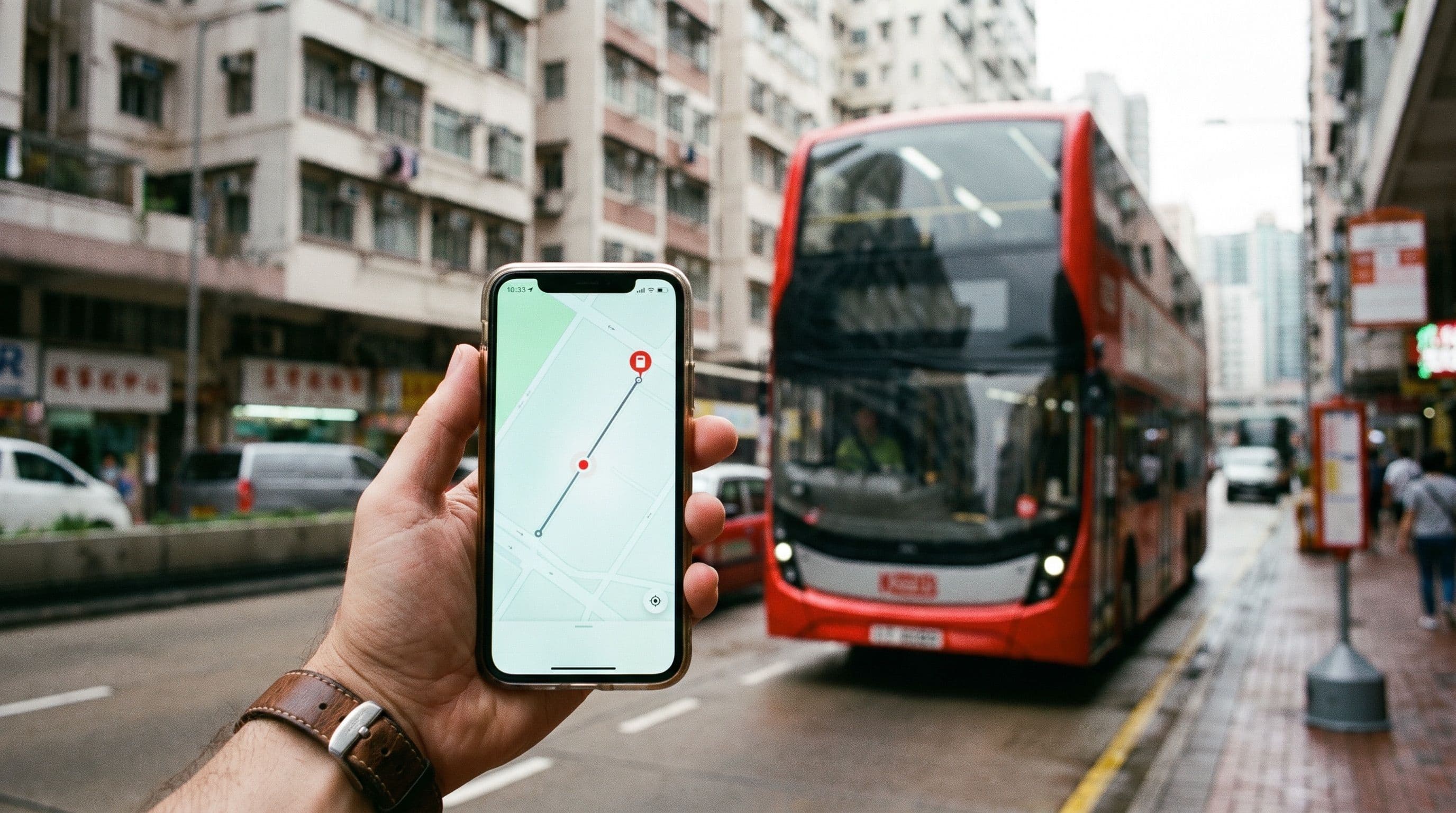
The best Hong Kong bus app for tourists isn't the one you'd guess first. Hong Kong runs its buses through several separate companies, and each one publishes its own official app that only covers its own routes. If you want one app that tells you when the next bus is actually coming, no matter who runs it, you need something that pulls all of them together. Here's what actually covers the whole system, what the official apps get right, and how to pay once you've found your bus.
The short answer
HKBUS (iOS) and HK Bus ETA (Android) are the two apps built specifically to solve this: both combine real-time arrival times for KMB, Citybus, Long Win Bus, New Lantau Bus, and the green minibus (GMB) network into a single search, instead of forcing you to know which company runs the route before you can even check it. HK Bus ETA also folds in MTR lines, Light Rail, and some ferry routes, and both offer home-screen widgets so you can see your saved stop's next arrival without opening the app at all. I keep one of these on my own home screen specifically for the widget; checking a saved stop without unlocking the phone is the entire point once you're standing at a busy junction trying to spot the right bus number.
Why the official single-operator apps fall short
KMB and Long Win Bus publish App1933, which covers real-time arrivals, routes and fares for their own network across Kowloon and the New Territories. Citybus publishes its own app for its Hong Kong Island routes and the airport buses. Both are accurate and free, and if you already know you're only riding KMB routes, App1933 alone is fine. The problem for a first-time visitor is you usually don't know in advance which company runs the bus outside your hotel, so you end up needing two or three apps installed just to cover one trip, checking each one in turn until you find the route you want.
The government's all-in-one option
The Transport Department's own HKeMobility app takes a different approach: it does point-to-point trip planning across every public transport mode plus walking in one search, shows real-time schedules, fares and estimated arrival times, and adds real-time parking vacancy and border-crossing wait times if you're driving or heading into mainland China. It's a genuinely useful planning tool, especially for a full-day itinerary, but reviewers building bus-specific route finders (HKBUS, HK Bus ETA) still tend to have the edge for the single question you'll ask most often at a bus stop: exactly how many minutes until my bus shows up.
What these apps get right (and where to double-check)
Both HKBUS and HK Bus ETA pull their data from Hong Kong's open-data service and the operators themselves, and both let you plan a direct or one-transfer journey with the fare and walking distance shown up front, which is genuinely useful when you're deciding whether a bus or the MTR is the faster option. HK Bus ETA is ad-free with WearOS smartwatch support if that matters to you; HKBUS has a slightly larger review base on the App Store and adds route maps and custom themes. Neither is a live GPS feed in the strict sense; arrival countdowns are estimates built from schedule and reported position data, so treat a "1 min" countdown as "get moving now," not "you have exactly 60 seconds." Bring a couple of minutes of buffer, especially outside peak hours.
One thing that trips people up even with a good app installed: Google Maps handles standard KMB and Citybus routes reasonably well for point-to-point directions, but its coverage of Hong Kong's green minibus routes is patchy, with some routes missing stops or showing the wrong street entirely. If a Google Maps transit suggestion routes you onto a minibus, cross-check it in HKBUS or HK Bus ETA before you commit. The same goes for cross-harbour tunnel buses between Hong Kong Island and Kowloon: they're run by the same KMB/Citybus operators, so they show up fine in either app once you know the route number.
The app doesn't pay your fare
None of these apps handle payment, they only tell you when and where. You still tap on with Octopus (or a contactless card on routes that accept it) as you board. If you're arriving without a physical card, the Octopus for Tourists app lets you add a digital Octopus card to your phone and top it up instantly with a foreign credit card, so you're not queuing at a top-up machine on your first morning. A pre-loaded physical Tourist Octopus Card, sorted before you land, does the same job if you'd rather have the card in hand.
Quick answers
What is the best app for traveling to Hong Kong? For bus-specific arrival times across every operator, HKBUS (iOS) or HK Bus ETA (Android). For a full trip-planning view across all transport modes including driving and parking, the government's HKeMobility app.
Can foreigners use the Octopus app? Yes. The Octopus for Tourists app lets visitors add a digital Octopus card to their phone and top it up instantly with a foreign credit card, no top-up machine needed.
What is the best ride app in Hong Kong? Uber, if you want a private car with upfront pricing instead of a bus or street taxi; it's a separate category from the route-finder apps in this guide, and works alongside them rather than replacing buses for most trips.
How to get around Hong Kong as a tourist? The MTR covers most cross-district trips fastest; buses and minibuses fill in wherever the MTR doesn't reach directly. Everything is paid the same way, tapping Octopus, so the app you use is just for finding the right route and knowing when it's coming.
If you're arriving straight from the airport, see every option for getting from the airport to the city before you're relying on a bus app for the first leg. And if you're weighing a taxi or Uber instead for a specific trip, see the full Hong Kong taxi guide for fares and how the apps compare.
Planning the rest of your trip? See our guide to Hong Kong Taxi Scams: How to Avoid Getting Overcharged.